Glass jars look like the simplest package on a shelf: a clear cylinder, a lid, a label. Behind that impression sits one of the most tightly controlled lines in packaging. A jar must hold vacuum, survive a high speed filler and pass a drop test, and each outcome is decided before the pallet leaves the plant.
A glass jar is made by melting silica sand, soda ash, limestone and cullet at 1,550 to 1,600 degrees Celsius, cutting the melt into weighed gobs, forming each gob in a two stage mould, then annealing, coating, inspecting and packing it.
Each stage explains part of the cost gap between suppliers.
What Raw Materials Go Into a Glass Jar?
A jar is made from three minerals plus recycled glass: silica sand forms the network, soda ash lowers the melting point, and limestone gives the durability that lets glass hold acidic food.
Container glass is soda lime glass, and the recipe has changed little in two thousand years.
| Ingredient | Share of batch | Function | If poorly controlled |
| Silica sand | 70 to 72 percent | Glass network | Weak walls, stones |
| Soda ash | 13 to 15 percent | Flux | Incomplete melting |
| Limestone, dolomite | 10 percent | Chemical durability | Poor acid resistance |
| Cullet | 20 to 90 percent | Replaces minerals, saves energy | Colour drift |
Cullet is crushed recycled glass, not a filler. It melts at a lower temperature than virgin minerals, so a higher ratio cuts furnace energy per tonne, and in markets with strong collection it reaches 60 to 90 percent of the batch. Buyers comparing wholesale glass jars usually weigh shape and price, yet the cullet ratio explains much of the difference in colour consistency and defect rate.
How Does the Furnace Turn Batch Into Molten Glass?
The weighed batch is fed into a furnace at 1,550 to 1,600 degrees Celsius, fuses into homogeneous glass, releases trapped gases during refining, and is conditioned in a forehearth before being sheared into gobs.
A furnace runs for years without stopping, often eight to fifteen between rebuilds, because cycling the refractory structure would destroy it. Regenerative furnaces recover exhaust heat to cut fuel use.
Most defects start here. Stones are unmelted minerals, seeds and blisters are trapped gas, and cords are streaks of glass with a different composition. All three trace back to batch weighing, temperature stability or refractory wear, which is why audits should include the calibration records on the batch scales. Batch drift is the usual cause of colour variation between lots.
In the forehearth, glass is equalised to forming viscosity, typically 1,050 to 1,150 degrees Celsius. A plunger feeder pushes it through a narrow tube while a shear blade cuts the stream into gobs, each weighing what one container requires, with gob weight held within about one percent.
How Is a Jar Formed? Press-and-Blow vs Blow-and-Blow
Gobs are shaped on an individual section machine by press and blow, which uses a plunger to form the parison and suits wide mouth jars, or by blow and blow, which uses compressed air and suits narrow necks.
Both use two stages. The gob becomes a parison on the blank side with the finish already defined, then a neck ring inverts it for the blow side, where air expands it against the mould.
Press-and-Blow: The Standard for Wide-Mouth Jars
A plunger presses the glass outward to fill the blank mould. Because glass is displaced mechanically rather than by air, wall distribution is tighter and finish dimensions more stable, which is why press and blow dominates wide mouth glass jars, especially where a lug or twist off closure needs a precise sealing surface.
Blow-and-Blow: Narrow Necks
A settle blow forms the finish, a counter blow opens the cavity, and the parison is blown to final shape. With no plunger passing through the opening, the method suits narrow necks. The two stage sequence is standard across the industry and is documented in detail by container machinery suppliers.
| Feature | Press and blow | Blow and blow |
| Parison formed by | Metal plunger | Compressed air |
| Typical containers | Wide mouth jars | Narrow neck bottles |
| Wall control | Tight and uniform | Moderate |
Sections run staggered cycles, and cycle speed depends on how fast the glass cools rather than on the machine, so a light jar runs faster than a heavy one.
Why Does Annealing Decide Whether a Jar Survives?
Annealing reheats formed jars to about 550 to 580 degrees Celsius and cools them on a controlled curve, releasing forming stress so the jar survives filling, capping, transport and temperature change.
Glass that cools unevenly develops stress between surface and interior, which is why a jar can pass inspection and fail days later in a pasteuriser.
The Lehr Cycle
Jars enter the lehr near 550 degrees Celsius, are reheated to the annealing point so the structure relaxes, held in a soaking zone, then cooled on a gradient to ambient over sixty to ninety minutes. Belt speed and zone temperatures are set per weight and wall thickness, because a light jar and a heavy jar cannot share one profile.
What Residual Stress Looks Like
A polariscope reveals stress as coloured bands, and a capable plant produces a stress report and lehr zone chart for the current job within minutes.
How Are Jars Coated, Inspected and Packed?
Every jar receives a hot end coating before annealing and a cold end coating after it, then passes automated inspection for dimensions, wall thickness, finish and cosmetic defects before palletising.
The hot end coating is applied near 500 degrees Celsius and bonds to the surface. The cold end coating is applied at roughly 100 to 120 degrees Celsius and adds lubricity, so jars slide rather than scratch on a filling line. Without it, clear jars scuff and lose the clarity shoppers read as quality.
Inspection and Documentation
Lines inspect every container rather than a sample. Cameras find stones, blisters and cracks, laser profiling measures height, diameter and wall thickness, and finish gauges verify the sealing surface. Rejected jars return to the furnace as cullet.
A quotation says what a jar costs; a document set says what it is. Request the dimensional report, the polariscope stress report, drop test results, a leak record, the food contact declaration, and batch traceability.
How Are Glass Jars Sized, Sealed and Finished?
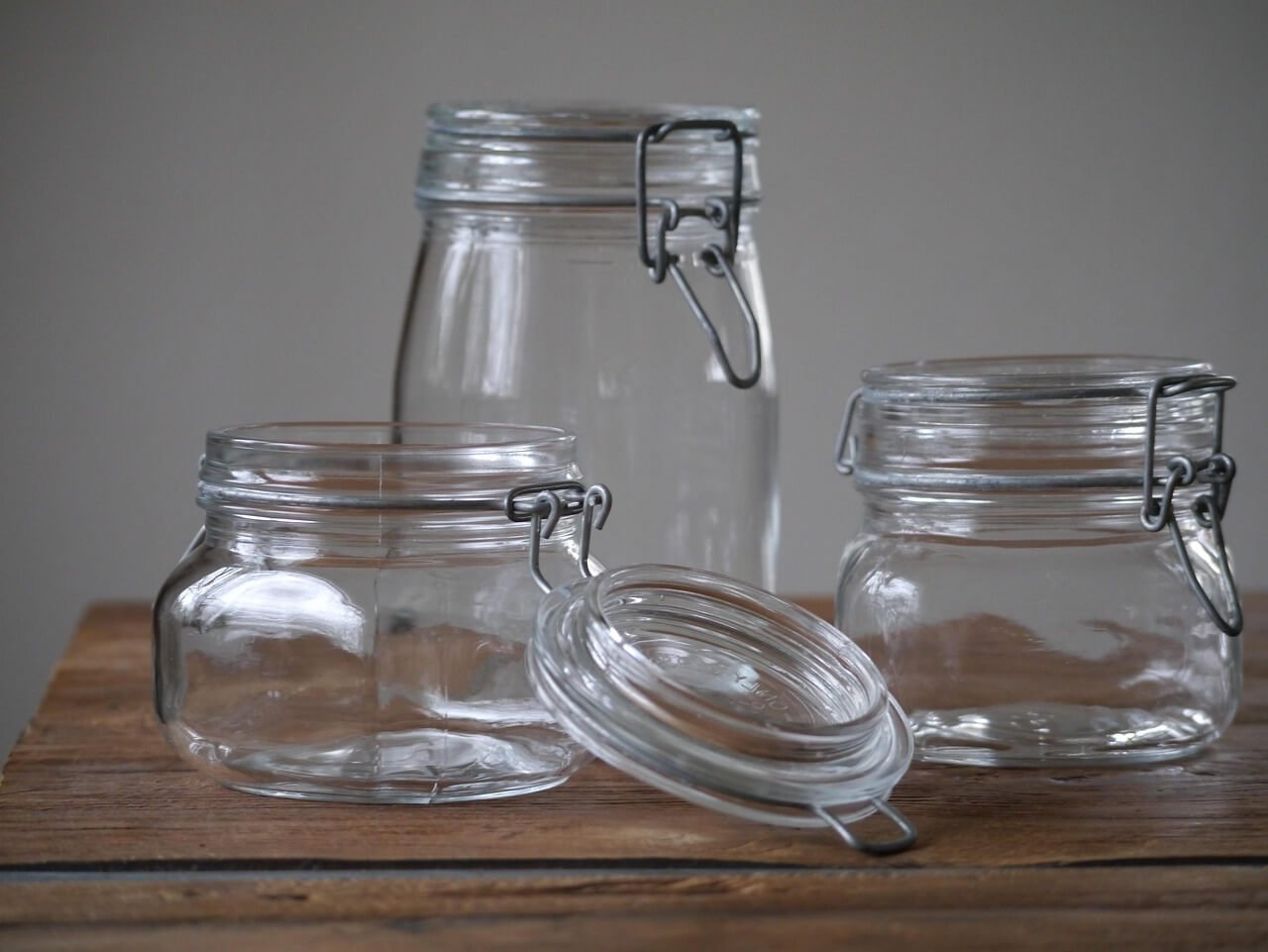
Jar size is defined by capacity and by the finish, the toleranced top edge and thread that the closure grips, and it is the finish rather than the body that decides whether a jar seals.
Finish diameter, thread profile and pitch sit within tolerances measured in tenths of a millimetre, so a closure made for one finish will not seal on another.
Finish, Threads and Closures
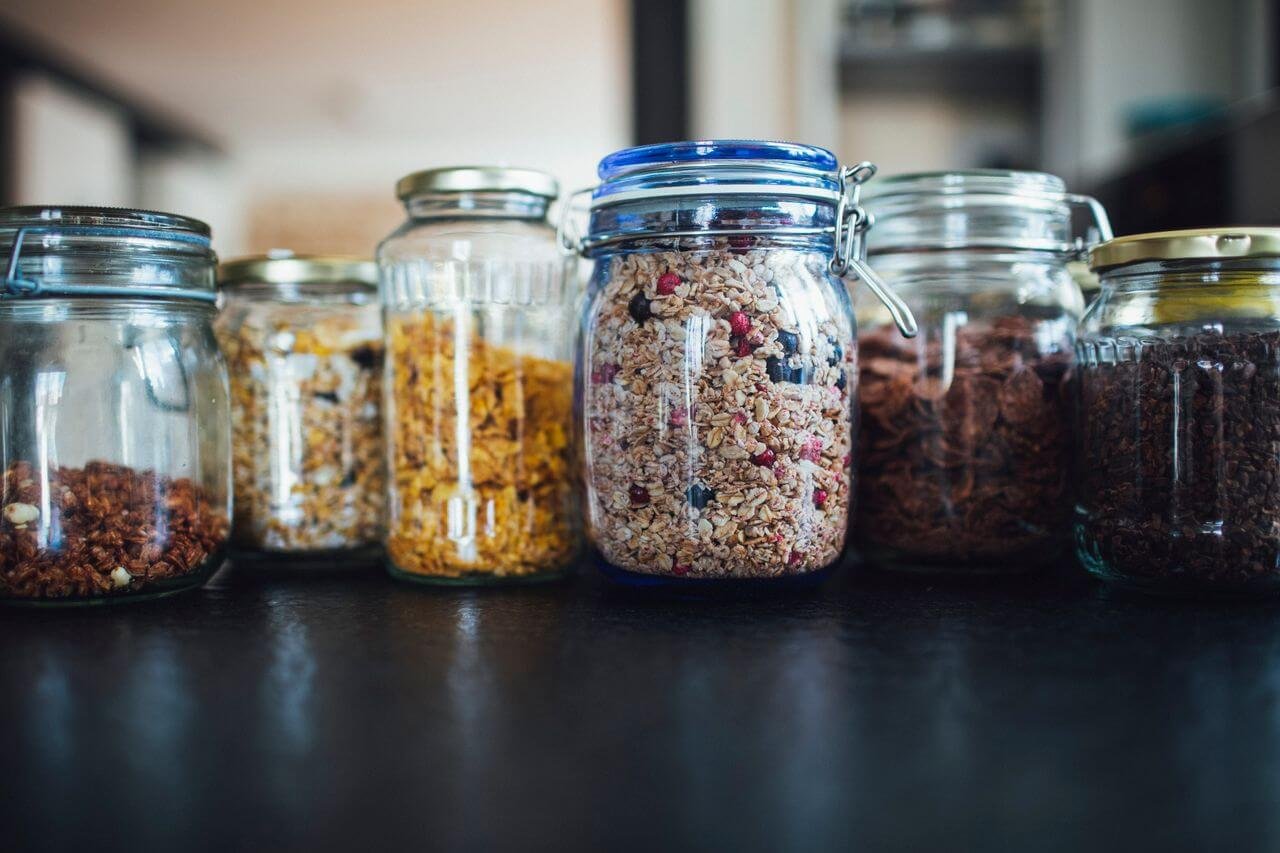
Continuous thread finishes are the food standard, with 43 to 89 millimetre diameters covering most of the market. Lug finishes use interrupted threads and a quarter turn for vacuum packed products. Buyers needing a specific closure family should review glass jars with lids by finish size before committing to a mould.
Wide-Mouth Formats and Mason-Style Jars
An opening above roughly 63 millimetres lets a spoon or nozzle enter, making wide mouth the default for jams, pickles, honey and candles. Narrow necks suit liquids that are poured.
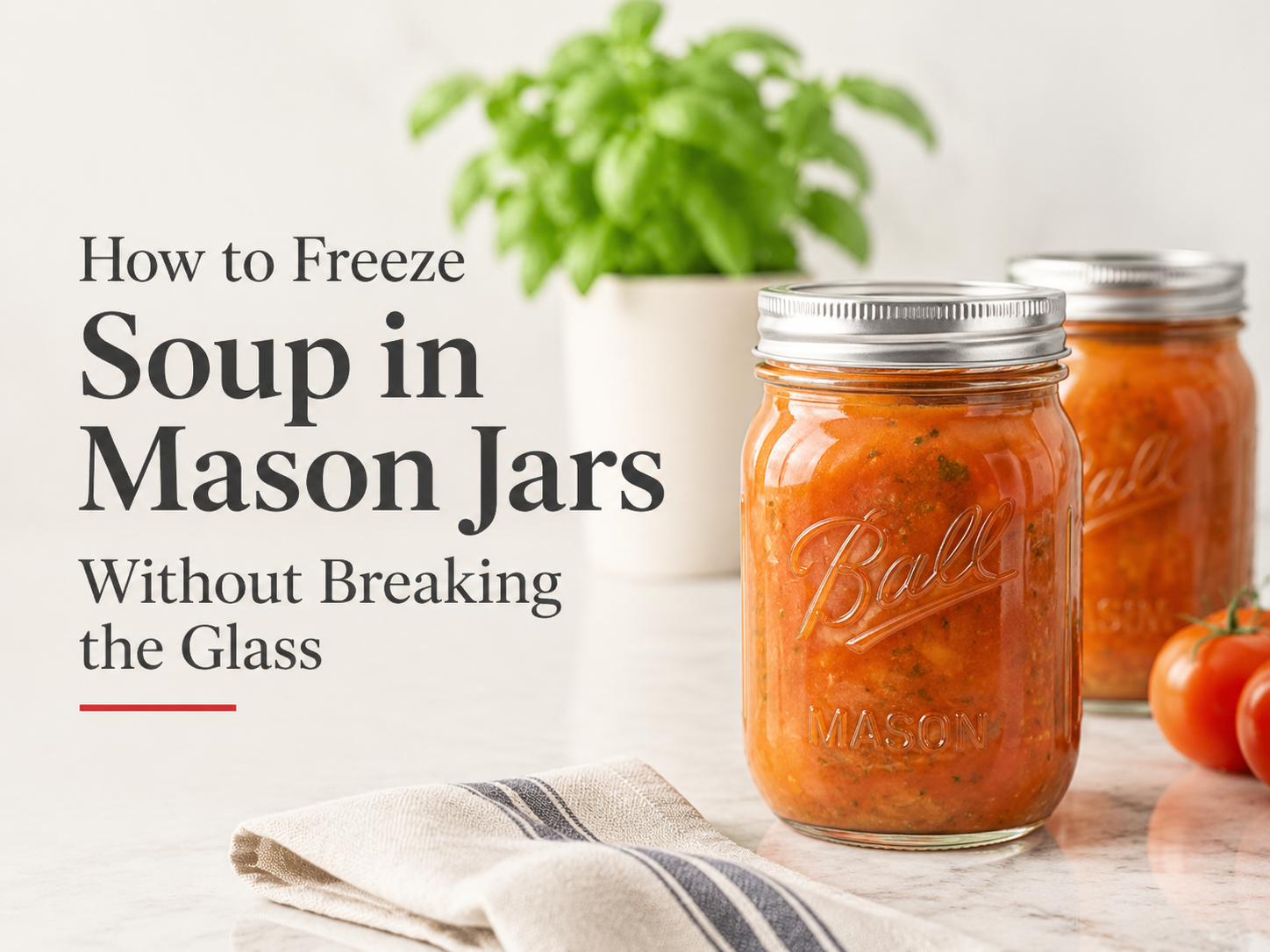
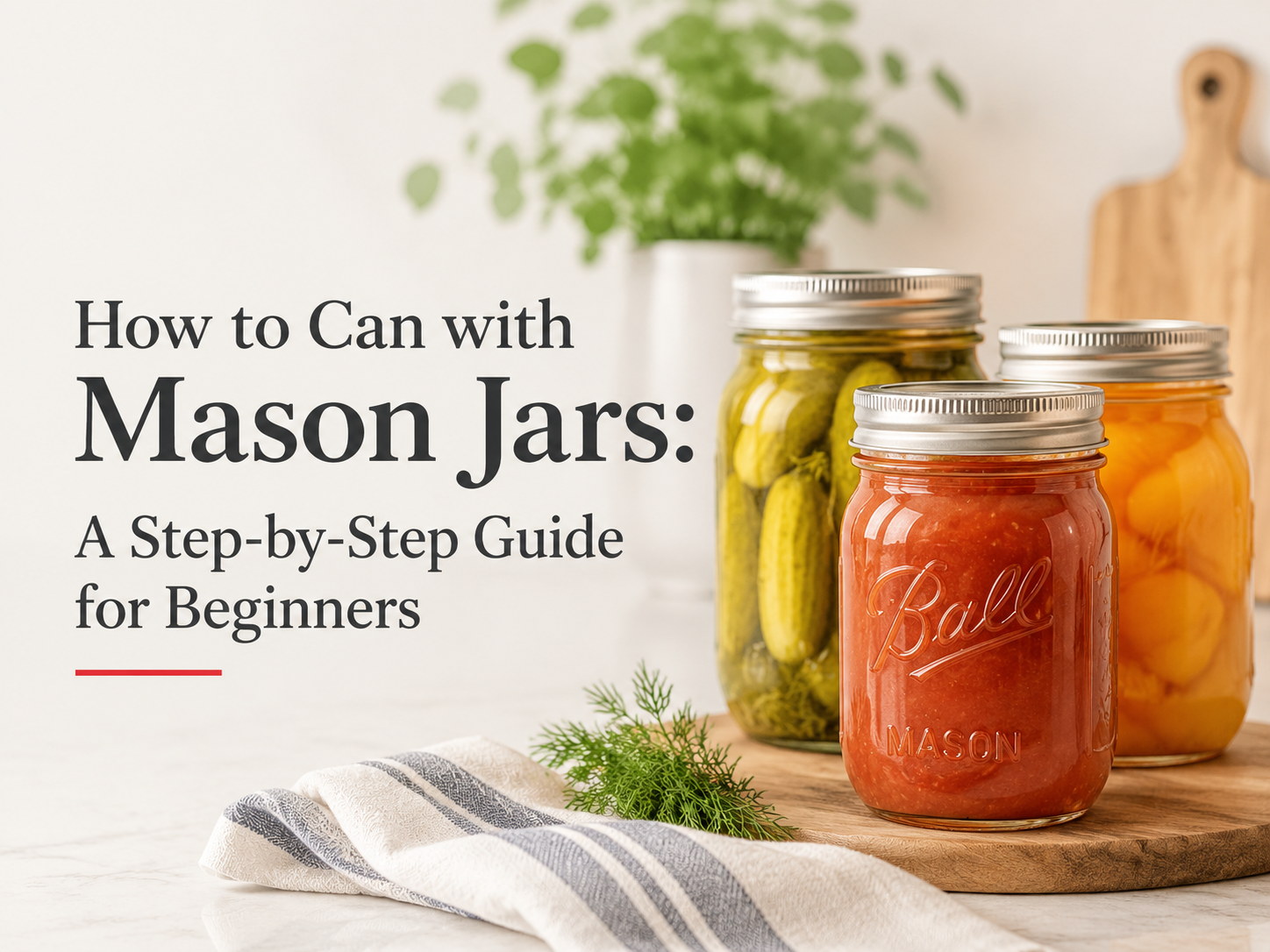
Mason style jars, with straight walls, a wide opening and a two piece lid, remain the most recognisable format in English speaking markets. Consumers like them because the mouth is easy to fill, the clear wall shows the contents, and the jar can be reused for storage long after the contents are gone.
How Are Glass Jars Decorated for Brands?
Jars are decorated after annealing by screen printing, frosting, spray coating, hot stamping, in mould embossing or labels, with the choice driven by durability, run length, cost and food contact compliance.
In mould embossing cannot wear off, but tooling is costly and the design cannot change without a new mould. Surface decoration is cheaper to change but must survive filling, refrigeration and handling.
| Method | Appearance | Durability | Best for |
| Screen printing | Raised opaque graphics | High | Premium brands |
| Acid etching | Matte, satin surface | Medium | Craft positioning |
| In mould embossing | Permanent relief | Very high | Structural branding |
| Pressure sensitive label | Full colour artwork | Medium | Short runs |
Ink choice is a compliance question before a design question. Food contact packaging must meet migration limits under European regulation 10/2011 or United States requirements.
How Were Glass Jars Made Before Machines?
Before automation, jars were hand blown: a craftsman gathered molten glass on a blowpipe, lowered it into a mould and blew it to shape, a process in which a blower with four assistants rarely produced more than eighteen dozen containers a day.
Hand-Blowing in the 1800s
Before roughly 1800 most containers were free blown, which is why early bottles are asymmetric and carry a pontil mark where a rod held them. Mould blowing spread from about 1800, and the two piece mould became standard after 1850, leaving the side seams that identify old bottles today.
Semi automatic machines arrived in the 1890s for wide mouth jars, and the first fully automatic bottle machine entered commercial use in 1903 in Toledo, Ohio, reaching rates near a million containers a week. By 1920 most American containers were machine made.
The Oldest Glass Containers Ever Found
The earliest glass containers date to roughly 1500 BC in Egypt and Mesopotamia and were made by core forming, where glass was trailed over a sand and clay core that was dug out once it cooled. The results were small, decorative and reserved for perfumes. Glassblowing, developed in the eastern Mediterranean in the first century BC, replaced it because it was faster and more uniform, turning glass into a packaging material.
Are Glass Jars Healthier Than Plastic?
Glass is chemically inert, non porous and impermeable, so it does not leach additives into food, absorb flavours or pass oxygen and moisture, which is why regulators treat it as a reference material.
The difference shows over time. Plastic can absorb the aroma of its contents, so a container that held sauce may carry that smell into the next product. Glass does not, and it can be washed, sterilised and refilled without losing performance. Glass is also the only packaging material certified by the United States Food and Drug Administration as generally regarded as safe.
Plastic still wins on weight and impact resistance, which lowers freight emissions, and it can be squeezed, so viscous sauces dispense more easily. The choice should follow the filling line, the shipping distance and the price the consumer will pay.
Are Glass Jars Sustainable?
Glass can be recycled indefinitely without loss of quality, and every ten percent of cullet added to the batch cuts furnace energy by roughly three percent, so the footprint of a jar depends on cullet use and on how the container is collected.
Cullet, Energy and Emissions
Cullet lowers the melting temperature, cutting fuel use and carbon dioxide per tonne, reducing emissions and extending furnace life. Published glass recycling data puts the saving near three percent for every ten percent of cullet, with about one tonne of carbon dioxide avoided for every six tonnes of recycled container glass remelted.
Recycling, Reuse and Lightweighting
A jar can become a new jar in as little as thirty days, and today’s containers are roughly forty percent lighter than those made thirty years ago. Buyers who want a defensible claim should ask what share of the batch is cullet, whether the plant holds an environmental management certification, and what the recycled content of that colour and format is. Knowing whether are glass jars recyclable in a given market is the other half of that claim.
Frequently Asked Questions
How long does it take to make a glass jar?
From batch to pallet, roughly twenty four to thirty six hours. The jar is formed in seconds and spends about an hour in the lehr, but the batch must be melted and refined first, and containers queue for packing.
Can you make glass jars at home?
Not from raw materials. Melting silica sand into glass needs a furnace near 1,500 degrees Celsius, beyond any domestic kiln. What works at home is reshaping and decorating: cutting bottles, fire polishing edges, slumping flat glass in a kiln, or applying bake on paint to an existing jar.
What drives the cost of a custom glass jar?
Mould tooling is a one time cost that rises with embossing and unusual shapes. Weight drives material and freight, and lightweighting is often the fastest route to a lower landed cost. Finish tolerance affects the reject rate more than the unit price, decoration adds cost per colour, and order volume decides whether the plant dedicates a schedule or shares furnace time.