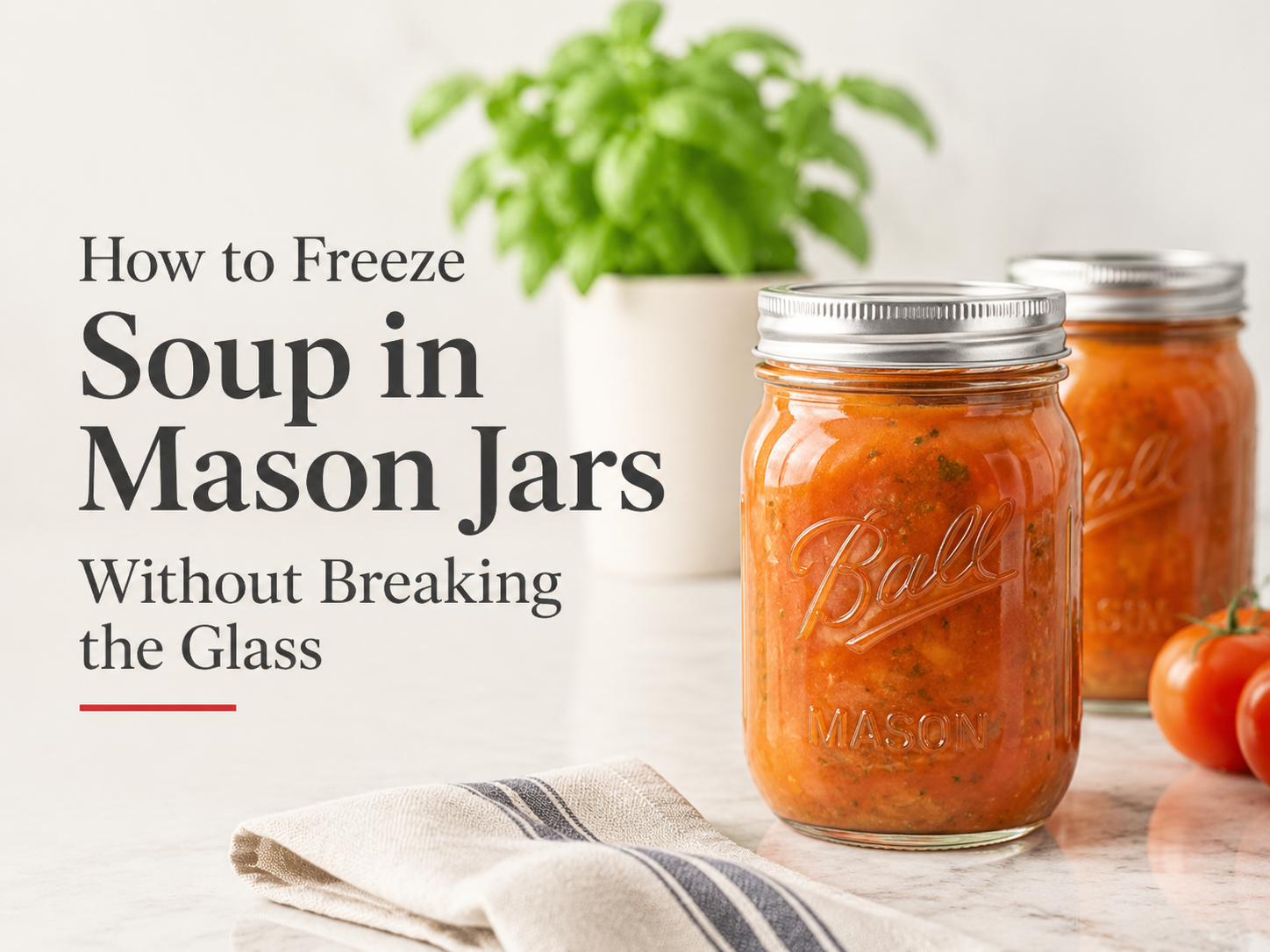
Batch cooking solves the weeknight dinner problem until you have to store the results, and at that point most kitchens reach for plastic. Glass jars are the better container on almost every measure, yet the fear of a shattered jar keeps many cooks from using them. That fear is reasonable, because glass does break in freezers, but the breakages follow predictable patterns and can be designed out.
Yes, you can freeze soup in glass jars, and glass is one of the best materials for the job, provided three conditions are met at once: the jar is strong enough for freezing, at least 2.5 cm of headspace is left for the soup to expand into, and the soup is cold rather than hot when it goes in. Break any one of those rules and a jar can crack, but the failure is mechanical and repeatable, so it can be engineered out of your routine.
The sections below explain why glass behaves the way it does under freezing stress, how much room soup actually needs, and the sequence professional kitchens follow to freeze batch after batch without losing a container.
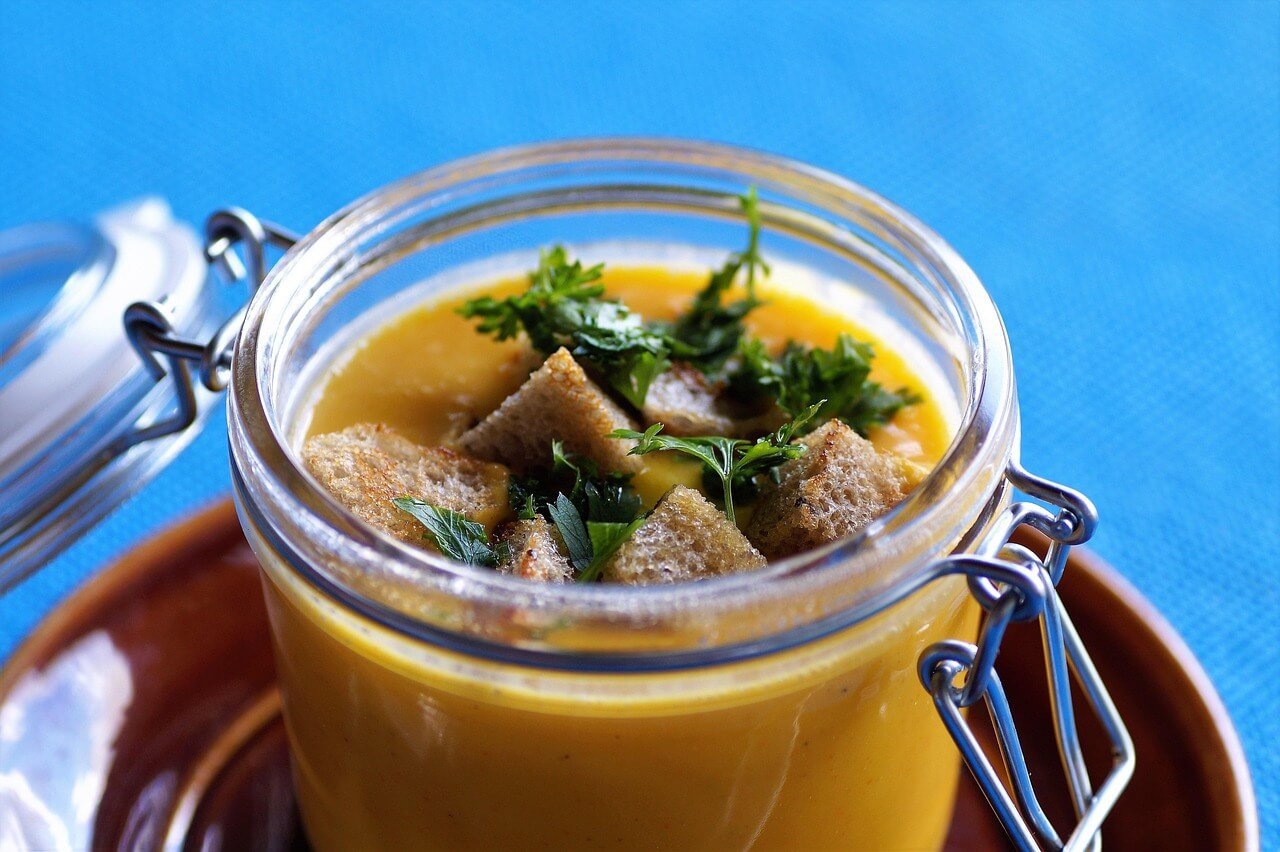
Why Glass Jars Are a Good Match for Frozen Soup
Glass is chemically inert, does not absorb odors or fats, tolerates freezer and microwave temperatures when properly made, and can be reused hundreds of times, so it outperforms most plastic containers on every measure except weight and impact resistance.
Soup is a hard food to store. It is water-based, often fatty, frequently acidic from tomatoes or wine, and heavily pigmented by beetroot or curry paste, which are exactly the conditions that stain and odor-load plastic over time. Glass ignores all of it, and a well-made range of glass jars adds full transparency, so portion size and remaining stock are visible without opening anything.
Where Glass Reaches Its Limit
Glass is strong in compression and weak in tension, and freezing attacks both. Water expands by roughly nine percent as it turns to ice, and because a wall cannot stretch, that expansion must go upward into headspace or outward into the glass. A rapid temperature change also creates a gradient through the wall, so one surface contracts while the other lags behind. The resulting tensile stress is what thermal shock describes, and it explains why a jar can survive the freezer yet crack the moment it meets hot water.
Can You Put Soup in a Glass Jar in the Freezer
Yes. Soup can go into a glass jar in the freezer as long as the jar is designed for freezing or originally held heat-processed food, the soup has cooled to room temperature or below, and the fill line sits at least 2.5 cm below the rim.
The phrase freezer safe is often printed without explanation. It means the container has been tested for the dimensional change and stress between roughly -18 °C and room temperature, and that the closure still seals after repeated cycles. It does not mean the jar survives any temperature jump, which is why a freezer-safe jar can still crack in a sink of hot water.
How to Tell Whether a Jar Is Freezer Safe
- Look for a marking. A snowflake symbol, the words freezer safe, or a temperature range on the base.
- Check the profile. Straight sides with no shoulder taper are the most forgiving, because expanding soup rises instead of pushing sideways.
- Check wall uniformity. Thick and thin sections in the same wall cool at different rates, which concentrates stress.
- Inspect the base and rim. A separate glass disc fused into the bottom is a weak joint, and chips or a dented thread start cracks.
Three jar types should stay out of the freezer entirely: thin-walled single-use jars from condiments, rounded-shoulder jars that trap an ice plug against the taper, and any jar with a hairline crack or an unknown history of thermal abuse.
Can You Freeze Liquids in Glass Jars: The Expansion Rule
Yes, liquids can be frozen in glass jars, but liquid is the most demanding filling you can choose, because it expands more than any other food as it freezes and it transmits pressure straight to the glass instead of absorbing it in air pockets.
Beans or shredded meat contain trapped air and compress slightly under freezing pressure. A smooth soup or stock has no such cushion, so the entire expansion volume must be absorbed by headspace. That is why the same jar that freezes a chickpea stew without complaint can crack on tomato soup.
How Much Headspace Each Jar Size Needs
| Jar capacity | Minimum headspace | Maximum fill | Typical use |
| 200 ml | 2.5 cm | 150 ml | Single portions, concentrate |
| 350 ml | 2.5 cm | 270 ml | Side soup, lunch portions |
| 500 ml | 3 cm | 380 ml | Standard single serving |
| 750 ml | 3.5 cm | 570 ml | Two portions |
| 1000 ml | 4 cm | 750 ml | Family portion, broth |
| 1500 ml | 5 cm | 1100 ml | Batch stock, catering prep |
For jars with a shoulder, treat the widest point as the ceiling. Filling above it forces ice through a narrowing channel, and that is where cracks begin.
Lid Handling: Ajar, Vented, or Sealed
- Lid ajar until frozen. The most forgiving method: freeze with the lid resting on top, then tighten once the surface is solid.
- Lid on, generous headspace. Faster and stackable, but it relies on correct fill levels, so calibrate portions first.
- Vented lids. Useful for high-fat soups that stay soft in the centre, because trapped air can escape as the contents contract.
Avoid pulling a hard vacuum on a jar you intend to freeze, since expansion adds an unnecessary outward load. If you buy glass jars with lids in bulk, confirm the gasket is specified for low temperature, because some foams stiffen below -10 °C and stop sealing.
Is It Better to Freeze Soup in Glass or Plastic
Glass is better for soup on almost every measure that affects taste, safety and reuse, while plastic wins on weight, shatter resistance and space efficiency, so the practical answer is glass for household and most professional storage, and plastic only where impact risk or sheer volume makes glass impractical.
| Criterion | Glass | Plastic |
| Chemical inertness | Fully inert | Migration possible with fatty or acidic soup |
| Odor and stain retention | None | Progressive staining and odor uptake |
| Thermal range | Freezer to oven or microwave if rated | Limited, softens with heat |
| Reheating in container | Yes if rated | Usually not recommended |
| Weight and shipping cost | High | Low |
| Breakage risk | Real, and the main drawback | Low |
Plastic is a logistics material and glass is a storage material. On a retail shelf, glass also carries a quality signal plastic cannot match, and it lets a customer see the product before buying.
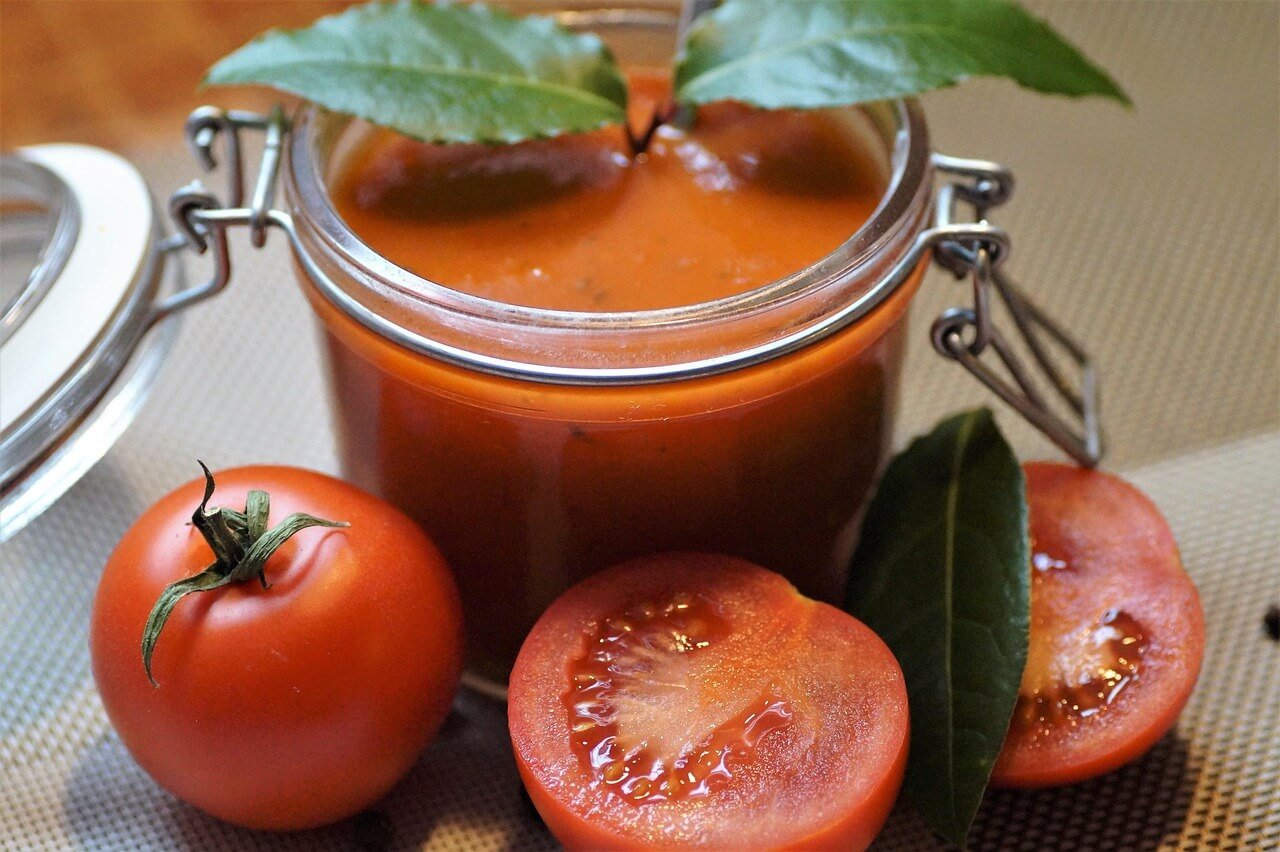
The Safest Way to Freeze Soup in Glass Jars, Step by Step
The safest method is to cool the soup quickly, portion it into jars filled to the correct line, chill it in the refrigerator, freeze it with the lid loose, seal and label once solid, and thaw it in the refrigerator rather than in hot water.
- Cool the soup in the pot in an ice bath, below 21 °C within two hours and below 5 °C before freezing.
- Inspect every jar for chips, cracks, a fused base disc and a clean thread.
- Fill to the calculated headspace and wipe the rim so no soup freezes into the closure.
- Chill the filled jars for two to four hours to remove most of the thermal load.
- Freeze with the lid ajar, spaced so air circulates around each jar.
- Seal once solid, usually after eight to twelve hours for a 500 ml jar.
- Label with contents and date, keep older jars at the front, and hold at -18 °C or below.
- Thaw in the refrigerator, in a bowl to catch condensation.
Cooling the Soup Fast and Safely
Speed matters, because the zone between 5 °C and 60 °C is where bacterial growth happens. Dividing a large pot into shallow containers multiplies surface area and can cut cooling time by more than half. Only then should the jars go into the freezer, since a hot jar warms everything around it and loads the glass with stress.
How Long Frozen Soup Keeps Its Quality
| Soup type | Freezer at -18 °C | Notes |
| Broth and clear stock | 3 to 4 months | Best in the first 2 months |
| Vegetable and bean soup | 2 to 3 months | Texture holds well |
| Tomato-based soup | 2 to 3 months | Acidity can affect unlacquered lids |
| Meat and poultry soup | 2 to 3 months | Cool fully before freezing |
| Soup with pasta or rice | 1 month maximum | Starch keeps absorbing liquid |
The USDA Food Safety and Inspection Service notes that food held continuously at -18 °C, which is 0 °F, stays safe indefinitely, and that published limits refer to quality rather than safety. Guidance from FoodSafety.gov puts soups and stews at two to three months for best quality, with refrigeration limited to three to four days.
Which Soups Freeze Well and Which Do Not
Broth-based, bean, lentil, tomato and pureed vegetable soups freeze almost perfectly, soups built on dairy, pasta, rice, potato or gelatin usually need those components held back and added at reheating, and dairy-thickened chowders and delicate bisques are better eaten fresh.
| Freezes cleanly | Needs adjustment | Avoid freezing |
| Chicken or vegetable broth | Cream of mushroom | Clam chowder |
| Minestrone without pasta | Chicken noodle with pasta in | Lobster bisque |
| Lentil and split pea | Potato and leek | Egg-drop soup |
| Tomato and roasted pepper | Rice soup | Hollandaise-thickened soups |
| Bean puree | Seafood soup with delicate fish | Congee and rice porridge |
For kitchens running large batches of stock, large glass jars let you freeze in the same vessel you portion from, removing a transfer step and a washing cycle.
Fixing Dairy, Pasta, Potato, and Rice
These ingredients keep changing after freezing. Dairy emulsions break when ice crystals disrupt the fat structure, pasta and rice keep absorbing liquid, and potatoes go grainy because their cell walls rupture. The reliable fix is deconstruction: freeze the base, then add the fragile component at reheating.
- Dairy: stir cream or milk in once the soup is hot, or finish with a cornflour slurry.
- Pasta and rice: cook to just under al dente, freeze separately, and combine in the bowl.
- Potato: undercook slightly and cut larger, or replace part of it with celeriac.
- Seafood: add shellfish raw or barely cooked at reheating rather than freezing it in the soup.
Seasoning and Texture Changes After Thawing
Freezing dulls aromatics and concentrates salt, because water is locked into ice while the remaining liquid phase turns saltier. Season a soup intended for freezing slightly under target, then correct after thawing. Fresh herbs, citrus and finishing oils belong at the end, since their volatile compounds do not survive a freeze cycle intact. Starch-thickened soups often loosen, so keep a little slurry on hand to restore body.
Thawing and Reheating Without Cracking the Jar
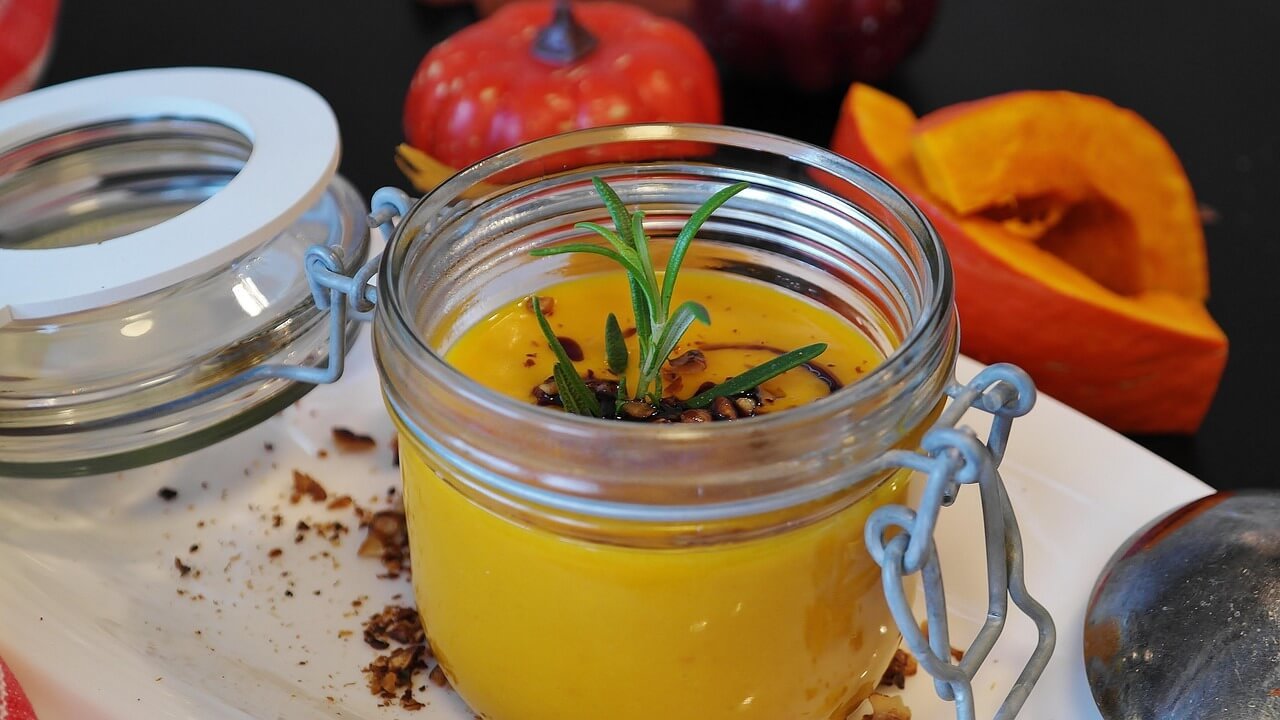
Thaw frozen soup in the refrigerator overnight, or stand the jar in cold water if you are in a hurry, and never place a frozen jar in hot water, on a hot burner, in an oven or in an air fryer, because the temperature difference across the wall is what causes it to fail.
Change the temperature slowly and evenly. A frozen jar moved to a refrigerator experiences a gentle gradient; the same jar dropped into simmering water experiences a violent one, with the outside expanding while the inside still contracts.
| Volume | Refrigerator | Cold water bath | Room temperature |
| 200 ml | 4 to 6 hours | 45 to 60 minutes | 2 to 3 hours |
| 350 ml | 6 to 8 hours | 1 to 1.5 hours | 3 to 4 hours |
| 500 ml | 8 to 12 hours | 1.5 to 2 hours | 4 to 6 hours |
| 1000 ml | 18 to 24 hours | 3 to 4 hours | Not advisable |
Change the cold water bath every 30 minutes. It stays far colder than the jar needs to reach, and it keeps the gradient gentle.
Reheating In or Out of the Jar
If the jar is rated for microwave use and the lid is not metal, reheat in short bursts with stirring between them, which evens out the temperature inside the glass as well as in the soup. Otherwise decant into a saucepan. Never reheat from frozen in a dry oven, because the air heats unevenly and the base becomes far hotter than the rim.
What Never to Do With a Frozen Glass Jar
- Run hot tap water over a frozen jar, or refill it with hot liquid.
- Place it on a gas burner, induction hob, oven, air fryer or pressure cooker.
- Put a frozen jar straight into a dishwasher, or lever out contents with a knife.
Troubleshooting: Five Problems and Their Fixes
Nearly every freezer failure with glass jars traces back to one of five causes, and each has a preventive fix that costs nothing more than a minute of attention.
| Problem | Likely cause | Fix |
| Vertical crack in the wall | Overfilled jar, insufficient headspace | Fill to the calculated line |
| Base separates from the jar | Fused base disc under expansion load | Retire those jars from liquid freezing |
| Lid will not come off | Vacuum from contraction, or soup frozen into the thread | Wipe the thread before freezing |
| Soup overflows while freezing | Filled into the shoulder or neck | Stop at the widest point |
| Pale, dry surface on the soup | Freezer burn from a loose lid or long storage | Seal once solid, rotate stock |
Choosing the Right Jars at Scale
For meal-prep kitchens, delis and retail soup brands, the right jar is defined by measurable specifications rather than appearance, and confirming those specifications before ordering separates a reliable freezing process from a costly failure rate.
- Mouth diameter. A wide opening fills faster, cleans more easily and releases a frozen block without levering, and it reduces the shoulder taper that causes cracks.
- Wall thickness uniformity. Ask for the tolerance, not the nominal thickness. Variation across a wall is the biggest driver of thermal failures.
- Thermal shock resistance. The temperature differential a jar survives without cracking, specified across the full freezer to hot-water range.
- Closure system. Gasket material must stay flexible below -10 °C, and lid coatings must resist acidic soup.
- Stacking strength and capacity tolerance. Both affect how efficiently a pallet or freezer shelf is used, and how consistent portion weights are.
| Use case | Capacity | Format priority |
| Retail single-serve soup | 350 to 500 ml | Wide mouth, straight sides, premium closure |
| Meal-prep subscription | 500 to 750 ml | Stackable, freezer and microwave rated |
| Deli and takeaway | 750 to 1000 ml | Impact resistance, easy-clean mouth |
| Central kitchen batch | 1000 to 1500 ml | Straight sides, high thermal shock rating |
For bulk buying, wide mouth glass jars simplify filling and emptying across all four formats.
FAQ
Can I freeze soup in a jar with a metal lid?
Yes, provided the lid stays loose until the soup is solid and the interior coating is intact. Acidic soups such as tomato or vinegar-based broth can attack exposed metal over repeated cycles, so replace lids that show pitting or rust. A plastic screw cap with a low-temperature gasket is more forgiving for very acidic recipes.
Is it safe to refreeze soup that has already thawed?
Only if it thawed in the refrigerator and was reheated to a full boil before being cooled and frozen again. Each cycle costs texture and flavour, and repeated thawing at room temperature is where the real risk sits. If a jar has been out for more than two hours, discard it.
Do I need to sterilize jars before freezing soup?
No. Sterilization is a canning requirement, where a sealed jar must stay shelf-stable at room temperature. Freezing stops bacterial growth rather than eliminating it, so a jar that is clean, dry and free of detergent residue is enough. Sterilizing does no harm, but it is no substitute for fast cooling and a correct freezer temperature.