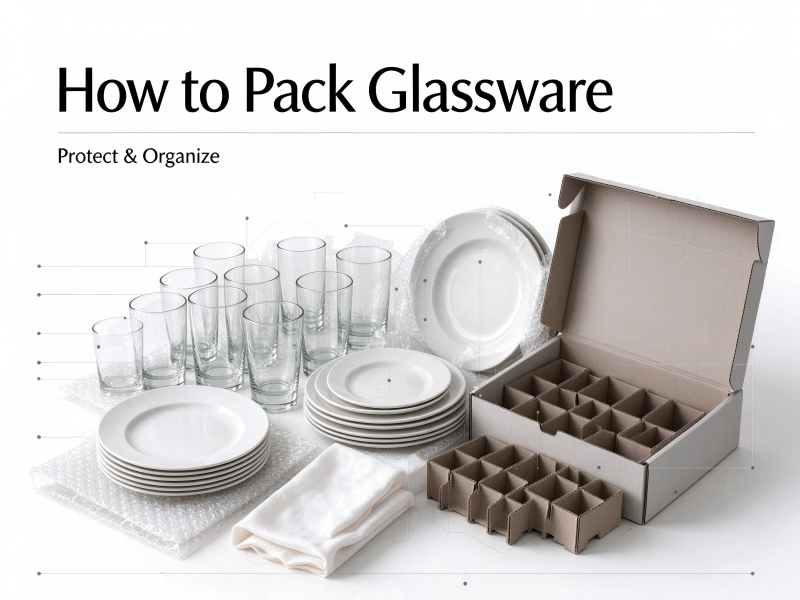
Most people sort their bins on autopilot. A glass bottle goes in the recycling, a yogurt tub gets a quick rinse, and the job is done. Then a cabinet full of old tumblers or a chipped casserole dish raises a harder question: does this go in too? The confusion is understandable. Glass bottles and jars sit inside a well-established recycling loop, and our glass jars recycling guide covers that side of the stream. Glassware, though, tells a different story.
No—in most cases, glassware cannot go in your recycling bin. Curbside programs accept container glass only, which means bottles and jars. Drinking glasses, crystal, bakeware, vases, and mirrors are made from different glass with different melting points, and recyclers treat them as contaminants. Intact pieces are better off donated, sold, or reused. Broken pieces belong in your general waste, wrapped and labeled.
Here is how to tell what goes where, why the rules exist, and what to do with the glassware your bin will not take.
Can Old Glassware Go in the Recycling Bin?
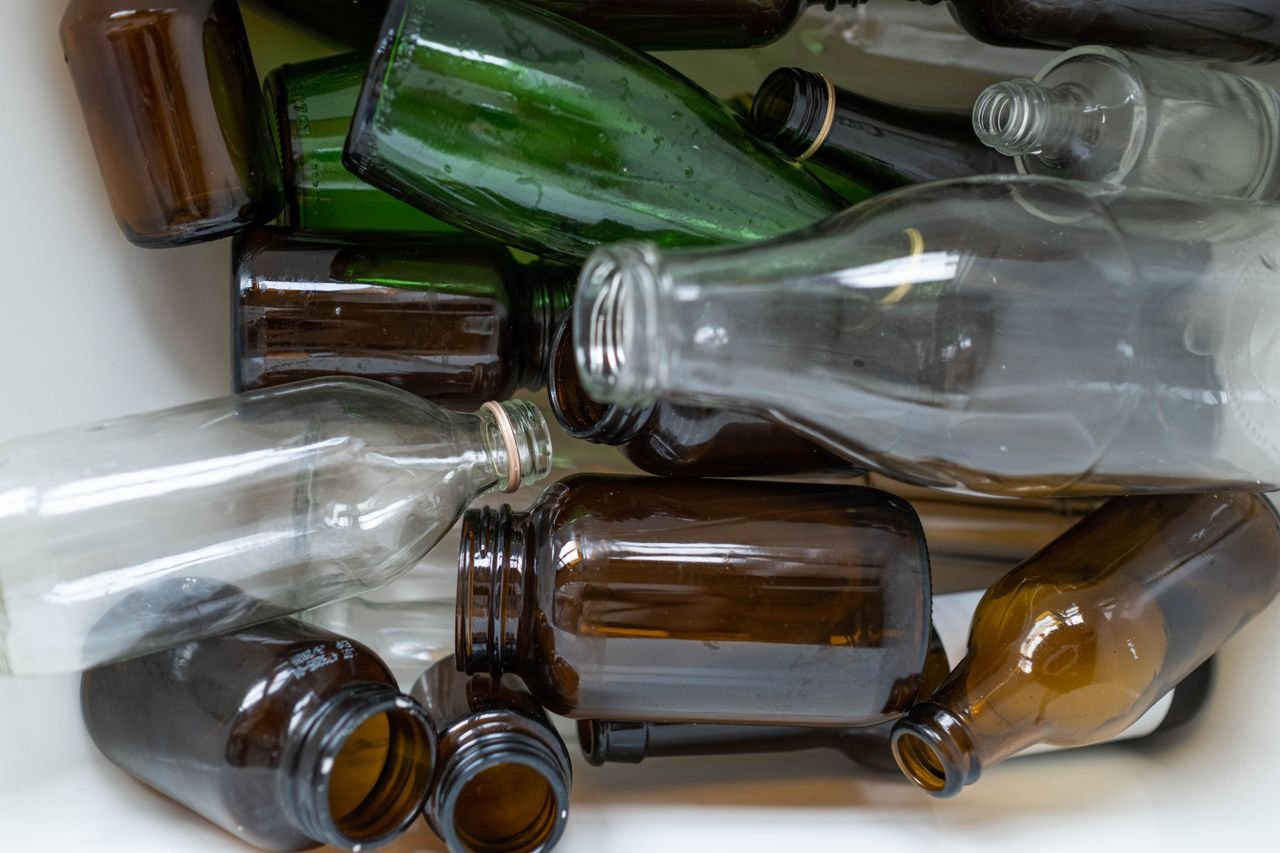
No. Almost every curbside program accepts glass bottles and jars only. Drinking glasses, bowls, bakeware, and decorative pieces fail the material specification even though they are technically glass.
Container glass is soda-lime glass made to a consistent recipe. That consistency is the whole point: a recycling plant can crush bottles and jars into cullet, melt them down, and form new containers without surprises. Glassware is not built to that recipe. Manufacturers make tumblers and wine glasses thicker for durability, temper some drinkware so it resists cracking, and use borosilicate glass for oven-safe dishes. Each of those choices changes how the glass melts, and glass that melts differently cannot ride along with container glass.
The rules are getting stricter, not looser. From 31 March 2026, councils in England must collect glass packaging as part of standard household recycling. The same government guidance explicitly lists drinking glasses, glass cookware, vases, and mirrors among the items collectors do not need to take (per the UK government’s Simpler Recycling guidance, checked 28 September 2026). If the item held food or a drink once and has a screw top or cork, it is packaging. If it is something you drink from or display, it is not.
Local programs still vary. Some accept colored bottle glass; some do not; some want lids off, others leave them on. Your council or waste hauler’s website is the only reliable reference for the packaging side. For glassware, though, the answer rarely changes: it stays out.
Why Drinking Glasses Cannot Be Recycled With Bottles and Jars
Different glass melts at a different temperature, and one incompatible piece can disrupt an entire furnace batch. That is the core reason, and it comes down to chemistry.
The Melting Point Problem
Bottle glass softens and flows within a narrow, well-controlled temperature range in a furnace. Borosilicate glass and tempered drinkware need much higher temperatures and stay thick and slow-flowing far longer. A piece that has not fully melted leaves solid lumps, called stones, in the new glass. Those stones become weak points. A bottle formed around one can crack during filling, shipping, or even on the store shelf.
Germany’s federal environment agency puts a number on the upside of clean recycling: every 10% of cullet in the melt cuts the energy needed for melting by roughly 3% (Umweltbundesamt, checked 28 September 2026). That saving only holds when the cullet is pure. Dirty cullage costs a plant more than it saves.
What One Contaminated Load Costs
Recycling authorities such as New York’s UCRRA identify heat-resistant bakeware as one of the most serious contamination threats in glass recycling, because even a single small piece can alter the viscosity of a molten batch. A rejected load does not get a partial refund. It gets pulled from the line, and sometimes the whole load goes to landfill.
Sorting facilities try to catch these pieces early. Optical sorters and manual pickers pull out cookware, ceramics, and window glass before the crusher. Every piece they catch is labor spent, and every piece they miss is a risk passed downstream. This is why a wine glass placed in the recycling “hoping for the best” does real damage even though it feels harmless.
Types of Glass That Cannot Be Recycled
If it is not a bottle or a jar, assume it stays out of the recycling bin. The table below covers the usual suspects.
| Item | Why it is excluded |
|---|---|
| Drinking glasses and tumblers | Thickened or tempered; melts at a different rate than container glass |
| Crystal and leaded glass | Lead oxide changes the melting chemistry and density. |
| Bakeware and heat-treated cookware | Borosilicate or toughened glass; needs a higher melting range |
| Mirrors and window glass | Flat glass with coatings and a different composition |
| Ceramics and porcelain | Fired clay that never melts back into container glass |
| Light bulbs | Mixed materials; handled through separate collection streams |
| Vases and decorative glass | Unknown composition, dyes, and surface treatments |
Crystal and Leaded Glass
Crystal deserves its own note because it looks so much like ordinary glassware. Traditional crystal is defined by its lead oxide content, which makes the piece heavier, brighter, and more resonant when tapped. That same lead content is exactly why crystal is excluded wherever container glass is collected. Lead changes how the glass melts and what it can safely become afterward.
The tricky part is that many people cannot tell the two apart by eye. If you have inherited a cabinet of stemware and are not sure what you are holding, our crystal vs. glass comparison walks through the differences. Either way, the recycling answer is the same: crystal stays out of the bin.
How Do I Dispose of Old Glassware?
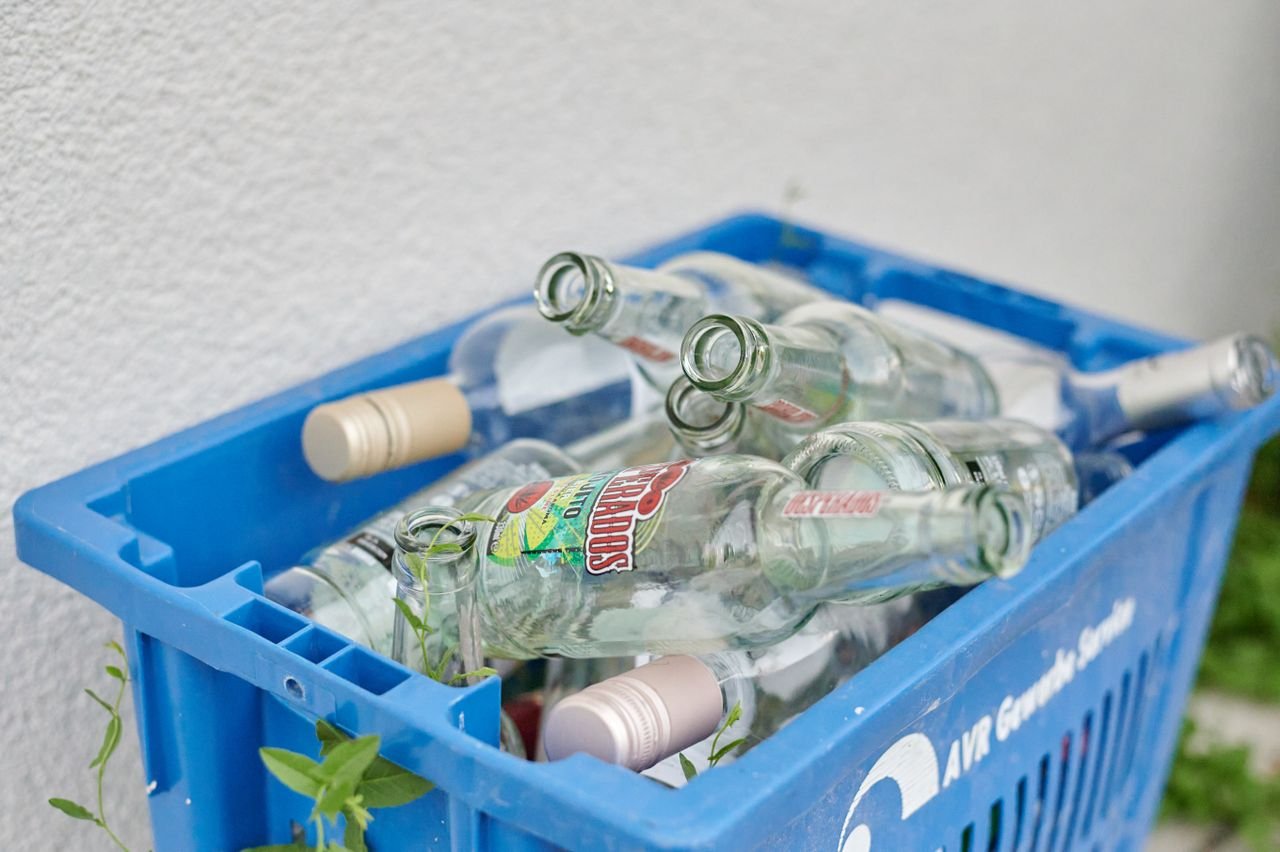
Intact pieces should be donated, sold, or repurposed. Broken pieces should be wrapped and placed in general waste. The condition of the glass decides the route.
Getting Rid of Broken Glass Safely
Broken drinkware is the most common disposal case, and it is simple if you follow a fixed sequence:
- Wrap the shards in newspaper or an old cloth so no edges poke through.
- Place the bundle in a rigid box, tin, or plastic container.
- Tape it closed and label it “broken glass.”
- Put it in your general waste bin, never the recycling.
- For large pieces such as mirror sheets or panes, check your council’s bulky waste or drop-off rules first.
Never drop loose shards directly into a bin bag. Waste collectors handle bags by hand more often than people assume, and loose glass is a genuine injury risk.
Can I Put Glass in My Garbage?
Yes, and for unusable glassware it is usually the correct route. Most municipal systems expect broken or unusable household glass in general waste because the recycling stream cannot process it. A few areas ask residents to bring broken glass to a staffed recycling center instead, so it is worth one quick check of your local rules. What is never correct: loose glass in the recycling bin or unwrapped glass in any bag.
Better Options Before the Bin: Donate, Sell, Reuse
Glassware does not wear out the way plastic does, so most intact pieces still have years of use left in them. Disposal should be the last resort, not the default.
Donate or Sell
Thrift stores and charity shops accept everyday glassware, and complete glassware sets move much faster than mismatched singles. If you have eight matching water glasses, bundle them together before dropping them off. Vintage and colored pieces can sell online, and collectors actively hunt for certain mid-century patterns.
There is a commercial route too. Event planners and caterers often source secondhand stock, so it is worth contacting glassware rental companies in your region if you own dozens of matching champagne flutes or tumblers. What looks like a surplus in your kitchen cabinet is inventory to someone else.
Reuse at Home
Old glasses make capable glassware storage containers: cotton pads in the bathroom, pens on the desk, and wooden spoons by the stove. A dedicated glassware cabinet turns a growing collection into a display instead of clutter, and single odd glasses hold flowers, herbs, cuttings, or candle leftovers. None of these uses cost anything, and each one delays a disposal decision that did not need to happen yet.
Upcycling at a Glassware Studio
Many cities now have glassware studios running cutting, slumping, and fusing workshops, where old bottles and drinkware are remade into new pieces. For a chipped heirloom with sentimental value, this is often the most satisfying route. The piece becomes something new instead of a wrapped box at the curb.
How Glass Recycling Actually Works
Container glass recycles endlessly without losing quality, which is exactly why the stream has to stay clean. Understanding the loop makes the restrictions above easier to accept.
Recycling plants crush collected bottles and jars into cullet, then melt the cullet together with raw materials such as sand, soda ash, and limestone. Because cullet melts at a lower temperature than virgin raw materials, every percentage point in the furnace saves energy. Industry data puts the savings at 2.5–3% for every 10% of cullet used, and a recycled bottle can go from your bin back to a store shelf in as little as 30 days (per the Glass Packaging Institute, checked 28 September 2026). Glass is also infinitely recyclable: it does not degrade the way paper fibers or plastics do.
The rates tell an interesting story. The United States recycles roughly 31% of its glass (US EPA data, 2018), while Germany’s packaging law has required a 90% recycling rate for glass since 2022 (Umweltbundesamt, checked 28 September 2026). The gap is not about technology. It is about clean, sorted input, which is the same reason your old wine glass cannot join the loop.
When replacement does become necessary, durability matters more than ever. Pieces made from borosilicate glass cups handle thermal shock and daily wear far better than standard drinkware, which means fewer chips, fewer replacements, and less waste over the years. For businesses buying glassware in volume, working with a manufacturer that controls its glass composition is the simplest way to get that durability consistently. You can contact us for material specifications, customization options, and quotations.
FAQ
Is tempered glass recyclable?
No. Tempered glass is heat-treated to be several times stronger than standard glass, and that treatment changes its internal structure. It cannot be remelted with container glass, and when it breaks, it shatters into small blunt pieces. Tempered glass goes in general waste, wrapped, or to a specialized processor if your area has one.
Can I recycle glassware at a drop-off center?
Sometimes. Staffed household waste recycling centers often have separate skips for hard glass, ceramics, and flat glass that curbside programs reject. Much of it is crushed for use as a road base or construction aggregate rather than made into new glassware. Check your local center’s list before loading the car, since acceptance varies widely.
How can I tell if my glassware is crystal?
Weight is the first clue: crystal is noticeably heavier than ordinary glass of the same size. Tap it gently and listen for a clear, ringing chime rather than a dull click. Crystal also sparkles more because of how it refracts light. The test matters less for recycling than for resale value, since crystal should be priced and sold rather than binned.