Highball glasses turn up on almost every home bar and behind most bar counters. They are the tall, straight-sided glasses people reach for when they want something cold, easy to drink, and built around a generous pour of ice. Most buyers meet them as part of glass cup sets rather than as a single glass, which is a big reason the highball ends up as the most-used shape in a collection and the first one to need replacing.
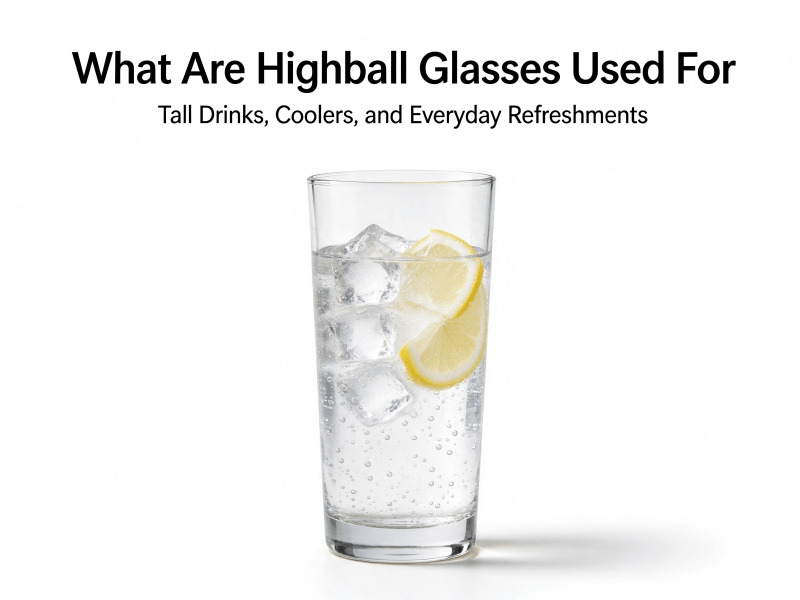
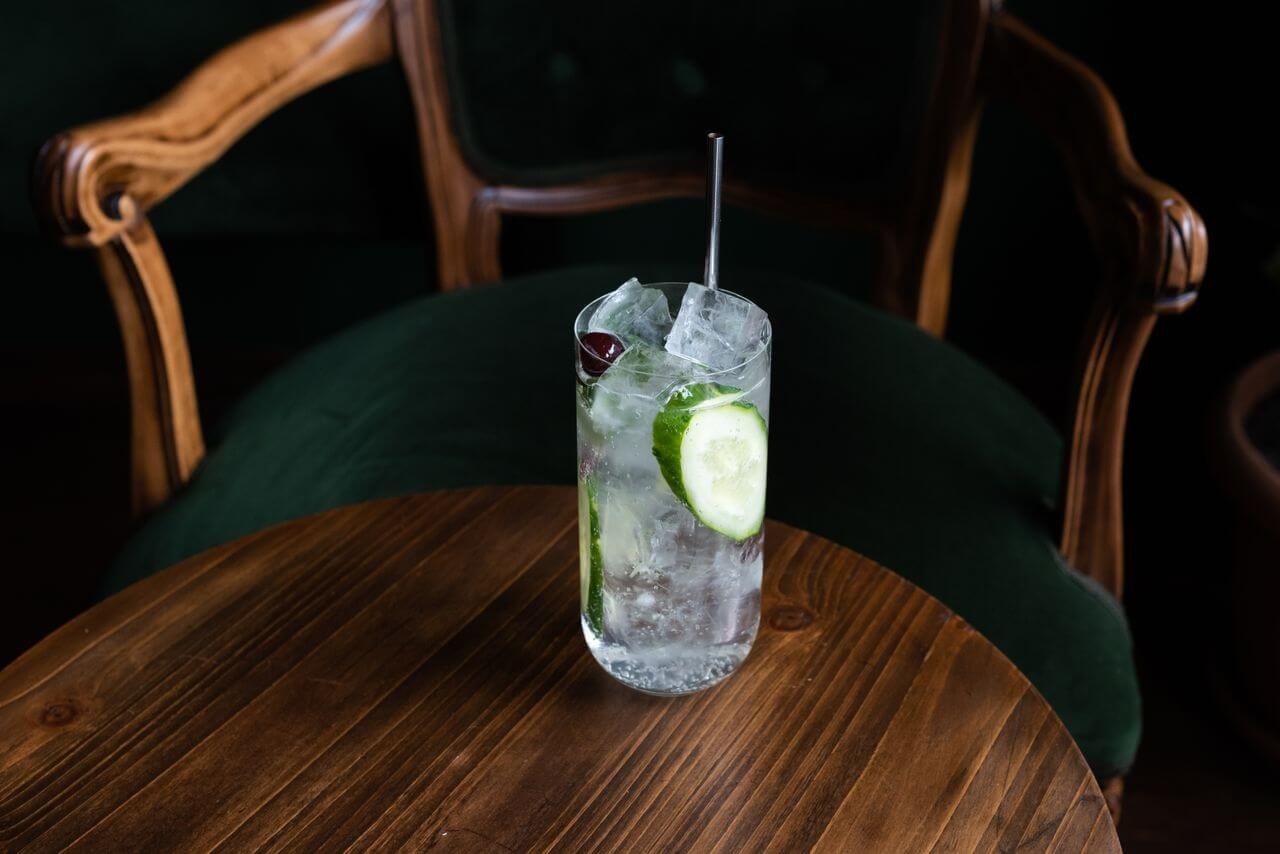
A highball glass is a tall, narrow, straight-sided glass that holds roughly 8 to 12 ounces, or 240 to 350 milliliters. It is built for long drinks: a small measure of spirit topped with a much larger pour of a carbonated or non-alcoholic mixer over ice, such as a gin and tonic, a whiskey highball, or a rum and cola. The height leaves room for ice and mixer, and the narrow mouth helps the drink stay fizzy for longer.
The rest of this guide covers the drinks that suit a highball glass, why the shape works, how it differs from a Collins glass and an old-fashioned glass, and how to pick and store a set.
What drinks go in a highball glass
Any drink built from a spirit and a larger volume of mixer over ice works in a highball glass. The most common are gin and tonic, whiskey and soda, vodka soda, and rum and cola. The glass also handles fruit-forward and layered cocktails and, despite the name, plain water, iced tea, and soft drinks.
Classic spirit-and-mixer highballs
These drinks are simple by design: one spirit, one mixer, plenty of ice, and often a single garnish. They lean on the height of the glass to stay cold and carbonated rather than on any complex technique.
The gin and tonic, the whiskey highball, the vodka soda, the rum and cola, and the dark rum and ginger beer serve are all standard examples. The International Bartenders Association lists several of these among its official cocktails and specifies a highball or tall tumbler for many of them, which says a lot about how settled the pairing is. The full set is on the IBA official cocktail list.
| Drink | Spirit | Mixer | Typical serve |
|---|---|---|---|
| Gin and tonic | Gin | Tonic water | 8-12 oz, cubed ice, lime |
| Whiskey highball | Whiskey | Soda water | 8-12 oz, cubed ice, lemon twist |
| Vodka soda | Vodka | Soda water | 8-12 oz, cubed ice, lime |
| Rum and cola | White or dark rum | Cola | 10-12 oz, cubed ice, lime |
| Dark rum and ginger beer | Dark rum | Ginger beer | 10-12 oz, cubed ice, lime |
A round of ice-cold highballs is quick to build once the glass is stocked, since there is no shaking or straining and everything goes straight into the glass.
Cocktails built tall
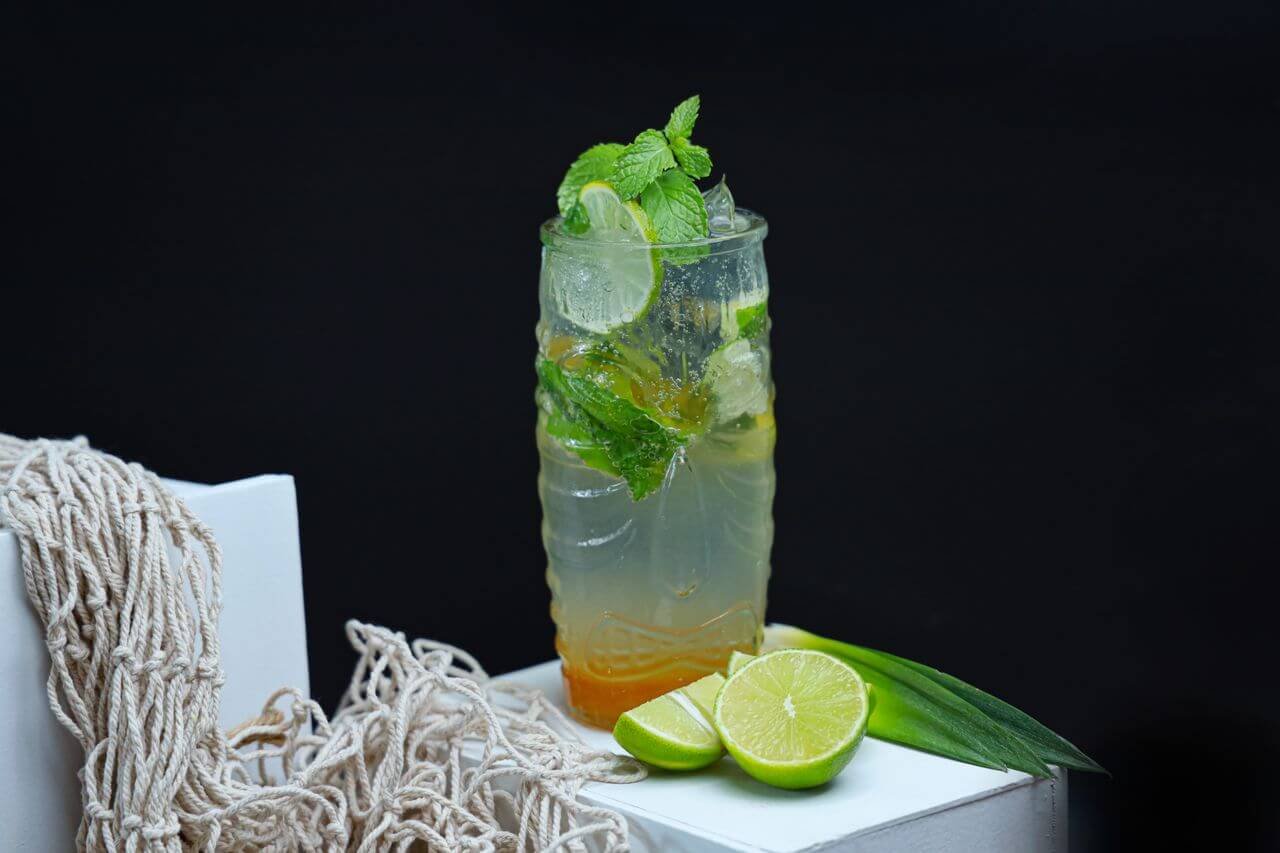
Some cocktails need more room than a two-ingredient highball. They carry muddled herbs, fruit juice, syrups, or a layered pour, and a tall column of ice keeps all of it cold without thinning the drink too fast.
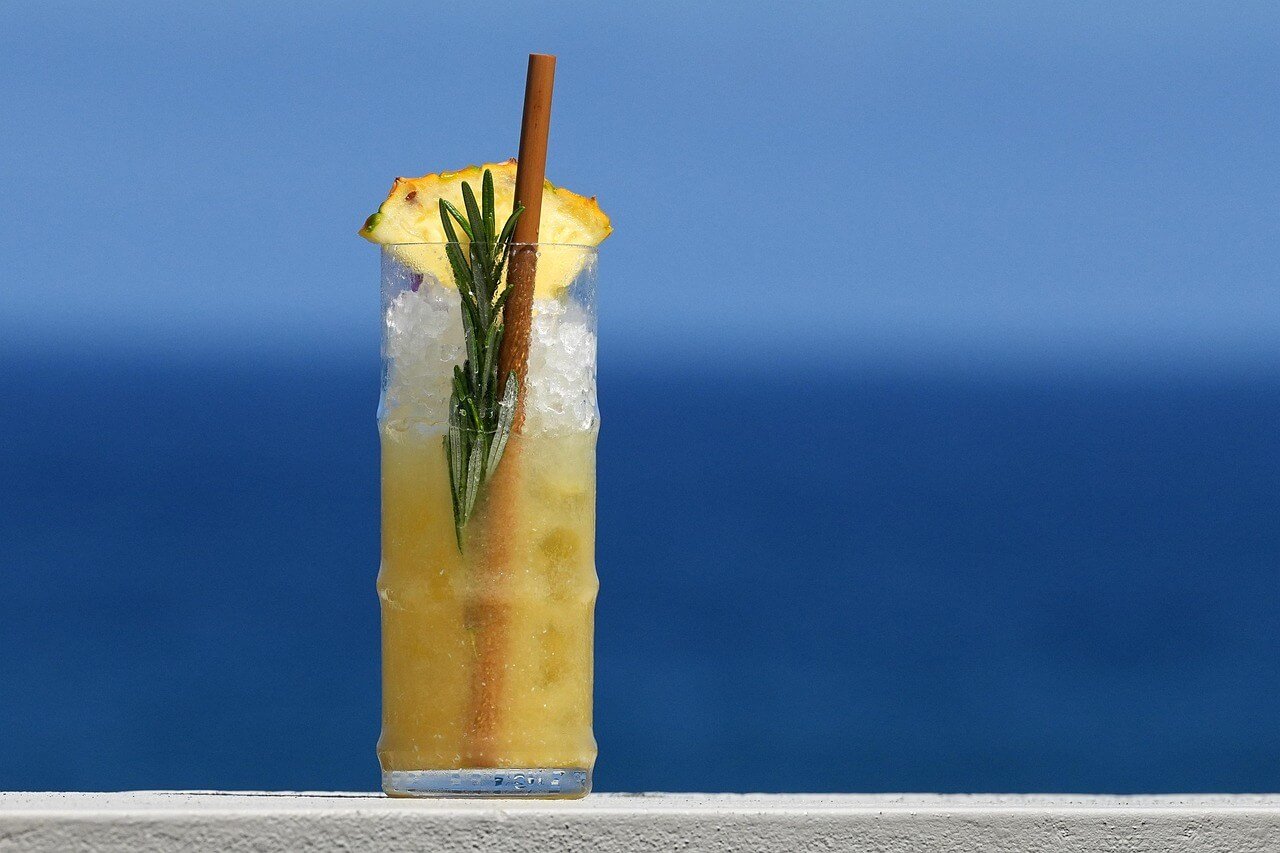
The mojito fills the glass with crushed ice and fresh mint. The Paloma mixes tequila with grapefruit soda. The dark rum and ginger beer serve layers; the dark spirit on top of the mixer for contrast. The Bloody Mary leans on tomato juice and seasoning, the tequila sunrise uses grenadine for a rising band of color, and a Long Island iced tea stacks several spirits under a top of cola. In each case the extra height gives the drink space to hold its garnish and its ice.
Water, soft drinks, and non-alcoholic beverages
A highball glass is not limited to alcohol. Because the shape is comfortable to hold and holds a decent volume, it works well for everyday drinks that people would otherwise pour into whatever glass is nearest.
Water, sparkling water with a slice of citrus, iced tea, lemonade, and juice all fit in a highball glass. The same goes for mocktails and soft drinks. A Shirley Temple, an Arnold Palmer, and a virgin mojito all look and drink better in a tall glass than in a short one. For anyone who wants a single glass type that covers both drinking and entertaining, this is the practical answer to whether you can use a highball glass for water. You can, and it is one of the better glasses for it.
Why the tall, narrow shape matters
The shape is functional, not decorative. A tall, narrow glass with a smaller opening slows carbonation loss, holds ice in an efficient column that limits dilution, and keeps the drink colder for longer by keeping your hand away from the liquid.
Keeping carbonation in
Carbon dioxide leaves a drink from its surface, and the rate depends on how much surface is exposed to the air. A wide mouth means a wide surface, which means fizz that fades in minutes. A highball glass narrows the opening and raises the liquid column, so less area is exposed. Soft drinks, tonic, ginger beer, and soda water all stay lively noticeably longer in a highball than in a wide tumbler.
Managing ice and dilution
The tall walls let you stack more ice in a smaller footprint. More ice chills the drink faster and, counter-intuitively, slows dilution: when the glass is well packed with ice, each cube melts more slowly than when one or two float in a large volume of liquid. The narrow column also keeps the ice together instead of spreading it thin across a wide base, so the drink stays cold from the first sip to the last.
Temperature, grip, and presentation
A highball glass usually has a slightly thicker base, which adds stability and keeps the warmth of your hand away from the chilled liquid. Holding the glass low, near the base, keeps fingerprints off the part that meets your mouth and stops your palm from heating the drink. The clear, straight sides also show what is in the glass: the color of the mixer, a band of grenadine, or a tall garnish of mint.
Highball glass vs. Collins glass vs. old-fashioned glass
The three are easy to mix up because they are all tumblers. The Collins glass is taller and narrower than a highball, the old-fashioned or rocks glass is shorter and wider, and each one is built for a different balance of spirit to mixer.
Highball vs. Collins glass
A Collins glass is the highball’s taller, slimmer relative. Where a highball holds about 8 to 12 ounces, a Collins glass holds about 10 to 14 ounces and stands higher with a narrower body. The extra height leaves room for a bigger pour of mixer and more ice, which is why a Tom Collins or a tall mojito goes into a Collins rather than a highball. In most bars the two are used almost interchangeably, and for home use the difference rarely matters.
Highball vs. old-fashioned glass
An old-fashioned glass, also called a rocks glass or a lowball, is short and wide and holds roughly 6 to 10 ounces. It suits spirit-forward drinks served with a large ice cube or two and only a splash of mixer, such as an old-fashioned or a negroni. A highball is the opposite arrangement: less spirit, more mixer, and more ice. A gin and tonic in a rocks glass feels cramped and goes flat quickly, while an old-fashioned in a highball turns thin and over-iced.
| Feature | Highball glass | Collins glass | Old-fashioned (rock) glass |
|---|---|---|---|
| Typical capacity | 8-12 oz (240-350 ml) | 10-14 oz (300-410 ml) | 6-10 oz (180-300 ml) |
| Shape | Tall, straight-sided | Taller and narrower | Short and wide |
| Best for | Gin and tonic, whiskey soda | Tom Collins, mojito | Old-fashioned Negroni |
| Key advantage | All-round versatility | Preserving carbonation | Muddling and aroma |
How to choose and look after highball glasses
Match the size to how you drink, pick a glass type that suits daily use, buy in sets rather than singles, and store them so they stay chip-free. For commercial use, weigh buying against renting.
Size, glass type, and rim
Most highball glasses fall between 8 and 12 ounces. Smaller glasses of 8 to 10 ounces are right for two-ingredient spirit and soda drinks, while 10 to 12 ounces suits mocktails, mojitos, and larger serves. Glass type matters for durability. Soda-lime glass is the common, economical choice, while borosilicate glass resists thermal shock better and is lighter for its strength. Lead-free glass is standard for anything that touches a drink. A thin, smooth rim tends to feel cleaner on the lip than a thick, rolled one.
Buying in sets and how many you need
Highball glasses are almost always sold in sets of four, six, or twelve, and buying the same line in multiples keeps replacements matching. A household that entertains occasionally needs about six, while larger dinners and small gatherings call for eight or twelve, plus a few spares for breakage. Restaurants and bars usually keep a deeper stock, because glasses wear out at the rim over time, and a busy service can lose several in a week. For commercial buyers, ordering a consistent size across a large glassware set range simplifies restocking and keeps table settings uniform.
Sourcing for bars, events, and rentals
For a bar or a one-off event, the choice is often buy versus rent. A cafe that serves long drinks daily will usually buy its own highball glasses, because the cost is recovered over repeated use and the glassware matches across service. A venue hosting a single large event often rents instead, since glassware rental covers delivery, collection, and washing and removes the need to store hundreds of glasses between events. Companies that want a specific shape, thickness, or printed logo can work with glassware studios or a manufacturer to produce a custom run. Custom orders usually start with a sample, so it helps to confirm the capacity, wall thickness, and rim finish before committing to a full production run.
Storage and care
Wash highball glasses soon after use and store them upright with a little space between them. Good glassware storage keeps them clear and chip-free for years. Most everyday highball glasses are dishwasher safe on a gentle cycle, but hand washing with warm water and a soft brush avoids the cloudiness that builds over time from detergent and hard water. Store glasses upright rather than stacked, and avoid nesting one inside another, because the rim of one glass can chip against the base of the next.
A cabinet with a little vertical clearance beats a crowded shelf, and a rack or a padded liner reduces movement. For bar stock and larger collections, dedicated glassware cabinets and protective glassware storage containers cut breakage during transport and between services. Dry glasses fully before putting them away so water spots do not set. Slightly cloudy glass cannot be polished back to clarity, so it is worth replacing pieces once they start to look dull.
Frequently asked questions
Can you use a highball glass for hot drinks?
Standard soda-lime highball glasses are not made for hot drinks and can crack from thermal shock when hot liquid meets cold glass. Borosilicate glass handles temperature changes far better, but for coffee, tea, or a hot toddy, a mug or an Irish coffee glass is the safer choice.
Should you chill highball glasses before serving?
Chilling helps if you want a cold drink to stay cold. Leave the glasses in the fridge for 20 to 30 minutes, or fill them with ice and water while you mix, so the ice in the drink melts more slowly once it is poured. Do not put an ordinary highball glass in the freezer unless it is marked freezer safe.
How full should a highball glass be filled?
Fill the glass most of the way with ice first, then add the spirit and top up with the mixer, leaving about half an inch to an inch below the rim. That gap leaves room for the garnish and stops the drink spilling when it is stirred or carried. Overfilling also wastes carbonation, because the bubbles have nowhere to settle.