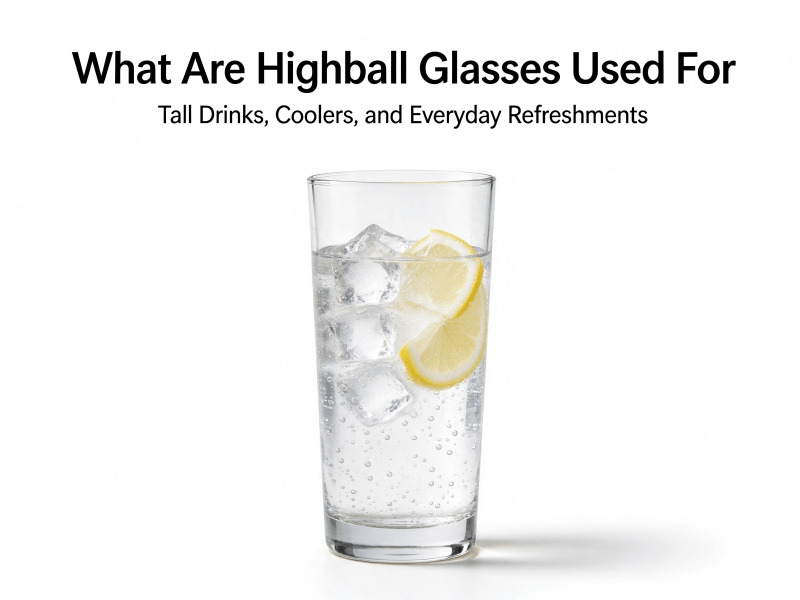
Ordering the wrong glass size is a costly mistake for bars, restaurants, and event businesses. A drink built for a tall glass looks thin in a short one, and a carbonated drink served in a wide bowl loses its fizz before the second sip. Capacity also matters for buyers, because commercial glassware is ordered by the case.
A standard highball glass holds 8 to 12 fluid ounces (240 to 350 ml). The classic size measures about 3 inches in diameter and 6 inches tall, which leaves room for 2 ounces of spirit, 4 to 6 ounces of mixer, and a full load of ice. Some modern versions hold 13 or 14 ounces, but 8 to 12 ounces remains the reference range behind most bar programs.
This guide breaks down the exact highball sizes, compares highball glasses with Collins, rocks, and pint glasses, and explains what to check before ordering glass cup sets for a business.
What is the typical size of a highball glass?
A typical highball glass holds 8 to 12 fluid ounces (240 to 350 ml), with the most common factory sizes landing at 8, 10, 11, and 12 ounces.
The highball belongs to the tall glass family, a group of straight-sided tumblers developed for carbonated mixed drinks. Tall glasses appeared in the 1870s, when bartenders needed a shape that kept fizz alive longer. The larger Collins glass and the small fizz glass came first, and the highball arrived in the 1890s as the in-between size. The name itself comes from American railroad slang: a “highball” signal meant “proceed at full speed,” and the term migrated into bars as shorthand for a quick tall drink.
In practice, the numbers work out like this:
- 8 oz (240 ml): the compact end, common in venues that serve smaller pours
- 10 to 12 oz (300 to 350 ml): the standard range for home sets and most bar programs
- 13 to 14 oz (380 to 410 ml): a growing commercial size for ice-heavy modern serves
A glass in the 8- to 12-ounce range stands roughly 3 inches (7.5 cm) wide and 5.5 to 6 inches (14 to 15 cm) tall. That proportion matters as much as the number itself, because the narrow column is what keeps a mixed drink cold and carbonated.
Capacity listings usually refer to total volume filled to the brim, and the usable volume is smaller once ice takes up space. A 12-ounce glass holds a full iced drink with roughly 9 to 10 ounces of liquid, which is why buyers should size up rather than match the finished drink volume exactly.
Why modern highball glasses hold 12 to 14 oz
The historical standard was 8 to 12 ounces, but walk into a hospitality supply showroom today and many tall glasses hold 13 or 14. The reason is simple: drinks got bigger. A mid-century gin and tonic followed a 1:2 ratio of spirit to mixer over a few ice cubes. The modern version runs 1:3 or 1:4 over a full glass of ice, which produces a 10- to 12-ounce finished drink before any headroom.
That arithmetic explains the drift. Two ounces of spirit, six ounces of mixer, and a generous portion of ice need at least a 12-ounce glass. Most commercial glassware now defaults to 12 to 14 ounces so the drink fits without overflowing and the garnish still sits above the rim. For buyers, the practical takeaway is that both ranges are correct. The classic 8 to 12 definition covers the traditional highball, while 12 to 14 ounces suits venues pouring larger, ice-heavy drinks.
Highball vs. Collins vs. rocks vs. pint glass
A highball glass holds 8 to 12 oz, a Collins glass holds 10 to 14 oz and is taller and narrower, a rocks glass holds 6 to 10 oz and is short and wide, and a pint glass holds 16 to 20 oz.
These four glasses cover most of what a bar serves, and suppliers use the labels loosely. Here is how they actually differ:
| Glass type | Shape | Typical capacity | Common drinks | Best use |
|---|---|---|---|---|
| Highball | Tall, straight, medium width | 8 to 12 oz | Gin and tonic, whiskey highball, rum and coke | Everyday spirit-and-mixer drinks |
| Collins | Taller and narrower | 10 to 14 oz | Tom Collins, paloma, long sparkling drinks | Drinks with extra mixer |
| Rocks (old-fashioned) | Short and wide | 6 to 10 oz | Old-fashioned, Negroni, neat whiskey | Spirit-forward serves |
| Pint | Tall and tapered | 16 to 20 oz | Beer, water, oversized mixed drinks | High-volume or substitute service |
The overlap between the highball and Collins is real: anything in the 10 to 12 ounce range fits either name, and most bartenders reach for whichever tall glass is clean. The rocks’ glass is the genuinely different one. Its wide mouth favors aroma over carbonation, which suits whiskey served over a large cube rather than a tall fizzy drink.
Is a pint glass 16 or 20 oz?
Both answers are correct, depending on where you are. A US pint glass holds 16 fluid ounces (about 473 ml), while a UK imperial pint holds 20 fluid ounces (about 568 ml). Many pint glasses sold internationally are marked on both lines.
Pint glasses also double as tall glass substitutes. In busy bars, a 16-ounce pint is often used when dedicated highballs run out, and it works fine for a large mixed drink. The tradeoff is presentation and carbonation: a pint is wider at the rim, so bubbles escape faster than they do from a narrow highball.
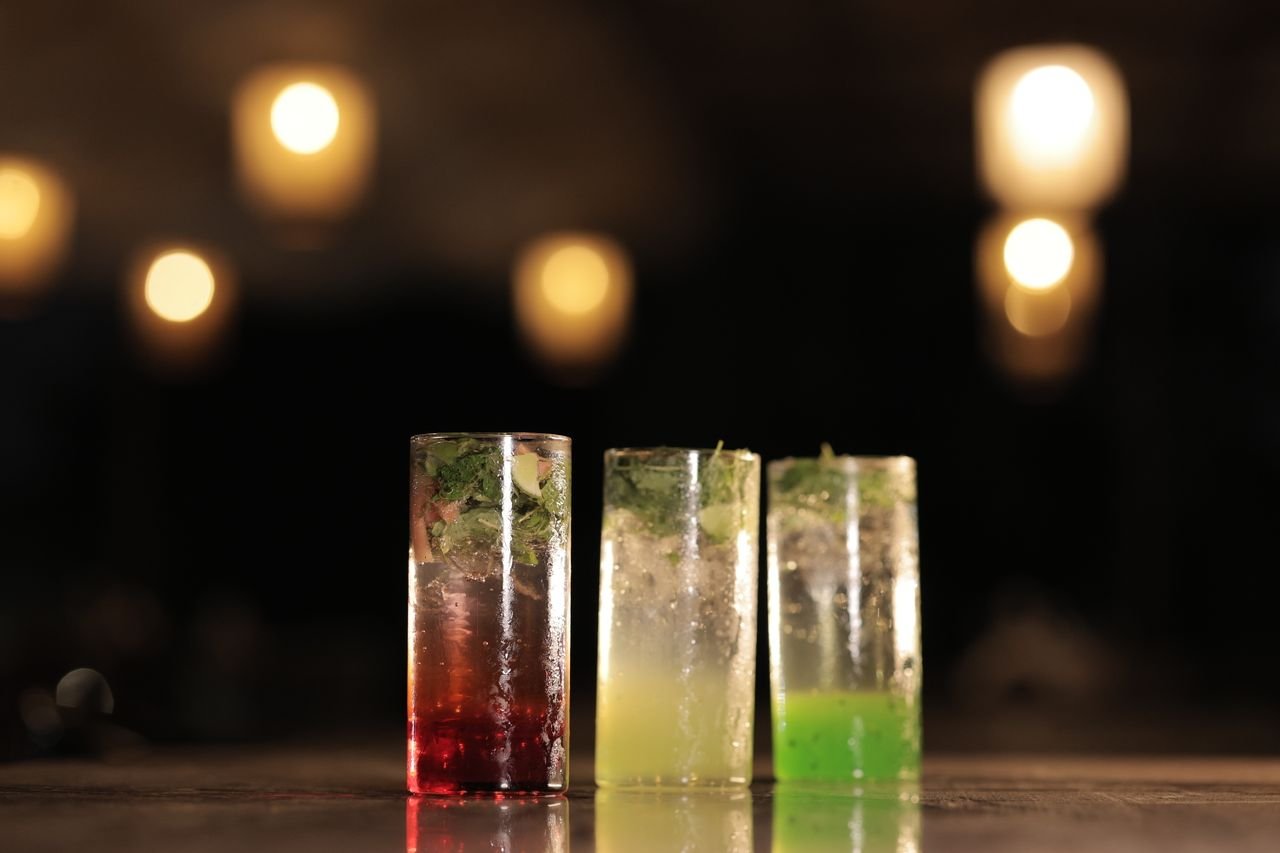
Common drinking glass sizes chart
Common drinking glasses range from a 1- to 2-ounce shot glass up to a 16- to 20-ounce pint, and each size is tied to a specific serving style.
Capacities below are typical factory figures; individual suppliers vary slightly, so treat them as ranges.
| Glass type | Typical capacity (oz) | Typical capacity (ml) | Typical use |
|---|---|---|---|
| Shot glass | 1 to 2 | 30 to 60 | Spirits served straight |
| Rocks glass | 6 to 10 | 180 to 300 | Whiskey, lowball cocktails |
| Highball glass | 8 to 12 | 240 to 350 | Tall mixed drinks |
| Collins glass | 10 to 14 | 300 to 410 | Long, sparkling cocktails |
| Pint glass | 16 to 20 | 473 to 568 | Beer and high-volume serves |
Is a shot glass 1 oz or 2 oz?
The US standard shot is 1.5 fluid ounces (44 ml), which is the measurement printed on most commercial jiggers. Shot glasses themselves vary: small ones hold 1 ounce, standard ones hold 1.5, and larger double versions hold 2 to 3. If a recipe calls for a shot, assume 1.5 ounces unless the glass is clearly marked otherwise.
What is an 8 oz glass called?
An 8-ounce glass usually goes by one of three names: a juice glass, a small tumbler, or, on the smaller end, a stemless wine glass. An 8-ounce highball is simply a compact highball. Restaurants use this size for juice service, and bars that pour tighter formats prefer it because a standard cocktail looks full.
Why the highball glass shape matters
The tall, straight shape is functional, not decorative: it preserves carbonation, keeps ice stacked, and holds the standard spirit-to-mixer ratio in the right proportions.
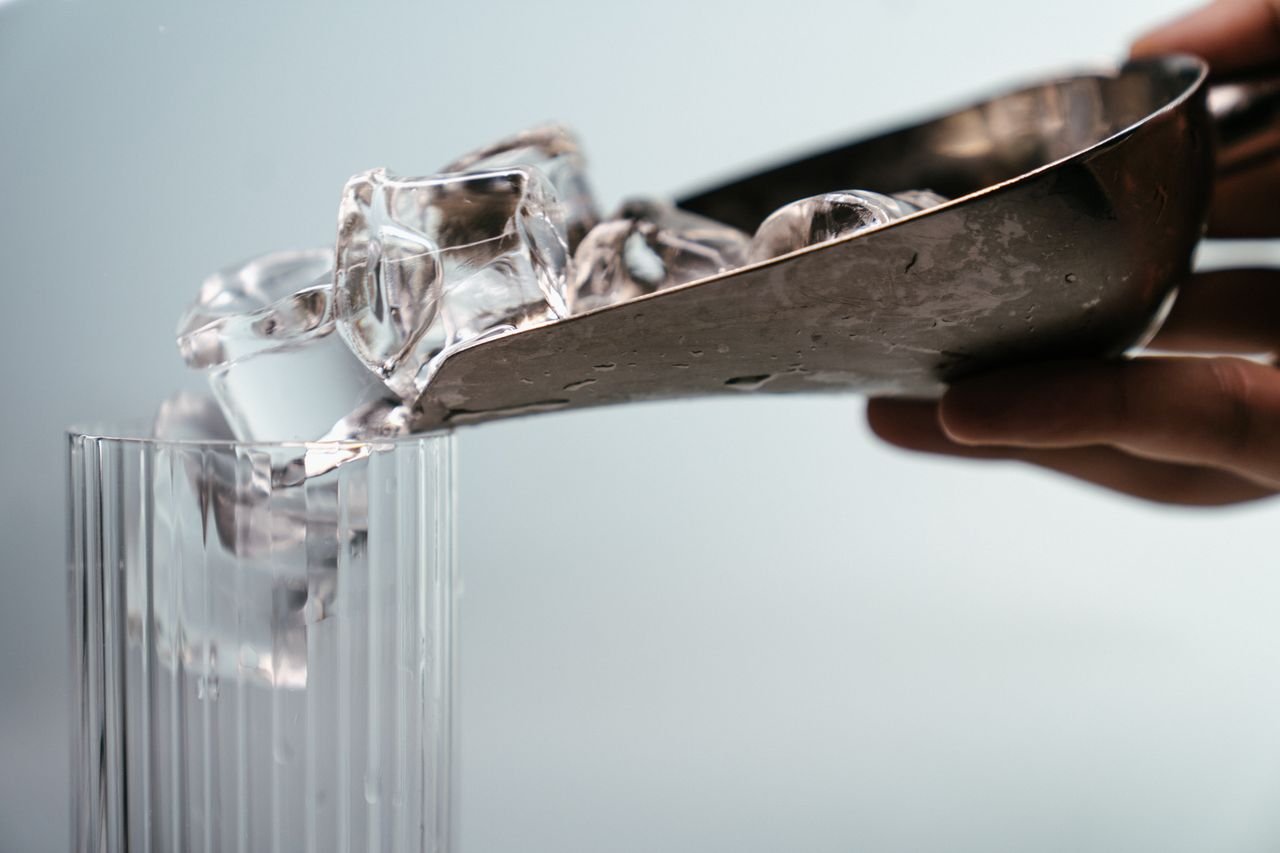
Carbonation is the main reason. A narrow opening and straight sides reduce the liquid surface exposed to air, so carbon dioxide escapes more slowly than from a wide bowl. Ice follows the same logic: in a tall column, cubes stay submerged instead of melting in open air, which slows dilution.
The capacity is also calibrated to a standard build. Most highball recipes follow a 1:3 or 1:4 ratio of 2 ounces of spirit to 4 to 6 ounces of mixer, which produces a 10 to 12 ounce finished drink. A glass below 10 ounces forces shorter pours, and one above 14 ounces makes a standard build look sparse, which is why the 11 to 13 ounce range has become the comfortable middle ground for most venues.
Classic cocktails served in a highball glass
The highball covers most two-ingredient and long mixed drinks:
- Gin and tonic
- Whiskey highball (whiskey and soda)
- Rum and Coke
- Vodka soda
- Paloma
- Dark and stormy
- Mojito
All of these share the same structure: a 1.5 to 2 ounce spirit base, a larger volume of carbonated mixer, and ice filling most of the glass. Switch the base spirit or the mixer and the glass stays the same, which is exactly why the highball is treated as the workhorse of a bar glassware set.
Buying highball glasses for bars and hospitality businesses
Commercial buyers should choose highball glasses by material, durability, and case configuration rather than capacity alone, since 8 to 12 ounces is a settled standard across the industry.
Material choices
Two materials dominate. Soda-lime glass is the standard for bar glassware: it is affordable, widely available, and handles commercial dishwashing well. Borosilicate glass costs more and resists thermal shock, which matters for venues that move glasses between hot and cold service. Either material works for highball service; the choice comes down to budget and how the glasses will be used.
Weight and rim thickness matter too. Thin-walled glasses feel elegant but chip sooner in high-turnover venues, while heavier tumblers last longer.
Set sizes, rentals, and custom orders
How you buy depends on how the glasses will earn their keep:
- Bars and restaurants typically order matched glassware sets by the case, sized to seat count and drink volume.
- Event venues and companies in the glassware rentals business order highballs in bulk because tall drinks dominate event menus and breakage rates run high during service.
- Brands that want shelf presence work with manufacturers on custom shapes, colors, and etched logos, and glassware studios that produce small-batch custom pieces serve the same need at lower volumes.
Customization is where a manufacturer relationship pays off. Beyond a printed logo, custom tooling can adjust wall thickness, base weight, and rim finish, and those details affect how a glass survives a commercial dishwasher. Buyers comparing suppliers should ask about minimum order quantities, sample lead times, and export packaging before committing to a design.
How to store highball glasses properly
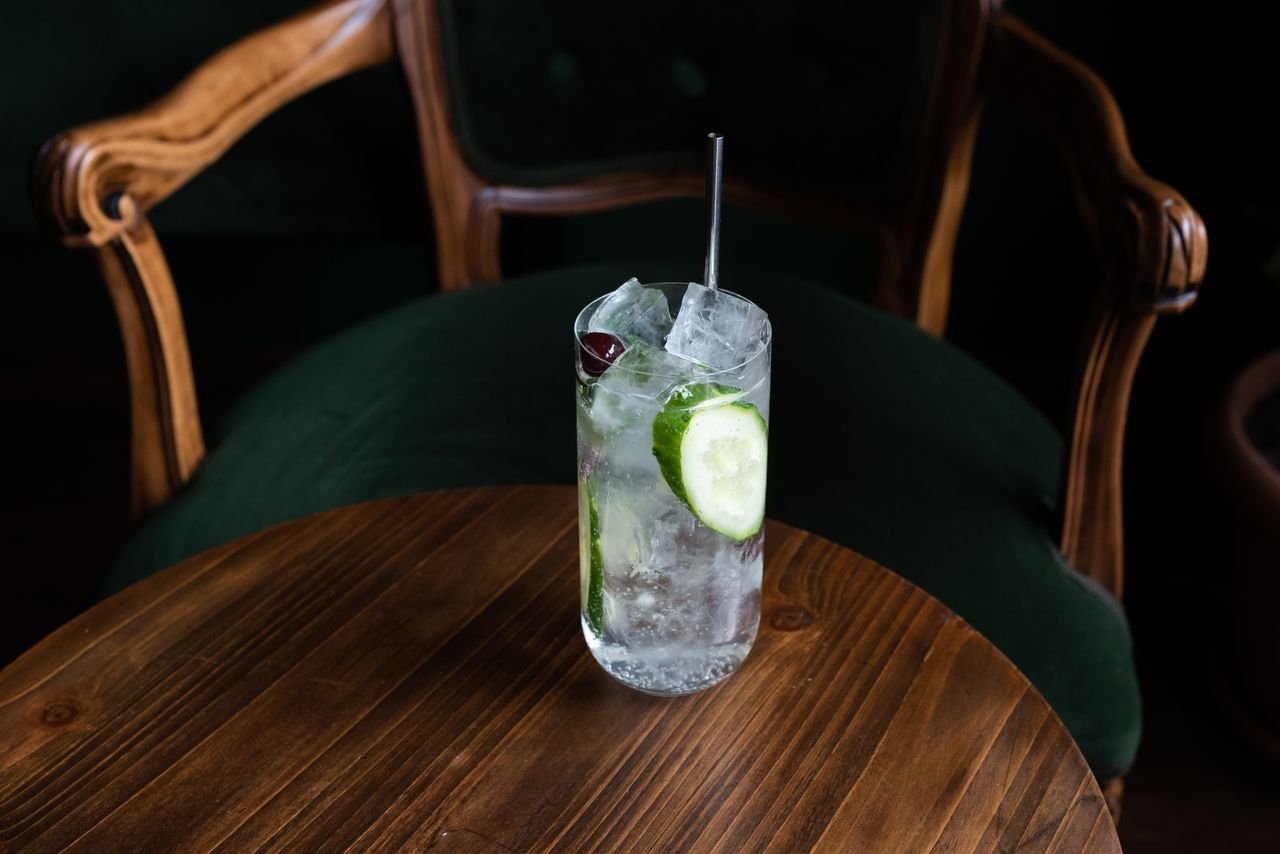
Store highball glasses upside down, fully dry, and with space between rims, whether on a home shelf or in a commercial rack.
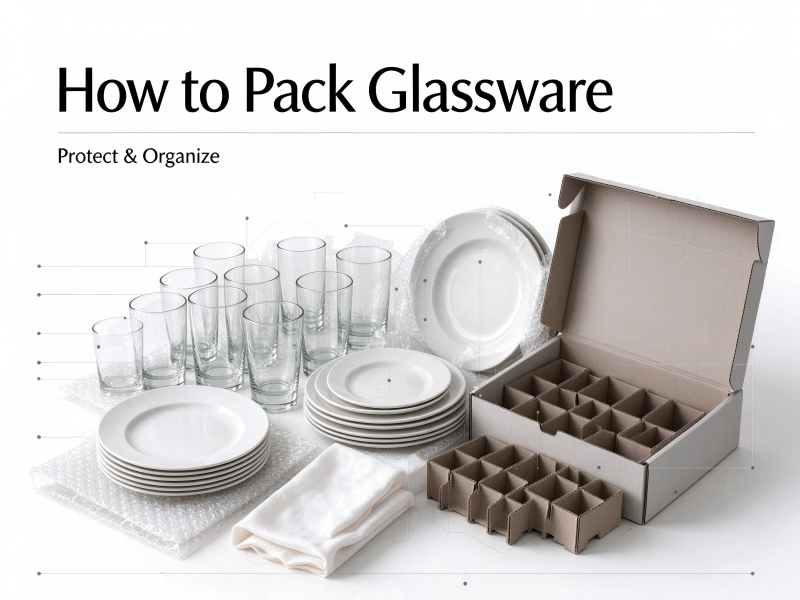
At home, a closed glassware cabinet is the best default because it keeps dust off the inside surface and protects rims from accidental knocks. Two rules prevent most damage: never stack glasses rim to rim, since the weight chips the rims, and make sure each glass is completely dry before it goes away, because trapped moisture leaves mineral marks and odors. Extra or seasonal sets store well in padded glassware storage containers with dividers, which also make them easier to move without breakage.
Commercial storage follows the same logic at scale. Racks keep highballs separated and dishwasher-ready, and shelves should sit away from ice wells and cooking lines, where grease and heat shorten glass life.
For a complete routine that covers washing, drying, and shelving, this guide to how to store clean glasses walks through the details step by step.
FAQ
Can you serve hot drinks in a highball glass?
Not in standard soda-lime glass. Boiling water risks thermal shock, which can crack a thin-walled highball. For hot drinks such as an Irish coffee, use a heatproof design made from borosilicate or tempered glass.
How many highball glasses should a bar or restaurant order?
A commonly used planning figure is two to three highball glasses per seat, because tall drinks turn over fast and some stock is always in the wash or broken. High-volume venues add a case or two of spares on top of that baseline.
What can replace a highball glass if you don’t have one?
A Collins glass is the closest substitute and simply holds a bit more. A pint glass works for larger builds, and any straight-sided 10 to 12 ounce tumbler will hold a standard highball drink acceptably. The only shape to avoid is a wide rocks glass, which flattens carbonated drinks quickly.