Walk through any kitchenware catalogue and the assumption is built in: glass looks inert, so it should tolerate heat. The reality is more uneven. Two dishes with identical silhouettes can sit on the same shelf, one rated for roasting and the other destined to crack the first time it meets a hot oven. For buyers and private-label teams, that gap is expensive.
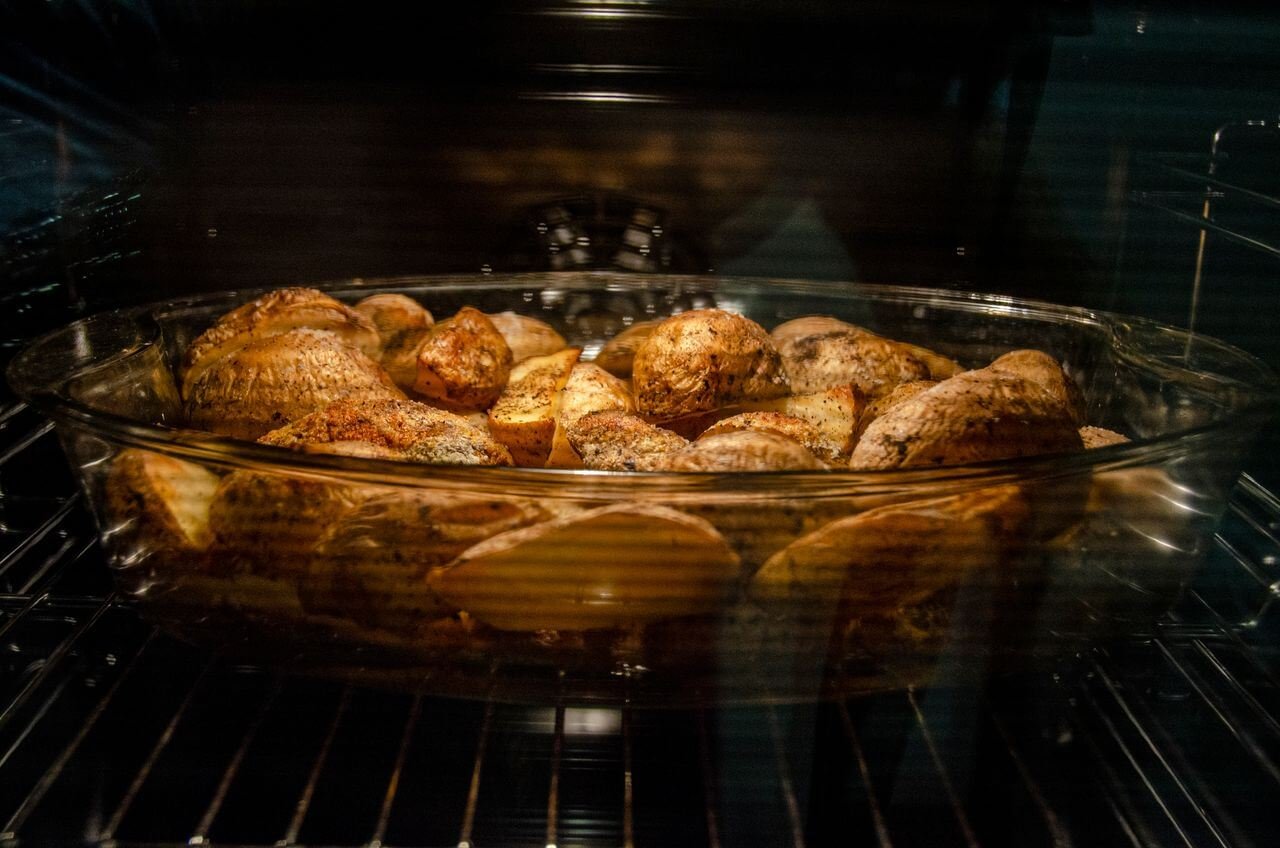
Yes, glassware can go in the oven, but only when the specific piece is made from oven-rated glass and used within its limits. Oven safety is decided by composition, tempering, and geometry, not by thickness, price, or appearance. Borosilicate glass and tempered soda-lime bakeware are engineered for oven heat, while drinking glasses, storage jars, decorative jars, and thin-walled tableware are not, even when they look sturdy.
Almost every failure blamed on poor glass is really a mismatch between the material and the way it was used.
What Makes Glassware Oven Safe
Oven safety is a material property fixed at the furnace and finished on the tempering line. A piece qualifies when its composition can absorb heat without expanding unevenly, and when manufacture has relieved the internal stress that would otherwise concentrate at rims, corners, and bases.
Three variables decide the outcome. Composition sets expansion per degree of change, tempering sets how much stress the piece absorbs, and geometry sets where that stress lands. A dish can be excellent on two of them and still be wrong for an oven.
Borosilicate Versus Tempered Soda-Lime
Borosilicate glass carries boron trioxide in its silica network, which suppresses expansion. Its coefficient of linear thermal expansion sits near 3.3 x 10^-6 per kelvin, about a third of soda-lime glass at around 9 x 10^-6. A smaller differential across the wall means lower internal stress.
Tempered soda-lime takes the opposite route. The formed piece is heated and cooled rapidly, locking the surface into compression while the core stays in tension. That pre-stress makes it several times stronger against impact and gives it a reserve when heat creates new stress. Tempering does not change the expansion coefficient.
Both families appear in international specifications. ASTM E438 separates a low-expansion borosilicate group from a soda-lime group, a reminder that glass names a family of materials rather than one substance.
| Property | Borosilicate 3.3 | Tempered Soda-Lime |
| Thermal expansion | About 3.3 x 10^-6/K | About 9 x 10^-6/K |
| Thermal shock tolerance | High | Moderate, improved by tempering |
| Impact resistance | Good | High, from surface compression |
| Typical failure | Gradual crack from an edge | Sudden shatter |
The Same Name, Two Different Glasses
A product line can change composition without changing its name or silhouette. Bakeware sold under one label in one market may be borosilicate, while the identical-looking item sold elsewhere is tempered soda-lime, because the manufacturer optimised for local cost or regulation. Never infer heat performance from a name, a mould shape, or a photograph.
Why Wall Thickness and Shape Matter
Thickness is misread as a safety feature. A thick wall stores heat but does nothing for the gradient across that wall during a fast ramp. Shape predicts behaviour better: sharp internal corners, abrupt thickness transitions, and applied handles all concentrate stress. A working overview of understanding heat-resistant glass covers how these properties are verified in production.
How to Tell If Glass Is Oven Safe
The only dependable answer is on the piece itself. Manufacturers mould, etch, or print their rating into the base, and that marking, not the clarity of the glass or the weight in your hand, decides whether the oven is an acceptable place for it.
Read the marking literally. A maximum temperature is a ceiling, not a target, and an icon for a microwave or a dishwasher says nothing about oven performance.
Read the Base Markings
| Marking on the base | What it means |
| Oven safe or oven proof | Rated for oven use; check any stated limit |
| Oven symbol with heat lines | Same meaning in pictogram form |
| A temperature in Celsius or Fahrenheit | The rated ceiling; stay below it |
| Microwave symbol only | Not rated for oven heat |
| Dishwasher symbol only | Not rated for oven heat |
| No marking | Storage and serving ware only |
Clues When There Is No Marking
Absence of a mark is common on imported or unbranded pieces, and it is not a puzzle to be solved by guesswork. A piece sold explicitly as bakeware, with a matching glass lid and a recipe leaflet, is very likely rated. A piece sold as a storage container or a drinking vessel almost certainly is not, however substantial it feels. Thickness, clarity, and the sound it makes when tapped all vary independently of heat resistance.
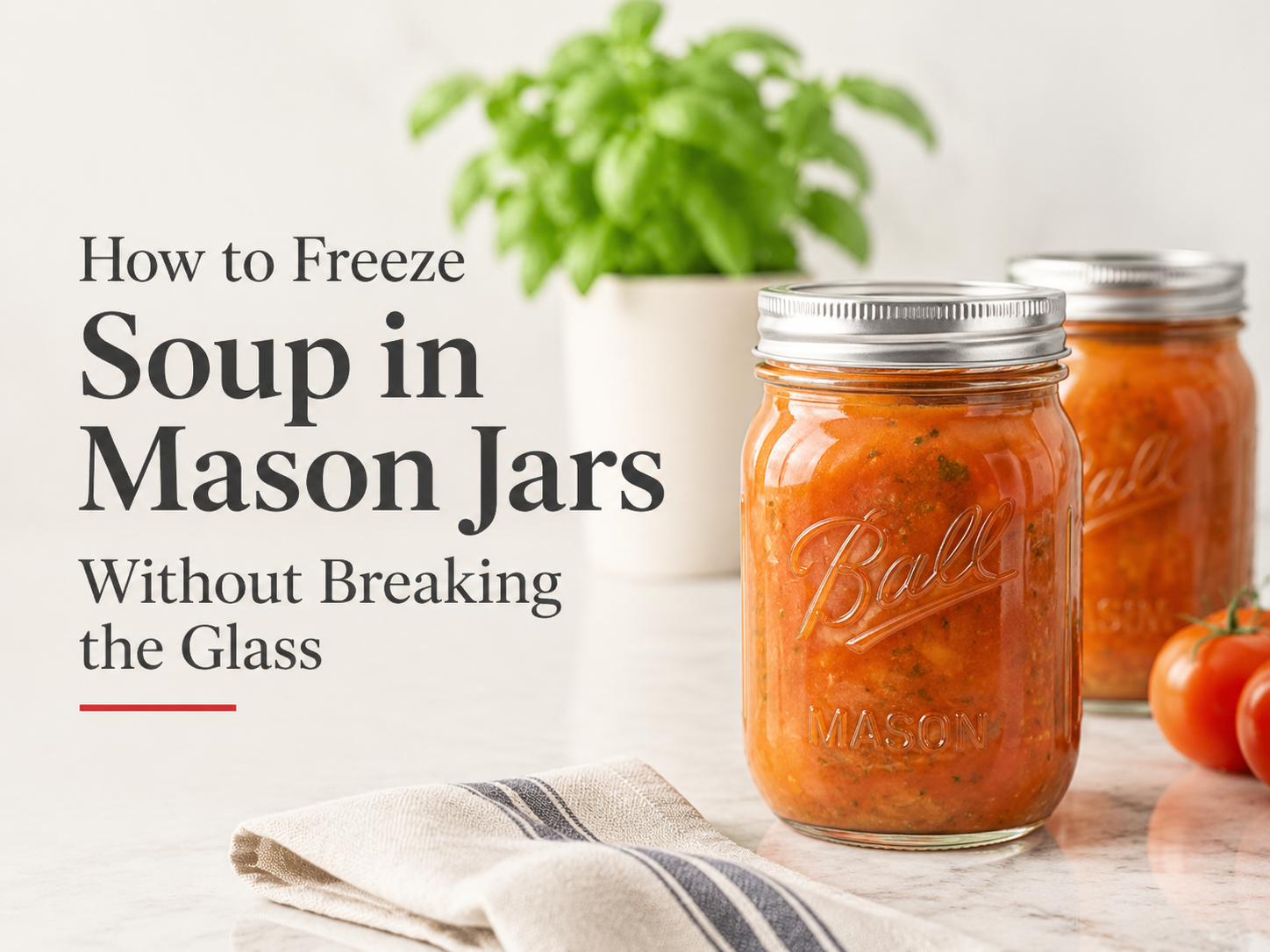
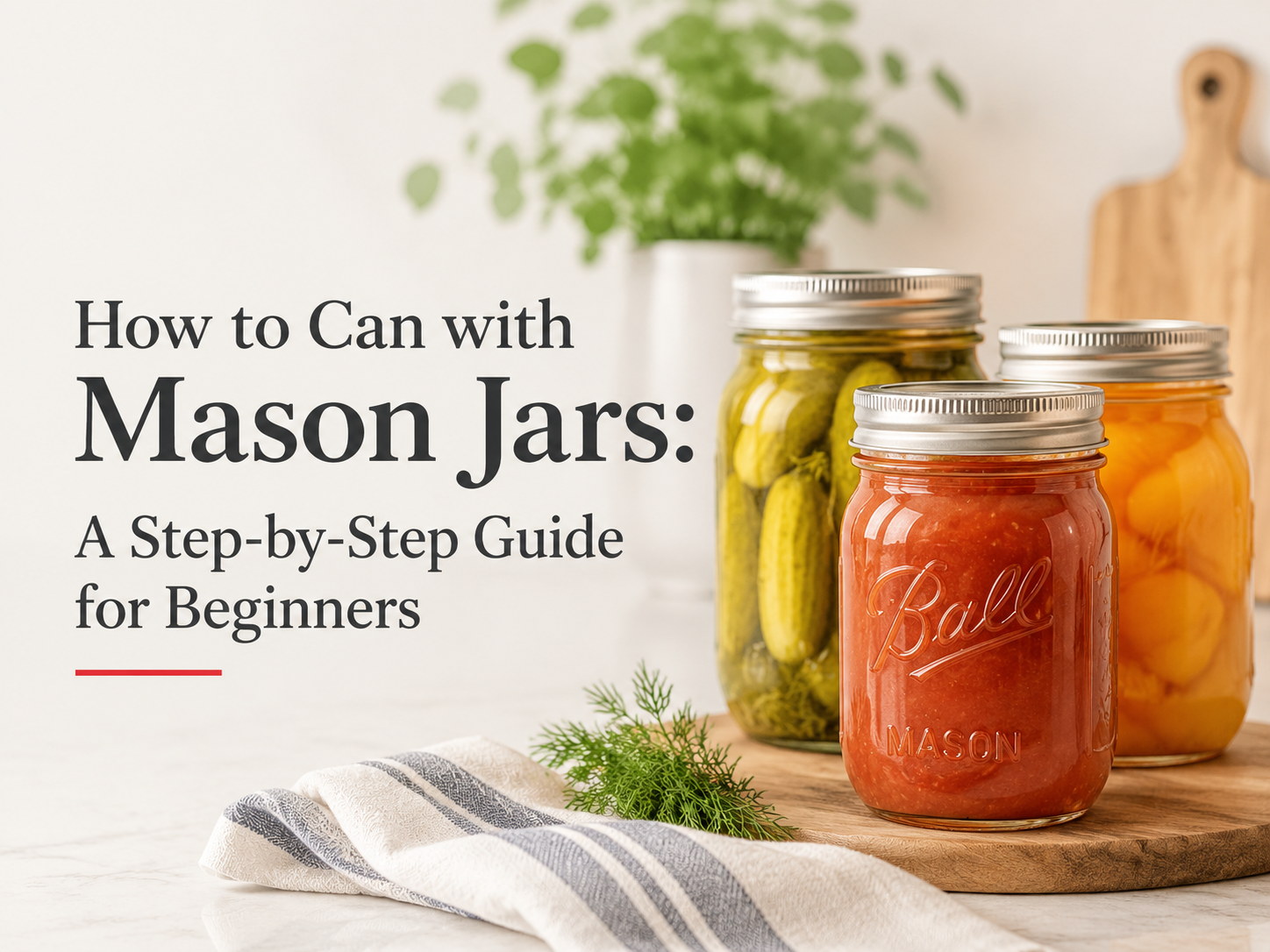
Mason jars are oven safe only where the manufacturer says so, and many standard jars are rated for water-bath processing rather than dry oven heat. When a piece carries no rating and its origin cannot be traced, the conservative choice is the correct one.
Oven Temperature Limits: 180°C, 350°F, and the Real Ceiling
Ordinary baking temperatures are rarely the problem. A dish rated for oven use sits comfortably at 180°C or 350°F for the length of a normal recipe. What damages glass is the difference in temperature between one part of the piece and another, which is why a dish can survive an hour at 200°C and fail in seconds when set down on a cold surface.
The number on the dial is a steady state. The risk lies in the transitions into and out of it.
Why 180°C (356°F) Is Almost Never the Problem
At 180°C, oven-rated glass is operating well inside its design envelope. Both borosilicate and tempered soda-lime bakeware are tested far above this figure, and most failures attributed to it are failures of handling: a chilled dish going straight in, a cold sauce poured into a hot base, or a piece resting against a heating element.
Fan-assisted modes do not exceed the setting, but they move heat more aggressively, so the glass surface reaches oven temperature faster. For a thick-walled dish taken from a cold cupboard, that ramp is the difference that matters.
Baking at 350°F (177°C)
350°F and 180°C describe nearly the same oven, and the guidance does not change. Preheat fully before the dish goes in, or place a room-temperature dish in a cold oven and let both come up together; either approach keeps the gradient modest. Avoid the middle path, sliding a cold dish into a partly heated oven where the element is still cycling hard. Under a grill, the oven rating stops applying, because direct radiant heat creates hot spots no rating covers.
Glass Oven Safe Temperature by Glass Type
| Glass type | Typical oven ceiling | Heating empty | Freezer to oven |
| Untempered soda-lime | Not rated | No | No |
| Tempered soda-lime bakeware | Around 220°C (425°F) | No | No, thaw first |
| Borosilicate 3.3 | Around 260°C (500°F) | Not advisable | No, thaw first |
| Glass-ceramic | Around 260°C (500°F) or higher | Check the rating | Usually no |
Behind these figures sit measurable properties. Published technical data for borosilicate glass 3.3 conforming to ISO 3585 lists a transformation temperature near 525°C and a softening point near 825°C. Kitchen temperatures leave a wide margin, so the limiting factor is never the softening point but the stress generated by uneven heating.
Thermal Shock: The Real Reason Glass Breaks
Thermal shock is the stress produced when one region of a piece changes temperature much faster than another. The warmer region expands, the cooler region resists, and the tension concentrates at the weakest point, usually a rim, a chip, or a scratch. Once that tension exceeds the strength of the glass, a crack starts and propagates almost instantly.
This is why you can bake glassware in one dish for years and watch an identical one shatter on its first outing. The material did not change; the handling did.
How Thermal Shock Builds Up
Glass is brittle, so it does not deform to relieve stress. It stores it. A differential of a few tens of degrees across a wall is enough to generate meaningful tension in soda-lime glass, and the effect compounds when the piece already carries damage. A chip on the rim is not cosmetic; it is a stress riser with a sharp tip, the geometry that turns stored tension into a running crack. Tempering raises the threshold, borosilicate lowers the stress, and neither eliminates the mechanism.
The Triggers That Cause Most Failures
- Moving a dish directly from refrigerator or freezer into a hot oven
- Setting a hot dish on a cold worktop, a wet towel, or a metal trivet
- Pouring cold stock, water, or wine into a hot dish
- Running cold water over glass that has just left the oven
- Heating an empty dish, which creates hot spots wherever food does not touch
- Placing a dish close to an exposed element or under a grill
- Using a piece with a chip, hairline crack, or deep scratch
Safe Handling Sequence
- Bring the dish to room temperature before it meets oven heat, or start it in a cold oven.
- Add a thin layer of liquid, oil, or sauce so heat spreads across the base rather than pooling.
- Load the dish into a fully preheated oven, clear of elements and walls.
- Rest the hot dish on a dry cloth, cork, or wooden board when it comes out.
- Let it cool to handling temperature before washing, and never plunge it into cold water.
What Should Stay Out of the Oven
Anything not explicitly rated for oven use stays out. That includes drinking glasses, standard storage jars, decorative jars, lead crystal, and thin-walled tableware. None are made to survive dry heat, and several are unsafe at baking temperatures because of what they release or how they fail.
| Item | Oven safe | Reason |
| Tempered or borosilicate bakeware | Yes, within rating | Designed and tested for oven heat |
| Drinking glasses and tumblers | No | Thin walls, untreated, no rating |
| Standard storage jars | No | Made for filling and sealing |
| Decorative or painted jars | No | Applied finishes are not heat rated |
| Lead crystal | No | Heat plus lead content is a combined risk |
| Glass lids with plastic knobs | No | Knob and seal fail before the glass |
Lids, Handles, and Mixed-Material Assemblies
Assemblies fail before single pieces do. A glass lid is usually rated to the same ceiling as its dish, but the knob, the gasket, and the clip are not, and they are often the first components to deform. Metal handles bolted through glass create a local thermal bridge, heating one small area far faster than the body around it.
Glass Compared With Metal and Ceramic Bakeware
Glass is not the default best choice; it is one option among three with different strengths. Glass heats slowly and holds heat, browns the base gently, and lets you watch the cooking process without opening the door. Metal responds faster and browns more aggressively. Ceramic sits between them and tolerates higher peaks but punishes thermal shock just as severely.
| Property | Glass | Metal | Ceramic |
| Heat response | Slow, even | Fast, localised | Moderate |
| Base browning | Gentle | Strong | Moderate |
| Thermal shock risk | High if mishandled | Very low | High if mishandled |
| Reacts with acidic food | No | Sometimes | No |
For a crisp base or a fast sear, metal wins. For slow bakes, gratins, and anything served straight from the oven, glass is the more practical vessel, provided the handling rules are followed.
What Buyers Should Specify for Oven-Safe Glassware
A purchase specification should convert heat resistance into verifiable parameters. Without them, a supplier can meet the sample and still ship a production run that behaves differently, because heat performance is invisible until it fails.
The parameters worth writing into a purchase order:
- Glass family and measured expansion coefficient, not a generic claim of heat resistance
- Whether the piece is annealed or tempered, and which tempering process is used
- Thermal shock test result, expressed as the differential survived without failure
- Wall thickness tolerance and its variation across the body
- Lid, knob, and gasket materials, each with its own temperature rating
- Maximum continuous service temperature, stated in Celsius and Fahrenheit
Sample validation should mirror real use. An empty-dish ramp test, a cold-to-hot cycle, and an edge inspection after cycling expose most problems before a container ships. The commonest specification error is treating extra thickness as a substitute for material selection; a thicker wall in the wrong glass simply stores more stress.
For buyers building a programme around heat-rated formats, reviewing custom glassware options alongside that list is the practical starting point, since geometry and material can be matched to the cooking method rather than retrofitted afterwards.
FAQ
Most remaining questions come down to reading the piece and respecting its limits rather than memorising numbers.
Why does glass bakeware tick or crackle in the oven?
Light ticking is usually normal. Glass and the metal rack expand at different rates, and the dish shifts microscopically as it heats. A single sharp crack followed by silence is different and warrants inspection before the next use.
Does food brown differently in glass than in metal?
Yes. Glass is a poorer conductor, so the base of the food browns more slowly and more evenly, while metal transfers heat quickly and produces a darker crust. Recipes developed in metal often need a slightly higher temperature or a longer finish in glass.
Can chipped or scratched glassware still go in the oven?
No. A chip or deep scratch concentrates stress at a sharp point and gives a crack a place to start. The piece may survive several uses, which is what makes the risk easy to underestimate, but it should be retired from oven duty and kept for storage or serving.