Glass bakeware sits in almost every kitchen, and the question of whether it can go into a hot oven comes up constantly. The answer isn’t a simple yes or no. It depends on what the glass is made of, how fast its temperature changes, and how the dish is handled before and after baking. Custom glassware made for the oven behaves very differently from a decorative bowl or a drinking glass, even though both look similar on a shelf.
The short answer is yes—you can bake in glassware, but only if the glass is rated for oven use and you avoid sudden temperature swings. Borosilicate and tempered soda-lime glass handle typical baking temperatures without trouble, while standard non-tempered glass can crack once it passes roughly 302°F to 392°F (150°C to 200°C). Heat alone rarely breaks a dish; the real danger is a fast change from hot to cold, or the reverse.
This guide covers how to tell which glass you’re working with, what temperatures each type tolerates, and the handling habits that keep a dish from cracking mid-bake.
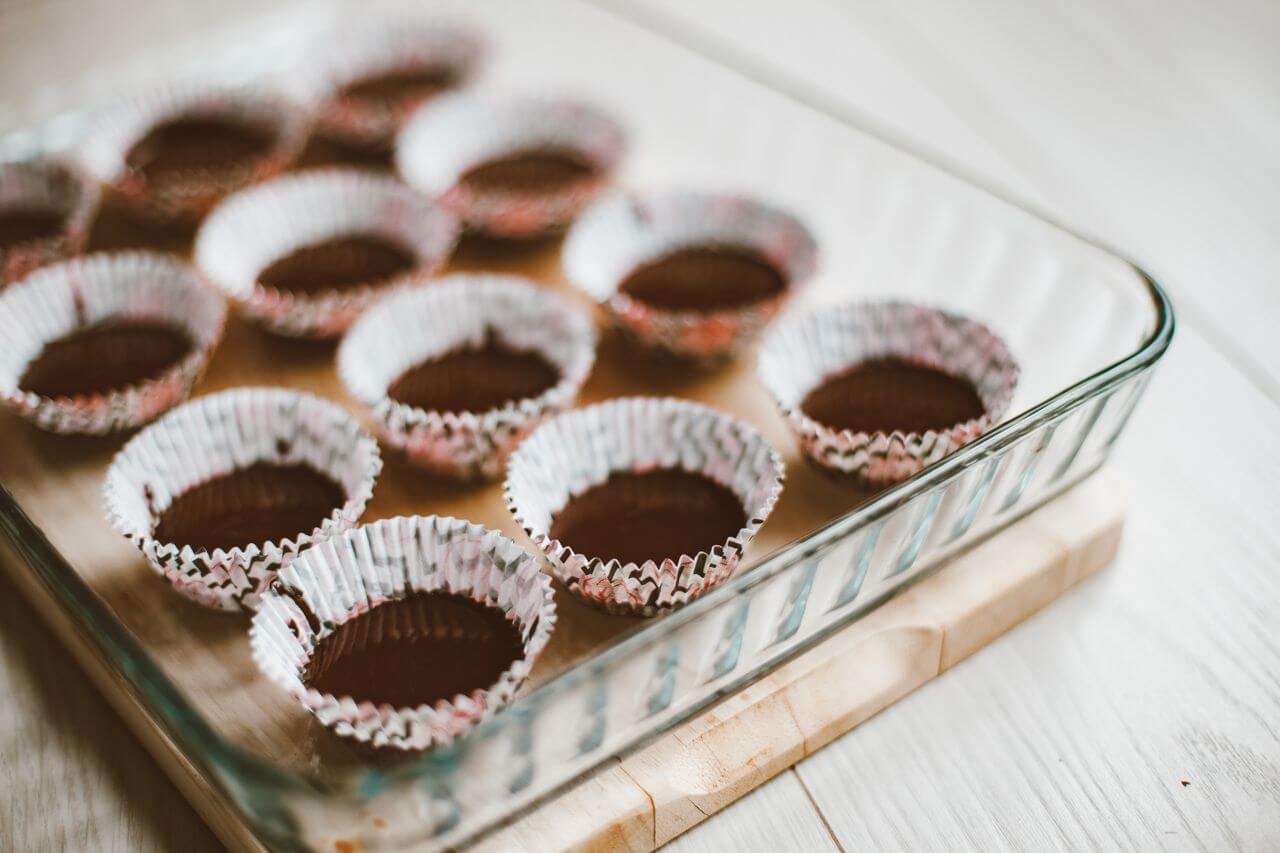
Do you know what your glassware is made of?
Most baking failures come down to material, not technique. The three glass types found in kitchens have very different heat limits, and once you know which one you have, the rest is easier to predict.
Glass used for food and drink falls into three broad groups. They look nearly identical in a shop, and that’s part of the problem—the material signals are easy to miss unless you know what to look for.
| Glass type | Typical oven limit | Expansion behavior | Common uses |
|---|---|---|---|
| Borosilicate | 450°F to 500°F (232°C to 260°C) | Low expansion, resists thermal shock | Bakeware, measuring cups, lab glass |
| Tempered soda-lime | Around 425°F (218°C) | Strengthened surface, moderate expansion | Some casserole dishes, drinkware |
| Standard non-tempered | Cracks near 302°F to 392°F (150°C to 200°C) | High expansion, weak against shock | Decorative bowls, jars, basic tumblers |
The difference comes down to how much a material expands when heated. Every glass expands as it warms and contracts as it cools. What separates a good bakeware material from a bad one is the rate of that change. Borosilicate glass has a low coefficient of thermal expansion, so it moves very little across a wide temperature range. Soda-lime glass moves more, which is why makers often temper it—a heat treatment that puts the outer surface under compression and lets it resist a certain amount of stress. Standard non-tempered glass does neither, so it stays cheap, decorative, and best kept away from the oven.
Reading the markings on the bottom of a dish
Turn the dish over. Manufacturers usually stamp a rating somewhere on the base or the rim. You’re looking for phrases like “oven safe,” “ovenproof,” or a temperature figure. Silence is itself a signal—a dish with no marking at all should be treated as decorative rather than heat-resistant.
Why thickness and shape change the risk
A thin-walled dish heats through quickly and evenly. A thick, heavy one holds more heat in the center, which means a bigger gap between its inner and outer surfaces during a temperature change. That gap is what builds stress. Sharp corners and tight curves concentrate that stress further, which is one reason round, gently sloped bakeware tends to outlast squares with tight angles.
How do you tell if glassware is oven-safe?
Check the bottom of the dish for an oven-safe marking, confirm the material, and rule out any metal trim or fine cracks. If none of that information exists, treat the dish as not oven-safe.
A few checks cover most cases:
- Look for a stamped rating on the base, rim, or a sticker on the underside.
- Confirm the material—borosilicate or tempered soda-lime can usually take the heat; plain soda-lime cannot.
- Check for decorative metal bands. Gold or silver rims can arc or discolor under high heat, and a dish with them shouldn’t go in the oven.
- Inspect for hairline cracks or chips. A damaged dish fails earlier than a new one, since the crack already concentrates stress.
- Check its history. A dish that has already survived repeated baking without issue is a better bet than an older one that’s been through years of temperature swings.
What an oven-safe label actually covers
An oven-safe rating usually refers to the dish in a standard oven, at moderate temperatures, without direct contact with a heating element. It typically does not cover the broiler, a stovetop burner, or a microwave-to-oven jump that skips any warm-up. A dish can carry the label and still crack if you push it past the conditions the label assumes.
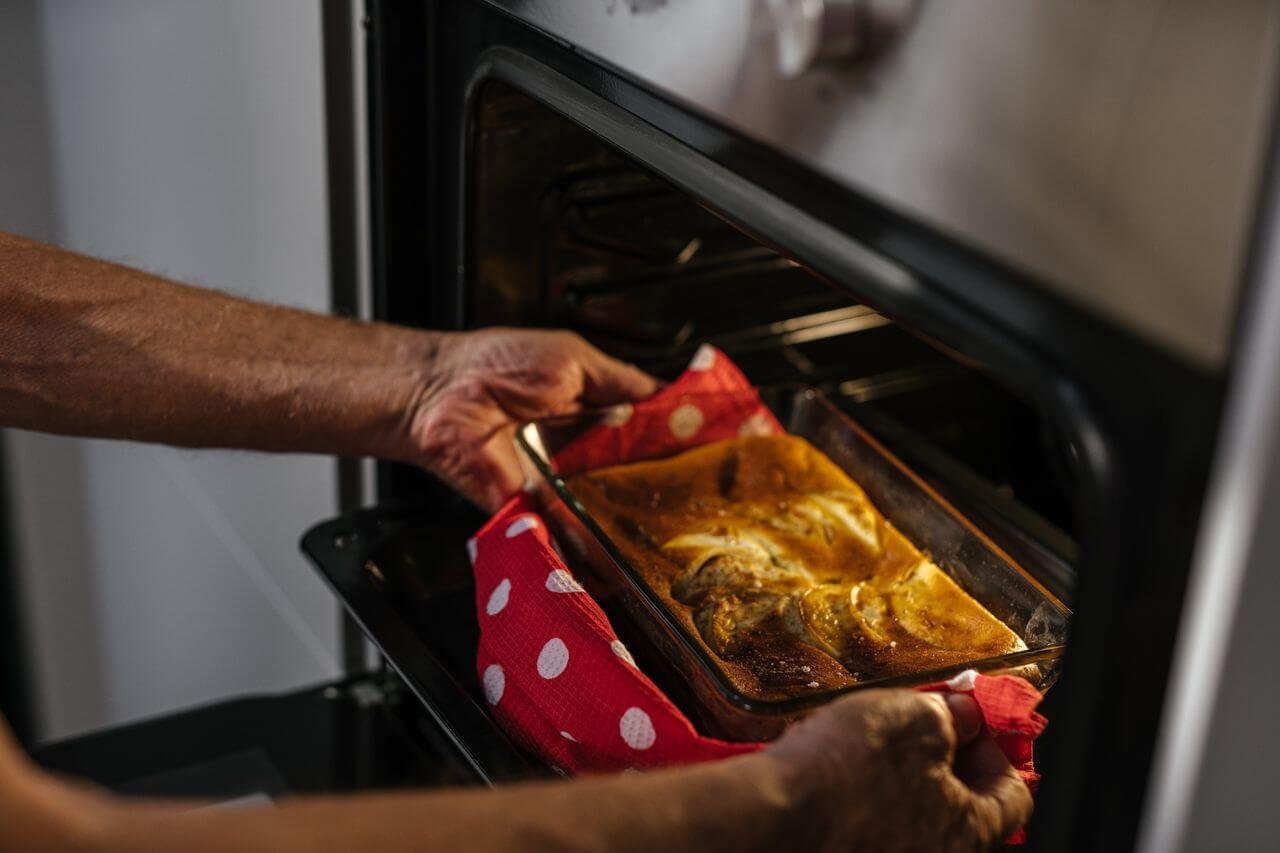
Is it safe to bake in glassware?
Yes, baking in glassware is safe when the glass is oven-rated and the dish avoids sudden temperature changes. It’s unsafe when you use unrated glass or move a dish between extremes too quickly—for example, from a cold counter into a hot oven, or from the oven onto a wet surface.
Here’s how the two cases usually play out:
| Situation | Risk level | Why |
|---|---|---|
| Oven-rated borosilicate into a preheated oven | Low | Low expansion, handles gradual heat |
| Tempered soda-lime at moderate heat | Low to moderate | Surface compression adds tolerance |
| Cold dish straight into a hot oven | High | Rapid expansion across the glass |
| Hot dish onto a cold or wet counter | High | Sudden contraction at the base |
| Standard glass used for baking | Very high | Cracks near 302°F to 392°F |
The mechanism behind a crack is thermal shock. When one part of a dish heats or cools faster than another, the two regions expand or contract at different rates. The glass has to absorb that mismatch as internal stress. Small mismatches are fine. Large ones, arriving quickly, exceed what the material can bend, and it fractures. That’s why temperature difference and speed matter more than the absolute number on your oven dial.
Can you bake a glass dish at 350°F?
A glass dish rated for oven use can bake at 350°F (177°C). That temperature sits comfortably inside the range for borosilicate and tempered soda-lime, though it’s already close to the failure point for standard non-tempered glass.
| Glass type | 350°F safe? | Notes |
|---|---|---|
| Borosilicate | Yes | Well within range |
| Tempered soda-lime | Yes | Below its ~425°F limit |
| Standard non-tempered | No | Near or past its break point |
Looking at the numbers, 350°F is a middle-of-the-road baking temperature. It’s the default for most cakes, casseroles, and roasted vegetables, and every oven-rated glass dish is built to handle it. The confusion starts when people apply the same number to unrated glass. A decorative bowl that looks sturdy may crack at 350°F simply because its material was never designed to reach that temperature. The dish, not the dial setting, decides what’s safe.
Safety data on glass and heat is published by standards bodies that test material behavior under controlled conditions. Trade and consumer bodies such as ASTM International maintain test methods for glass products, including how they respond to temperature change.
How do you prevent glassware from cracking?
Prevent cracking by keeping temperature changes gradual and never putting a hot or cold dish in direct contact with a strong temperature difference. Warm a cold dish before it meets the oven, and rest a hot dish on a dry cloth or trivet instead of a cold or wet surface.
A working checklist:
- Bring a chilled or frozen dish toward room temperature before baking.
- Add a little liquid to the dish when roasting dry foods, so the base doesn’t overheat unevenly.
- Never pour cold liquid into a hot dish, and don’t baste with something straight from the fridge.
- Set a hot dish on a dry towel, a wooden board, or a trivet. Wet or cold countertops pull heat out of the base fast.
- Keep the dish away from the broiler and any direct contact with a heating element.
- Let the dish cool on the counter before washing, rather than moving it to a cold sink right away.
Most of these habits come down to one idea: avoid a fast gap between one part of the dish and another. Heat-resistant glass gets its tolerance from how it manages that gap, but handling still matters even with the best material.
What to do if it is already cracked
Stop using it for baking. A cracked dish has a stress point that spreads with each temperature change, and a break during baking can spill hot food. If the crack is a clean, shallow one in a decorative piece, it can sometimes move to non-heat uses. For anything that goes in the oven, replace it.
Baking with glassware in commercial kitchens
In commercial settings, glassware has to be specified by heat rating and batch consistency, not picked by appearance. Volume operations also put dishes through far more temperature cycles than a home kitchen, so material choice drives how long the glass lasts.
Glassware in a commercial kitchen or food production line faces conditions a home oven never produces. Dishes go from a hot pass to a cold wash and back again, sometimes several times a day. Cooks stack, move, and reload them under time pressure, which means handling mistakes is more likely. Under those conditions, two things matter most.
The first is a stated heat rating from the supplier. A kitchen can’t guess at a dish’s limits when it’s running hundreds of covers, so it needs documented tolerances it can plan around. The second is consistency across batches. A run of dishes that varies in wall thickness or material will fail unevenly, which makes loss hard to predict and reorder. For buyers working at this scale, glassware is a spec item—temperature range, material, and repeatability all belong in the purchase decision.
The same logic applies to storage. Commercial kitchens keep hundreds of pieces on hand, and how glassware is stored affects breakage as much as how it’s used. Racks that separate pieces, dry shelves, and consistent placement reduce the chips and cracks that lead to a dish leaving service early.
FAQ
Can glassware go from the fridge straight into the oven?
Not safely. A dish pulled from a refrigerator is cold throughout, and the oven is hot. That jump creates the temperature difference thermal shock feeds on. Let the dish sit out for a while, or start it in a cooler oven and bring the temperature up so the glass warms gradually.
Does a cracked glass dish still work?
Not for baking. A crack concentrates stress, and each new temperature change widens it. A dish can look fine until the moment it fails, often when it’s holding hot food. Move it to a non-heat use or replace it.
Is thick glass safer than thin glass for baking?
Thickness alone doesn’t make a dish safer. A thick dish holds more heat in the center, which can widen the gap between its inner and outer temperatures during a fast change. What matters more is the material’s heat rating. A thin borosilicate dish usually outperforms a thick decorative one.