Cleaning is only half the job. Most glassware is retired for the same short list of reasons: dust settling inside a bowl, water trapped under an inverted rim, pieces knocking together on an overfilled shelf, and a rim resting on a surface nobody has wiped since spring. A glass that came off the drying rack in perfect shape can pick up a film, a smell, or a chip within a week of going back into the wrong spot.
Store cleaned glassware dry, in a clean and enclosed space, standing upright on a lined shelf with space between pieces. Turn it upside down only when the shelf underneath is dry, clean, and ventilated. Keep it out of the dishwasher, away from the stove and the sink, and off the floor.
The rules barely change between one cabinet and a thousand glasses, but glassware storage solves a different problem in a home kitchen, behind a bar and inside a rental crate, so each setting is worth taking on its own.

The short answer for home kitchens
In a home kitchen, put cleaned glassware in a closed cabinet at roughly chest height, on a clean shelf lined with a non-slip mat, standing upright with a finger’s width between pieces. Give stemware its own shelf or a hanging rail, keep heavy jugs and jars low, and send the once-a-year pieces to the top shelf inside a dust cover.
Dry it completely before it goes anywhere.
A drying rack is a drying position, not a storage position. Anything still damp when the cabinet door closes keeps that moisture sealed in with it. What you notice later is a ring of water spots on the base or a musty smell that only appears when you pour something in. In a humid kitchen, an upside-down glass on a solid shelf can hold a film inside the bowl for days.
Air-drying on a rack is the simplest route. Tilt the glasses so water runs off the rim, and leave them until the base shows no moisture. Stemware usually needs a quick polish after that, because water left in the bowl leaves visible streaks as it evaporates.
Hand-drying is fine with a clean, soft, lint-free cloth. Paper towels aren’t. They shed fibers that stick to glass and show up against the light. Don’t dry the inside of a glass with your bare hand either, since skin oils leave prints that need another wash to remove.
One step most people skip: when the dishwasher has just finished, wait for the steam to clear before opening the cabinet next to it. A small kitchen holds more airborne moisture than that cabinet can shed.
Upright or inverted: how to decide
The upright-versus-inverted argument comes down to two questions. What can settle into the glass, and what is the rim resting on?
| Storage spot | Best position | Why it works | What to watch |
|---|---|---|---|
| Closed cabinet, dry shelf | Upright | The rim carries no load, and no water gets trapped inside | Dust settles in the bowl over months of disuse |
| Open shelf or bar cart | Inverted | Keeps dust and cooking aerosol out of the bowl | The rim sits on the shelf, so both need to be completely dry. |
| Compartment rack | Inverted | Dividers protect the sides, and water drains off | The rack has to be dry and clean before loading. |
| Hanging stemware rail | Inverted, held by the base | No rim contact and no shelf space used | Dust collects on the outside; check the clearance below. |
| Drawer with dividers | Upright or on its side | Short pieces can’t fall over. | A liner is essential; never stack heavy over light. |
Neither position is wrong on its own. The shelf decides. An inverted glass needs a clean, dry, ventilated surface under the rim, and a glass put away damp traps water in the bowl instead of letting it drain. Solid cabinet doors also remove most of the dust argument for inverting everyday glasses, which makes upright storage with a little space between pieces the easier habit there.
Where not to store glassware
- Inside the dishwasher. Vibration, standing water, and a closed door make it the worst long-term home for glass.
- Beside the stove, where cooking grease travels as an aerosol and settles on everything nearby.
- Directly above or below the sink, where splashes reach it.
- On a windowsill or near the oven. Heat and direct sun age glass, and temperature swings stress thin rims.
- On the floor, which is where dust, mop water, and feet all end up.

What the FDA Food Code requires for stored glassware
The FDA Food Code treats clean glassware as cleaned equipment. Section 4-903.11 requires it to be stored in a clean, dry location, protected from splash, dust, and other contamination, at least 15 cm (6 inches) above the floor, in a self-draining position that allows air drying, and either covered or inverted.
The five storage conditions in the code
- A clean, dry location, not a damp corner or a wet drainboard.
- Protection from splash, dust, and other contamination.
- At least 15 cm (6 inches) above the floor.
- A self-draining position that allows air drying.
- Covered, or inverted, so the food-contact surface isn’t left open to the room.
The code is written for restaurants, bars, and retail food stores in jurisdictions that adopt it, so it doesn’t bind a home kitchen. The reasoning still carries over. Dust, splash, moisture, and floor-level dirt don’t check whether a kitchen holds a license.
What that means outside a commercial kitchen
| Code requirement | Home equivalent | Why it matters |
|---|---|---|
| Clean, dry location | Wipe the shelf monthly and let it dry before the glasses go back. | A clean glass on a greasy shelf is no longer clean. |
| Not exposed to splash or dust | Doors instead of open shelving, and nothing stored over the sink | Splashes and airborne grease reach open glassware. |
| 15 cm above the floor | A shelf or a counter-height cabinet, not a crate on a garage floor | Floor level collects dust, dampness, and pests. |
| Self-draining, air-dry first | Dry on a rack, then store. | Water left in a bowl becomes spots and smells. |
| Covered or inverted | Close the doors, use a dust cover, or store rim-down on a clean liner. | Protects the surface that touches the drink |
Matching the storage position to the type of glassware
Store thick-based tumblers upright. Store thin-rimmed stemware upright on its own shelf, in a rail, or in a compartment rack that supports the bowl. Store jars and bottles with the lid loose and the seal dry. What decides the position is which part of the glass can take a load and which part touches the drink.
Everyday tumblers and glassware sets
Matched glassware sets are where storage habits start showing up on the invoice. One chipped rim can take a set of six out of service, and finding a single replacement in the same shape and size is harder than it sounds.
Everyday tumblers have thick bases and strong rims, so upright storage is straightforward. Leave a gap between pieces. Glass on glass is abrasive, and a crowded shelf is where most chips begin.
Stacking is a separate decision. Some tumblers and mugs have a shoulder designed to nest, and those stack fine when both pieces are dry. Nesting glasses that weren’t built for it stresses the sides, and they can jam hard enough to crack when you pull them apart. Heavy mugs and thin glasses belong on different shelves.
Stemware, flutes, and thin-rim pieces
The rim is the thinnest part of a stemmed glass and the part that touches the mouth, so it should carry nothing at all.
Upright storage on a padded shelf works when pieces have room and the shelf is shallow enough that nothing presses against them. A hanging rail keeps rims off every surface and frees shelf space, though the outside of the bowl will collect dust. A compartment rack that supports the bowl, rather than letting the stem take the weight, is the safest option once volume goes up.
Jars, bottles, and lidded pieces
Glass jars and bottles are storage containers in their own right, and the lid is the part people get wrong. A metal lid left screwed down on a damp jar can rust or seize, and a rubber gasket stored compressed while still wet is where a sour smell comes from. Take the lid off, or set it loosely on top so air can move through, and dry the gasket separately.
Wooden and bamboo lids shouldn’t be soaked in the first place. Wipe them, let them air-dry away from heat, and keep them off the jar if the piece is going away for a while.
| Glass type | Position | Surface | Avoid |
|---|---|---|---|
| Heavy tumbler or rocks glass | Upright | Lined shelf, spaced | Nesting without a designed shoulder |
| Thin everyday glass | Upright | Lined shelf | Rim-down on a hard, unwiped shelf |
| Stemware and flutes | Upright, hanging rail, or a bowl-supported rack | Padded compartment | Stacking, or a cabinet packed tight |
| Jug, pitcher, or teapot | Upright | Lower shelf | Storing with liquid still inside |
| Glass jar or bottle | Upright | Shelf or open crate | Leaving a wet gasket compressed under the lid |
| Glass storage container | Upright, lid off between uses | Shelf | Sealing food into a jar that is still warm |
Glassware cabinet setup: liners, dividers, and containers
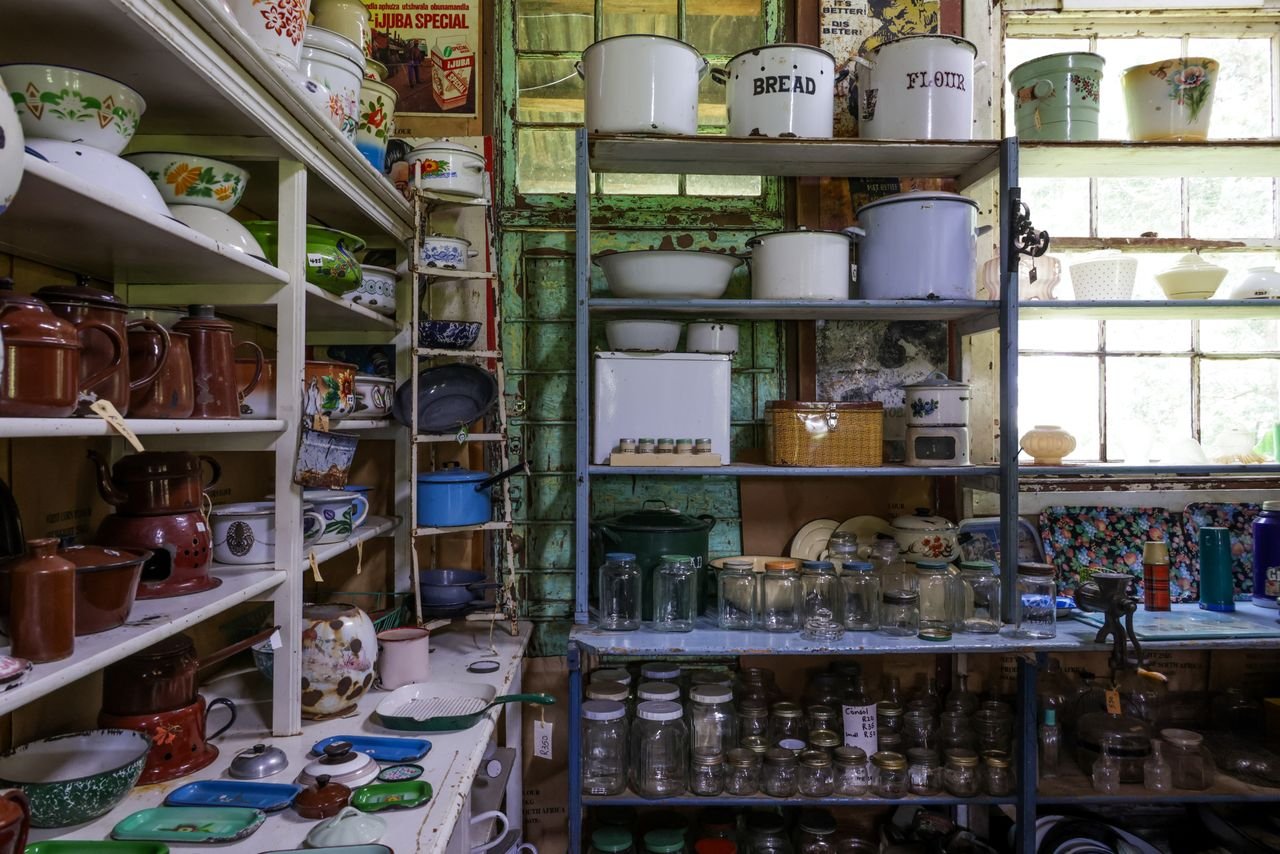
A working glassware cabinet has a soft non-slip liner, dividers that stop pieces from touching, and a height band you can reach without lifting above your shoulder. Line it, divide it, space it out, and keep the top shelf for pieces you use a few times a year.
Shelf liners and dividers
A liner does two jobs. It cushions the base, and it stops glasses from sliding when the door closes. Cork and closed-cell foam all work, and cork is the better choice for rims and thin bases because it doesn’t abrade glass.
Dividers handle the rest. Adjustable ones let you set spacing to the widest piece on the shelf instead of the average, and they keep pieces from touching through the twenty times a day a cabinet door opens. If a shelf holds mixed sizes, group by height so nothing tall stands next to something that can topple into it.
Two habits matter more than any accessory. Lift glasses out instead of sliding them across a shelf, and never fill a shelf to capacity. The piece that doesn’t fit is the piece that ends up chipped.
Glassware storage containers, racks, and crates
When volume goes up, open containers stop being enough.
Compartment racks are the standard answer for bars and catering. The open sides allow airflow, so glass that goes in dry stays dry, and the dividers hold each piece upright through handling.
Stackable crates do the same job at lower cost, provided the compartments match the widest part of the glass. A compartment that’s too wide lets pieces rock, and movement is what causes hairline fractures that only show up as a sudden break months later. For pieces that come out a few times a year, lidded boxes with individual dividers keep dust out for months and remove the need to re-wash before use. Measure the tallest glass, foot included, before choosing any rack.
Keeping the cabinet itself clean
Storage only protects glass if the space itself is clean. Wipe the shelves and the inside of the doors monthly, and let them dry completely before the glassware goes back. Skip scented cleaners and furniture polish, because the residue transfers to anything that touches the surface.
Keep glassware away from shelves holding coffee, spices, onions, or cleaning supplies. Glass doesn’t absorb odors, but a closed cabinet concentrates whatever is inside it.
Storing glassware for a business: rentals, venues, and studios
In a business, storage is inventory control. Cleaned glassware should move out of the wash area in the same rack it will be stored and transported in, stay inverted in that rack, and never sit on the floor or in an open staging area where dust and traffic reach it.
Rental inventory and event stock
Anyone searching for glassware rentals near me is borrowing someone else’s inventory, and that changes how the glasses have to be handled. Rented pieces arrive in compartment racks, in transit-ready condition, and go back the same way. Chips, cloudiness, and missing pieces come off the deposit.
That puts the pressure on the storage side. Color-coded racks make it obvious where each glass belongs when a load comes back at midnight, and racks on dollies move full loads without anyone carrying a stack by hand. Empty racks get washed and dried before they’re stacked away, because a rack stored damp is a rack that smells the next time it’s used.
For the warehouse itself, the food code conditions still make sense minus the license: racks off the floor, dust covers over shelving that holds out-of-season stock, and nothing stored in a damp basement. Counting pieces in and out catches losses early, while they can still be found in a van or a venue’s back room.
Bars, restaurants, and cafes
Back-bar storage runs on speed, and the food code sets the floor. Racks stay within reach of the pass, glasses go into them inverted and dry, and nothing sits on the floor or on a shelf below counter height where splash from the sink reaches it.
Two rules do most of the work during service. Keep glass washing separate from food prep, so the glass washer never handles dishes with grease on them. Then retire chipped pieces the first time you spot them, because a chip on a rim holds residue that a wash cycle won’t reach.
Glassware studios and small-batch makers
A studio has the opposite problem to a bar. Pieces are made in batches, displayed for a while, and stored for months, and open shelving is normal because the work is meant to be seen.
The tension is dust. Anything on display near a workbench picks up kiln dust, polishing compound, or clay particles, and a quick rinse before sale or use is standard practice. For stock that isn’t on show, lidded crates and covered shelving keep pieces sale-ready, and labelling by batch makes first-in, first-out rotation possible without opening every box.
Long-term and seasonal storage
For glassware that comes out a few times a year, store it dry in a lidded box or a compartment crate, with each piece separated, in a room that stays dry and out of direct sun. Label the box by type, keep it off the floor, and rinse and dry everything before it goes back into service.
Seasonal pieces are where people improvise, and improvisation is how a set of four becomes a set of three.
Original packaging is the easiest answer when you kept it, because the inserts were shaped for those pieces. If you didn’t, use unbleached tissue or clean cloth between items rather than newsprint, which transfers ink with age and humidity.
Where the box lives matters as much as what’s inside it. Attics, garages, and unheated basements swing through temperature and humidity, and the glass pays for it. A closed cupboard on a living floor is a better home. Check the box once a season, and look at the rims while you’re there.
Frequently asked questions
How often should a glassware cabinet be cleaned?
Wipe the shelves and the inside of the doors about once a month, and more often if the cabinet sits next to the dishwasher. Felt liners should be shaken out monthly and washed or replaced a couple of times a year, since they hold dust that transfers to the base of every glass. If the shelves feel tacky under a finger, they’re overdue.
How long can clean glassware sit before it needs washing again?
A sealed cabinet keeps glass usable for months, with a quick rinse before the first pour. Open shelving is different: dust and cooking aerosol settle inside an upright glass within a few days in a busy kitchen. The practical test is to hold the glass up to the light and look inside the bowl. Any film means a wash.
Where can you find replacement glassware for an incomplete set?
Retail works for one or two pieces, and a local search for glassware near me will turn up shops that sell singles. Matching a discontinued pattern is the harder problem, because retail stock mixes suppliers and the same shape rarely comes back twice. When glasses are used in service or sold as sets, replacing the full run from one manufacturer keeps size, rim thickness, and mouth diameter consistent from batch to batch, which is what stops the next chip from retiring the set as well.