Yes, you can paint glassware with acrylics, and the finish can last for years when it is applied correctly. Glass has no pores for paint to grip, so most of the work happens before the brush touches it: clean the surface, choose an acrylic made for non-porous materials, cure the paint, and seal it.
The steps below work on any smooth glass surface, including the custom glassware shapes a factory produces in bulk: cups, bowls, vases, jars, and bottles. Each one has a different safe painting area, and that difference matters more than the design itself.
| Glassware item | Best acrylic type | Where to paint | Dishwasher safe after curing |
|---|---|---|---|
| Drinking glasses and stemware | Glass-specific or enamel acrylic | Outer surface, well below the rim | No |
| Storage jars and containers | Multi-surface acrylic | Outside only | No |
| Vases and candle holders | Multi-surface or standard acrylic | Whole outer surface | No |
| Glass plates and shallow bowls | Glass-specific enamel | Back face only | No |
Dishwasher guidance here reflects how acrylic films react to heat, detergent, and long water exposure. It is not a claim taken from one paint label. Read the label of the product you buy.
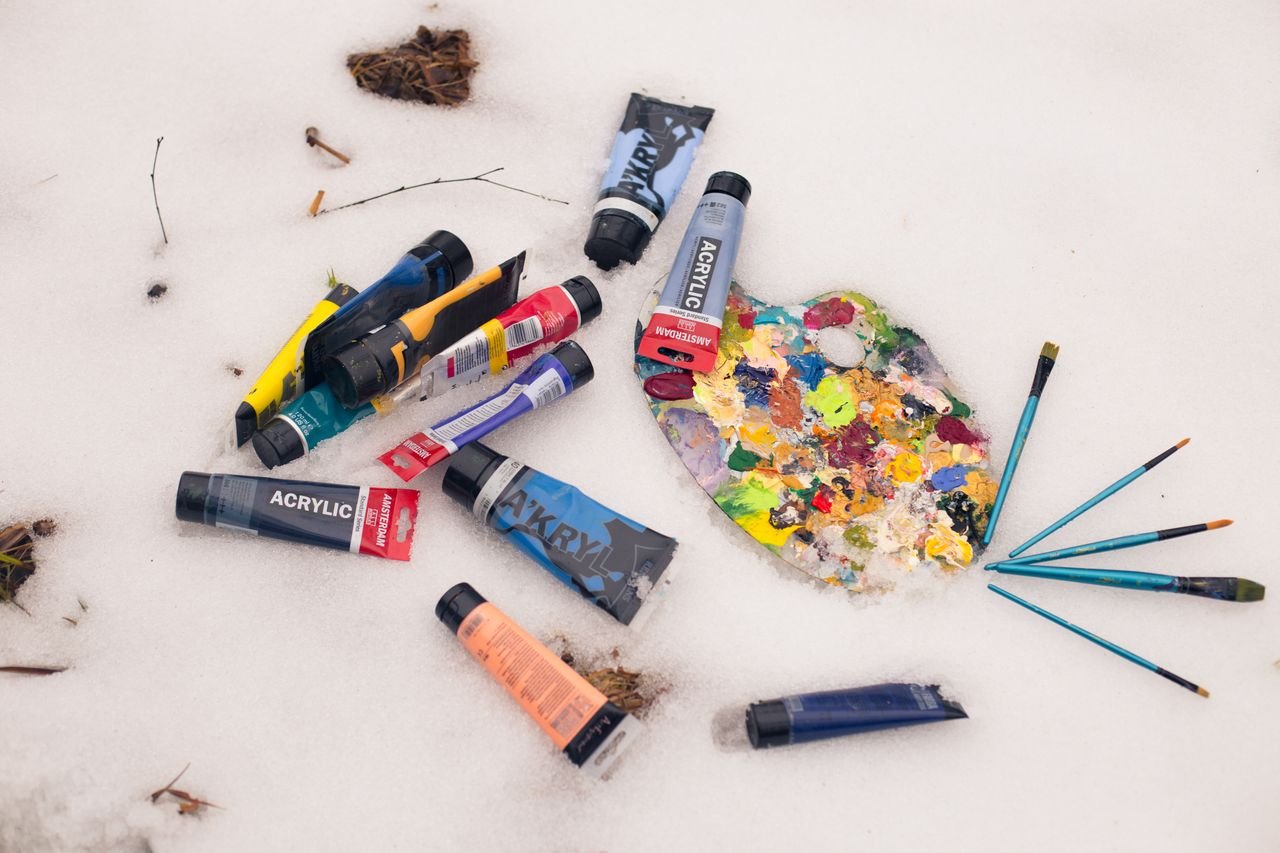
Which acrylic paint works best on glassware?
Four types of acrylic end up on glass, and they behave very differently.
| Paint type | Adhesion to glass | Durability | Best for |
|---|---|---|---|
| Standard craft acrylic | Low without a primer | Peels with handling | Display pieces that are rarely touched |
| Multi-surface acrylic | Good | Medium | Jars, vases, decorative items |
| Enamel acrylic | Very high | High once cured | Functional pieces, mugs, plates |
| Glass-specific acrylic | Very high | High | Stemware, windows, stained-glass effects |
The order matters. A multi-surface or enamel acrylic is formulated to wet out a slick surface. A standard craft acrylic is not. That choice decides whether your design survives the first wash.
Why standard acrylic paint peels off glass
Glass is an amorphous solid rather than a crystalline one, so it forms with a seamless, pore-free skin (Corning Museum of Glass). Acrylic paint is water-based and bonds mechanically by flowing into texture and hardening inside it. On glass there is no texture to flow into. When the water evaporates, what is left is a flexible plastic film resting on a slick surface, held by almost nothing.
A fingernail, a warm rinse, or a light scrub lifts that film. The fix is not a thicker coat. It is a clean surface, a paint built for non-porous materials, and a full cure.
Oils make the problem worse. A fingerprint left on the glass becomes a barrier between paint and surface, and the failure appears weeks later in a patch you could not see while you were working.
Prepare the glass surface.
Start with a wash and finish with a solvent wipe. Both take a few minutes, and neither can be skipped.
Wash the piece in warm water with a little mild dish soap, then rinse until the water sheets off evenly. Dry it with a lint-free cloth. Soap residue is why a piece can look clean and still shed paint, so the second step matters: wipe the whole surface with isopropyl alcohol at 70 percent or higher, using a fresh pad, and let it evaporate for ten to fifteen minutes.
After that, do not touch the area you plan to paint. Bare hands leave oil, and oil is what paint cannot cross. Vinegar and water are reasonable substitutes for alcohol because the acetic acid cuts greasy film and mineral spots. Alcohol is faster because it leaves nothing behind.
When to sand or prime
Sanding gives the paint something to hold. A light pass with 220 to 400 grit paper creates microscopic scratches without cutting visible lines into the glass. It works well on flat panels and flat-sided jars. It is risky on thin curved walls, where finger pressure is hard to control, so test the technique on a scrap piece first. Wipe away all dust and clean the surface again before painting.
Priming is the alternative. A glass primer or a clear acrylic ground adds a receptive layer, and it is the safer option for stemware necks and narrow curves. Follow the drying time on the product. A primer applied the same afternoon you paint has not bonded yet.
Tape off the rim and food-contact areas.
For anything you drink from, mask the top of the piece with painter’s tape and leave about an inch, or 2.5 cm, unpainted below the rim. Lips touch that band, and acrylic paint is not food safe. On a plate or a shallow bowl, turn the piece over and paint the back face only. Food never meets the paint, and the design still shows through the glass.
Press the tape flat along its full edge with a fingertip so paint cannot creep underneath, and pull it off while the paint is still wet. A dried edge can take a strip of your design with it.
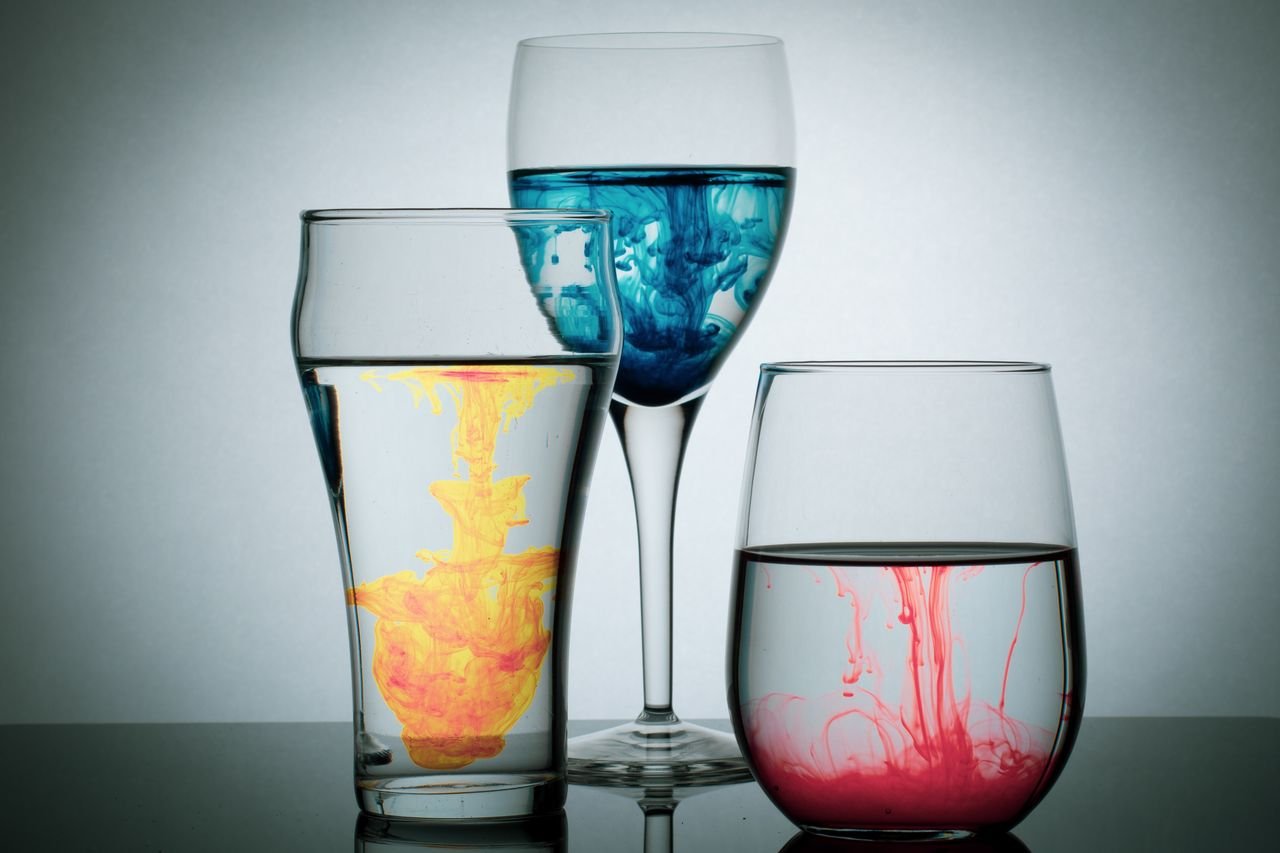
Painting techniques for glassware
Build the design in thin coats.
Thin coats outlast thick ones on glass. Load the brush lightly, move in one direction, and stop before the paint starts to drag. Two to four thin layers give a solid color. One heavy layer traps moisture, dries unevenly, and cracks.
Let each coat dry for thirty to sixty minutes before the next. Do not thin the paint with water to stretch it, because water weakens the film and undoes the work you did on the surface. If the paint feels too stiff to flow, use a medium made for acrylics.
Foam brushes leave fewer stroke marks than bristle brushes on curved glass. Synthetic brushes hold their shape better than natural hair when you are working with thin, watery paint.
Dots, stripes, and stencils
Dots are the fastest way to get an even pattern onto a curved surface. Press a sponge dauber straight down against the glass, twist a half turn, and lift. Refresh it with paint every dot or two. A pencil eraser or the blunt end of a brush makes smaller dots with the same motion.
Stripes come from masking tape. Lay two strips down at the spacing you want, press the edges flat, and dab paint between them rather than brushing sideways so nothing creeps under the tape. Pull the tape while the paint is wet.
Stencils do the same job for lettering and repeated shapes. Hold the stencil tight against the glass and dab with a nearly dry brush. Thin paint bleeds under a stencil edge. Almost-dry paint does not.
Reverse painting from the inside
Reverse painting puts the artwork on the interior wall of a vase, a bottle, or an ornament, working from the background forward. Seen from outside, the colors appear to float inside the glass, and the outer surface stays perfectly smooth. Nothing wears against the paint because nothing touches it.
Reserve this for pieces that will not hold food or drink. Paint inside a drinking vessel touches the contents directly.
How to cure and seal painted glassware
Drying and curing are not the same thing. Paint feels dry to the touch in about half an hour. It reaches full hardness and adhesion much later.
Air curing
Air curing needs no equipment: leave the piece untouched in a dust-free spot at room temperature for twenty-one days. Handle it as little as possible and keep it out of water. Cold and damp conditions slow the process down, and the piece is not finished until that time has passed.
Oven curing
Oven curing is faster and produces a harder film. It also has one hard rule, which is to heat the glass slowly in both directions.
- Put the piece in a cold oven. Never put cold glass into a preheated oven.
- Set the oven to 350°F (175°C).
- Once it reaches temperature, bake for thirty minutes.
- Switch the oven off and leave the glass inside until it has cooled to room temperature.
Sudden temperature change is what cracks glass, not the heat itself. Only bake glass that the maker lists as oven safe. Thin walls, old glass, and pieces with chips may not survive it. Projects that cannot be baked should simply be air cured instead.
Sealing the finished piece
A clear acrylic sealer adds a protective shell over the paint. Spray types give the most even coverage and are easiest to keep streak-free. Brush-on varnish gives more control at edges. Two or three thin coats, fifteen to twenty minutes apart, is enough. Gloss brings the colors up. Matte hides glare and finger marks.
Seal only after the paint is fully dry. Sealing over tacky paint traps moisture under the coating, and it will cloud or bubble. Keep the sealer away from the rim and food-contact areas.
Common problems and how to fix them
| Problem | Likely cause | What to do |
|---|---|---|
| Paint lifts in sheets. | Oils left on the glass | Strip it, clean with alcohol, and repaint. |
| Streaky, uneven coverage | One thick coat, or brushing over tacky paint | Use thinner coats and let each one dry. |
| Cracks after baking | Glass heated or cooled too fast | Start the cold oven, and cool inside the oven. |
| Color fades | No UV protection | Add a clear sealer, and keep it out of direct sun. |
| Cloudy or bubbled sealer | Sealed before the paint was dry | Wait a day or two, then reseal. |
| Paint fails around the rim. | Paint reached the lip area. | Remove it, retape, and repaint the lower |
Most of these trace back to one of three shortcuts: not cleaning, painting too thick, or rushing the cure. Stripping and repainting a piece costs an afternoon. Getting the order right the first time costs nothing.

Food safety and everyday care
Acrylic paint is not food safe, even after curing and sealing, so no painted surface should touch food or your lips. On drinkware, leave the top inch unpainted. On plates and bowls, paint the outside or the back.
Wash painted glassware by hand in cool water with mild soap. Skip the dishwasher, skip soaking, and never scrub the design. Dry the piece straight away instead of letting it stand wet. Painted glass does not go in the microwave or the freezer, because both put the film through rapid temperature change.
Set expectations accordingly. A painted vase on a shelf holds its color for years. A painted glass that gets washed every day lasts months, whichever sealer you use. That gap is worth knowing before you promise a set for daily use.
Project ideas, and where the blank comes from
Painted glassware earns its place in gifts, wedding favors, seasonal decorations, and small product lines. The design is rarely the hard part. Sourcing consistent blanks is. A maker who needs two hundred identical jars has to know that wall thickness, rim size, and capacity will not drift between batches, because paint magnifies every difference in the surface underneath it.
If your project needs the blank rather than the paint, that is what we produce. Send the shape, the capacity, and the artwork, and we will come back with a quote for the run, along with samples to paint on.
For a jar-specific walk-through, including how to work through a narrow opening, our guide on How Do You Paint Glass Jars covers the same sequence in more detail.
FAQ
Can you use regular acrylic paint on glassware?
Regular craft acrylic will cling to glass at first and then scratch or peel under normal handling. It is fine for a piece that sits on a shelf. For anything that gets washed or held, choose a multi-surface or enamel acrylic.
How long does acrylic paint take to dry on glassware?
It is dry to the touch in thirty to sixty minutes. That is not the same as cured. Wait at least a day before adding sealer, and expect twenty-one days of air curing, or thirty minutes at 350°F in the oven, before the finish reaches full strength.
Is acrylic-painted glassware dishwasher safe?
No. Dishwasher heat, detergent, and long water exposure break down the film even after curing and sealing. Hand wash with mild soap in cool water and dry immediately.
How do you make acrylic paint stay on glass permanently?
Clean the glass with alcohol, use an acrylic made for non-porous surfaces, apply thin coats, seal with a clear acrylic sealer, and cure the piece fully, either by air for three weeks or in a 350°F oven for thirty minutes. No shortcut skips the preparation.
Can you paint the inside of a glass?
Only on decorative pieces that will not hold food or drink. Interior paint touches the contents directly. If you want color that appears suspended inside the glass, use reverse painting on a vase, a bottle, or an ornament instead.