Glasses that once looked crystal clear can turn dull and cloudy after months of dishwashing. The haze sits on the surface, it does not wipe off with a normal wash, and it often shows up on everyday tumblers and wine glasses at the same time. For restaurants, hotels, and anyone who runs a kitchen, cloudy glassware is more than a cosmetic issue. It makes a table setting look old, and replacing a whole cabinet of glasses gets expensive fast.
The direct answer depends on what kind of etching you are looking at. Light etching that is really a mineral film can be removed with a white vinegar soak, a baking soda paste, or a denture tablet soak. True etching, where the glass surface itself has been chemically eaten or physically pitted, is permanent. You can improve its appearance with fine polishing compounds, but you cannot fully restore the surface. The practical move is to diagnose the cause first, clean what can be cleaned, prevent further damage, and replace pieces when polishing will not help.
This guide walks through what causes etching, how to tell fixable haze from permanent damage, the cleaning methods that actually work, and the habits that keep glass clear for years.

What causes etching on glassware
Etching comes from two very different problems: a layer of something sitting on the glass or actual damage to the glass surface. The first is a cleaning problem. The second is permanent.
Hard water film is the most common culprit. Water with high calcium and magnesium content leaves mineral deposits behind as droplets dry on the glass. Wash after wash, the layer builds up into a chalky white film that looks like etching but is not. Detergent cannot remove it, and neither can a quick rinse.
Dishwasher etching is the permanent kind. It happens when very soft water, too much alkaline detergent, and high heat work together to strip metal ions out of the glass itself. The first sign is often a faint rainbow sheen when you hold the glass to the light. Over time that sheen turns into a milky cloud that no cleaning will lift. Ironically, glasses washed in very soft water with heavy detergent doses are the most at risk, because the detergent has no food soil to break down and attacks the glass instead.
Acid residue causes a third type. Lemon juice, wine, and acidic cleaners can leave marks if they sit on the glass too long, and homemade etching cream leaves the same kind of surface change on purpose. Many glassware studios sell acid-etched pieces as a design feature, and hobbyists know how unforgiving the cream can be when a project goes wrong. Fresh acid marks from the last day or so can sometimes be neutralized. Older ones have already changed the surface.
Everyday wear adds its own layer of damage. Glasses that knock against each other in an overcrowded dishwasher rack or slide around a cabinet develop fine scratches that catch light and read as haze. Individually each mark is tiny, but months of contact leave a surface that looks tired even when it is perfectly clean, and those shallow scratches respond to the same polishing methods used for light etching below.
The fastest way to tell them apart is the vinegar test. Soak a paper towel in white vinegar, press it against the cloudy area, and let it sit for five minutes. If the haze wipes away, you are dealing with mineral film. If the cloud stays, the glass surface itself has changed, and that is true etching. The University of Florida IFAS Extension describes this same distinction in its guidance on cloudy glassware: film is a removable buildup, while etching is a loss of material that cannot be corrected (University of Florida IFAS Extension).
Can you remove etching from glass? What is fixable and what is not
Light etching on the surface can often be reduced or removed. Deep etching cannot.
Fixable cases include hard water film, soap scum, light haze from detergent residue, fresh acid marks, and shallow scratches from dishwasher racks. In these cases the damage sits in the topmost layer of the glass, and abrasive or acidic cleaning can reach it without weakening the piece.
Permanent cases include true chemical etching from the dishwasher, frosting and sandblasted finishes, deep acid etching, and any mark you can feel with a fingernail. These have removed or rearranged actual glass material. Polishing can flatten microscopic roughness around the edges and improve how the glass reflects light, which sometimes makes a lightly etched piece look clear again. It cannot rebuild glass that is gone.
There is a limit worth respecting. Every polishing method works by removing a thin layer of surrounding glass to level the surface. That is fine for a shallow mark on thick glass. On a thin wine glass or a delicate stemmed piece, aggressive polishing thins the walls and can distort the shape. If a piece is valuable to you, test on a small spot first and stop early.
How to clean etched glassware: methods that actually work
Match the method to the cause, and most cloudy glasses come back. Start with the gentlest option and work up.
White vinegar soak. Fill a bowl with undiluted white vinegar and let the glass sit for 15 to 20 minutes, or lay vinegar-soaked paper towels over the cloudy spots. Scrub lightly with a microfiber cloth, rinse with warm water, and dry immediately. This dissolves calcium and magnesium deposits, so it is the fix for hard water film. It will not remove true etching, no matter how long you soak. If the haze is still there after a vinegar soak, move on to polishing or plan for replacement.
Baking soda paste. Mix three parts baking soda with one part water until the paste feels like thick toothpaste. Spread it on the hazy area, let it sit for 10 to 15 minutes, then rub gently in circles with a damp microfiber cloth. Rinse well and dry. Baking soda works as a very fine abrasive, so it lifts light haze and shallow marks. It also neutralizes fresh acid residue, which makes it the best first response to a lemon juice or wine stain that has not yet set.
Denture tablet soak. Drop one denture tablet into a container of warm water for every cup of water, and submerge the glass for about 30 minutes. The foaming action lifts film from surfaces a cloth cannot reach, which makes this method useful for the inside of narrow glasses and tall stems. It is the mildest option here, so it may need a second round for stubborn film.
Glass polishing compounds. Cerium oxide powder mixed with water into a paste is the standard compound for polishing light scratches and shallow etching out of glass. Apply it with a soft pad, work in small circles for a few minutes, wipe, and check the result under good light. Repeat up to three cycles. If the haze has not faded after the third round, more polishing will only thin the glass, so stop. Avoid any product marketed as an etching remover that contains hydrofluoric acid. It removes a layer of glass the same way the original damage did, and on thin or valuable pieces it usually makes things worse.
A quick comparison:
| Method | Works on | Time | Caution |
|---|---|---|---|
| White vinegar soak | Hard water film, mineral spots | 15 to 20 minutes | None for most glass; rinse after |
| Baking soda paste | Light haze, fresh acid marks | 10 to 15 minutes | Gentle pressure only |
| Denture tablet soak | Interior film, narrow glasses | About 30 minutes | Mild; repeat for heavy film |
| Cerium oxide polish | Light scratches, shallow etch | 2 to 3 short cycles | Stop if haze stays; not for thin glass |

When polishing will not help: repair or replace
Deep etching does not come out, and at some point the math decides for you.
Judge each piece on four things: how deep the damage is, what the piece is worth, how thick the glass is, and the risk of making it worse. An everyday tumbler from a boxed set is worth less than the hour it would take to polish, so replace it. A heavy bartender’s mixing glass with light etching is worth a cerium oxide attempt. A thin crystal wine glass with real etching is a poor candidate for polishing, and an heirloom piece is better left to a professional restorer than to a home workshop.
Businesses face this decision at scale. Caterers and companies that manage glassware rentals wash thousands of glasses a month, and uniform cloudiness across a whole glassware set usually points to a washing process problem before a purchasing problem. Fix the detergent dose and water settings first. If pieces keep etching anyway, the smarter move is replacing the worst stock with quality glassware that handles commercial dishwashing, rather than cycling the same pieces until every one of them is cloudy. When a full replacement is on the table, ordering custom glassware built for high-volume washing tends to cost less over a few years than repeatedly buying low-grade stock that fogs up within months.
How to prevent etching on glassware
Prevention is cheaper than any method above, and it comes down to four controls: detergent dose, water hardness, heat, and drying.
Dishwasher habits do most of the work. Use less detergent, not more. Soft water needs only a tablespoon or so of detergent per load, and pre-rinsing dishes until they are spotless gives the detergent nothing to break down except your glasses. Use a rinse aid so water sheets off instead of drying in droplets. Keep the wash water between 120 and 140 degrees Fahrenheit, hot enough to clean but not hot enough to speed up chemical attack. Leave space between glasses so the spray arms reach every surface, and run crystal and delicate stems on a gentle cycle or wash them by hand. Skip detergent pods on soft water if etching keeps appearing; powder lets you dose precisely for your water.
Water hardness matters on both ends. Hard water leaves the mineral film that fogs glass, so a dishwasher salt setting matched to your supply, a booster additive, or a water softener prevents buildup. Very soft water plus heavy detergent is what drives true etching, so if your home has a softener, cut the detergent dose and watch the results for a few weeks.
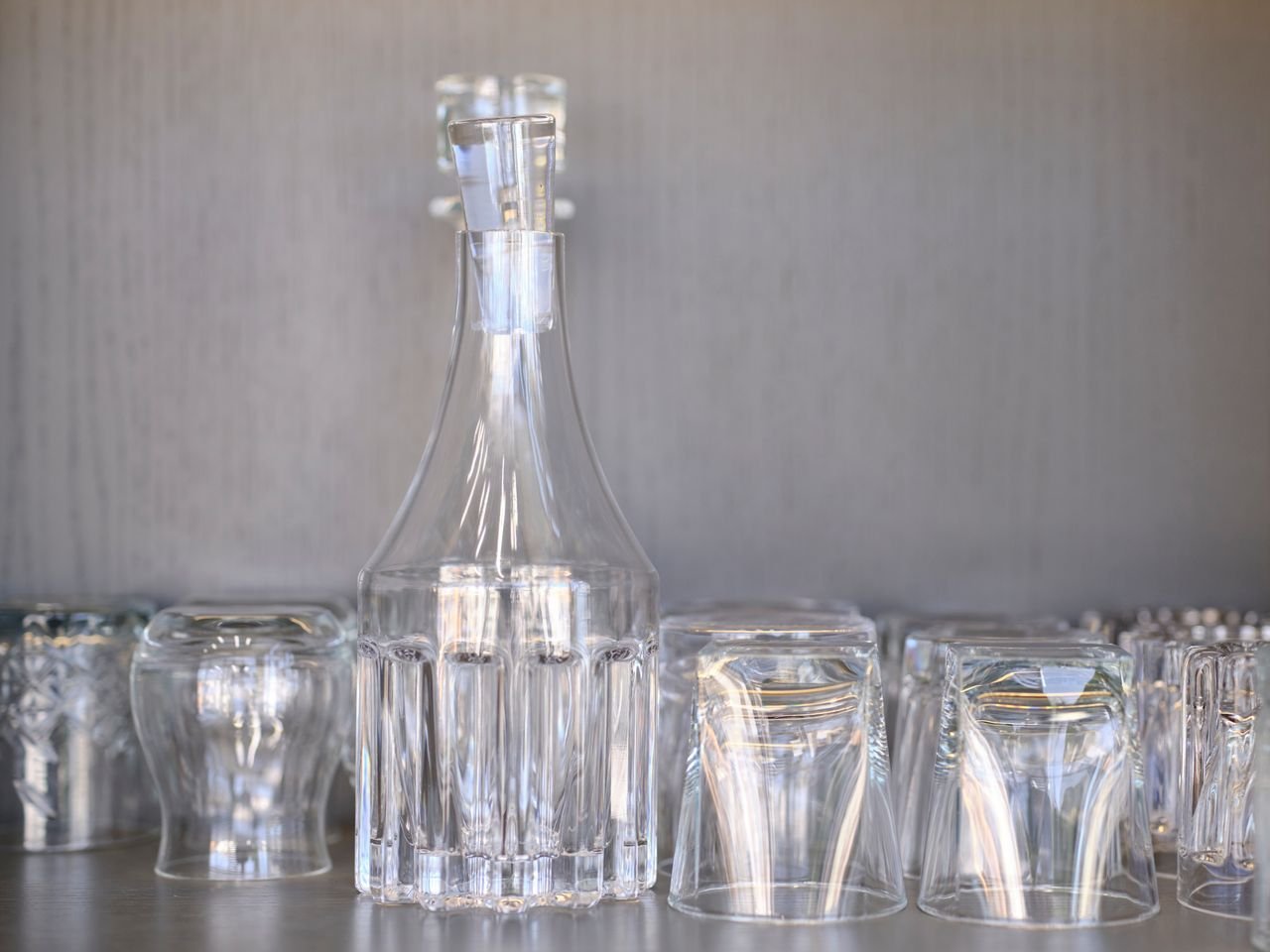
Drying and storage protect glass between washes. Unload promptly so droplets do not dry into spots, and wipe glasses with a microfiber cloth rather than air drying in a humid kitchen. Make sure pieces are fully dry before they go back on the shelf. Line the shelves of your glassware cabinet with felt or a soft liner, and keep seasonal or event glassware in lidded, padded glassware storage containers instead of loose cardboard boxes. Stacking glasses directly on top of each other scratches rims, and scratches catch light almost like etching does. For a fuller routine, see our guide on how to store clean glassware so pieces stay dry, separated, and dust-free between uses.
None of these steps costs much. A rinse aid bottle, a lighter hand with detergent, and a shelf liner prevent the damage that no cleaning method can undo.
FAQ
Is etched glassware still safe to use?
Yes. Etching changes the surface of the glass, not its chemical safety. A cloudy tumbler or an acid-etched vase is fine for drinking and food use. The exceptions are practical rather than toxic: heavily etched glass has a rougher surface that holds residue and is harder to sanitize, which is why restaurants retire cloudy stock, and lead crystal that has gone through many dishwasher cycles should be hand washed and kept away from acidic drinks.
Does toothpaste remove etching from glass?
Only the fake kind. Regular white toothpaste is a mild abrasive, so it can dull light film the same way baking soda does. It will not touch true etching, and gel toothpastes with whitening additives do nothing useful on glass. Baking soda paste is cheaper, gentler, and easier to rinse off, so there is little reason to reach for toothpaste.
Why do my glasses still turn cloudy even with a rinse aid?
Rinse aid stops water droplets from drying into mineral spots, but it does nothing against chemical etching. If cloudiness keeps spreading, check three things: whether you are using too much detergent for soft water, whether the machine’s hardness setting matches your actual supply, and whether the wash temperature is running too high. The vinegar test will tell you whether you are fighting film, which rinse aid helps with, or true etching, which only prevention can stop.