Glassware picks up more than fingerprints. Every wash in hard water leaves a thin layer of calcium and magnesium behind, and over time that layer turns crystal-clear glasses dull and milky. Dishwasher detergent, high heat, and air drying make the problem worse. Many people assume the haze means the glass is ruined, but in most cases the cloudiness is only mineral film, and it can be stripped away with something already in the kitchen cupboard. That goes for everyday tumblers, wine glasses, and a glass cup set you save for guests alike.
White vinegar removes hard-water film from glassware because its acetic acid dissolves the calcium and magnesium minerals that soap and water leave behind. Soak the glasses in a solution of equal parts white vinegar and warm water for five to fifteen minutes, wipe gently with a soft cloth, rinse well, and dry at once with a lint-free cloth. For heavy buildup, use undiluted vinegar and a longer soak.
Here is the full method, plus how to diagnose cloudy glasses, where vinegar should never be used, and how to keep glasses clear long after the wash is done.
Why Vinegar Works on Glassware
Vinegar cleans glass because its acetic acid dissolves mineral deposits that ordinary dish soap cannot break down.
Hard water carries dissolved calcium and magnesium. When rinsed glasses air dry, the water evaporates and those minerals stay on the surface as a chalky film. Each wash adds another layer, which is why the haze seems to appear slowly and then refuse to leave. Standard detergent is designed to cut grease and food residue, not to dissolve inorganic minerals, so scrubbing with soap alone does very little against limescale.
Vinegar approaches the problem from a different direction. The acetic acid in distilled white vinegar reacts with the mineral deposits and loosens them from the glass, which is why a short soak often restores clarity where repeated washing failed. The same chemistry explains why vinegar removes hard-water spots on shower doors and faucets.
One limit is worth knowing before you start. Vinegar is a mineral remover, not a general cleaner. Greasy residue, lipstick marks, and dried drink leftovers should be washed off with warm water and dish soap first. Vinegar works best on glass that is already clean but hazy.
How to Clean Glassware with Vinegar, Step by Step
Wash first, then soak in a vinegar solution matched to how heavy the film is, rinse thoroughly, and hand dry with a lint-free cloth.
The process takes under half an hour for most glasses. Heavily clouded pieces may need an hour or more of soaking, but the steps stay the same.
Mix the Right Vinegar Solution
Start with distilled white vinegar. Match the strength of the solution to the amount of film you can see or feel. A light haze that shows up only in direct light needs a gentler treatment than a glass that looks frosted all over.
| Condition of the glass | Vinegar-to-water ratio | Soak time |
|---|---|---|
| Light film, visible in bright light only | 1:1 with warm water | 5 to 15 minutes |
| Noticeable haze, water spots on the base and bowl | 1:1 with warm water | 15 to 30 minutes |
| Heavy mineral buildup, frosted appearance | Undiluted white vinegar | Up to 2 hours, checking every 30 minutes |
Fill a plastic basin rather than the sink itself. A basin protects delicate stems and thin walls from bumping metal or ceramic surfaces, and it uses less vinegar. Warm the water slightly but do not use it hot, because sudden temperature swings can crack thin glass.
Soak, Scrub, and Rinse
Submerge the glasses so the cloudy areas sit fully in the solution. Let them soak for the time listed above. When the soak is done, wipe the interior and exterior with a soft cloth or a non-abrasive sponge, working in circles. The film usually comes off with light pressure. If spots remain around the base or on the rim, rub those areas with a cloth dipped in straight vinegar.
Rinse each glass thoroughly under clean running water. This step matters more than it looks. Vinegar left on the surface can leave its own streaks, and any residue adds a sour smell and taste to the next drink poured. A final rinse in cool water strips the acid away completely.
Dry and Polish Without Streaks
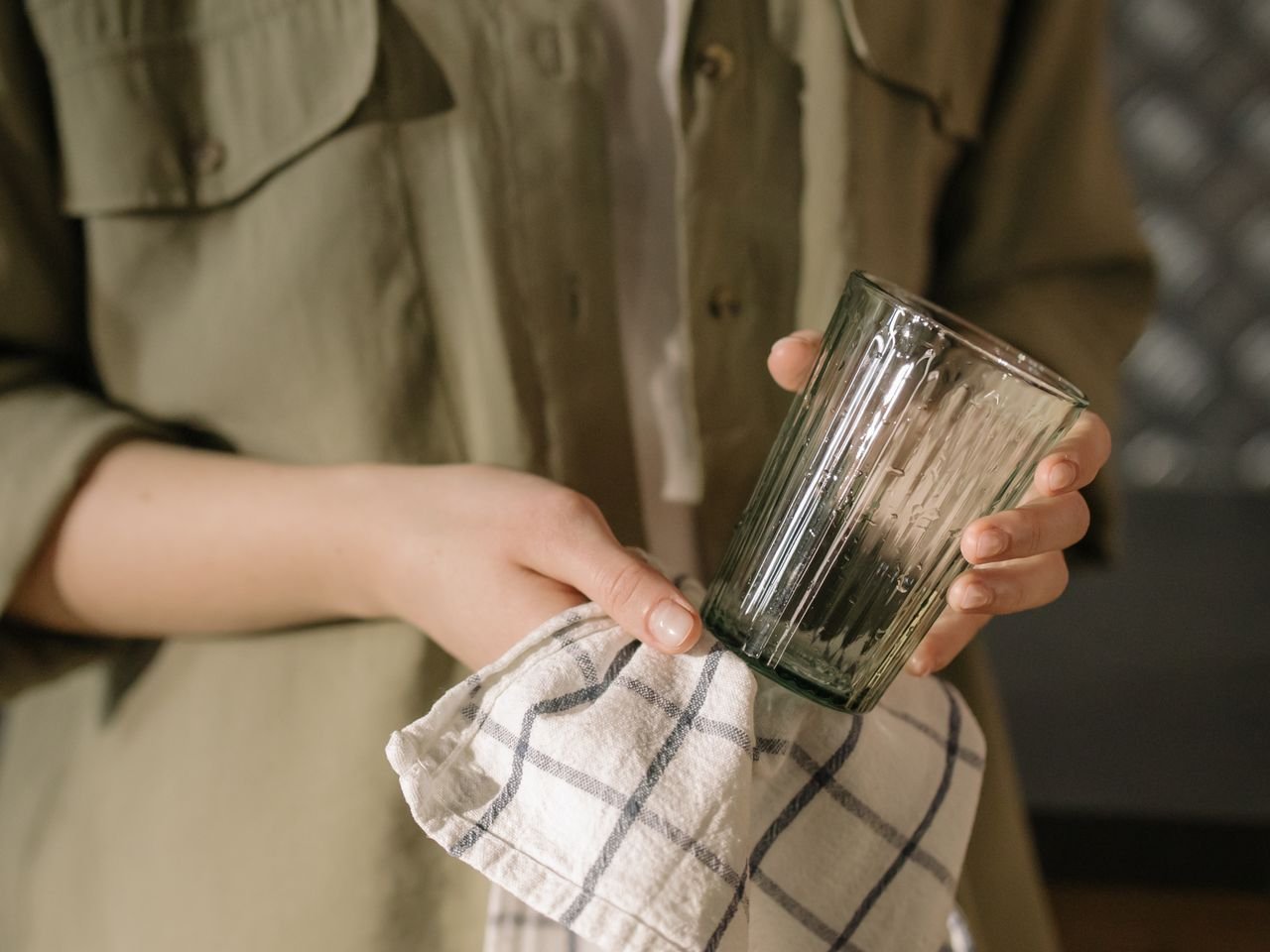
Dry the glasses immediately instead of letting them air dry. Air drying is what causes new water spots in the first place, especially in hard-water homes. Use a lint-free cloth or a microfiber towel, and polish the inside of the glass first, then the outside, holding the bowl rather than the stem for wine glasses. Buff firmly and methodically until the surface is dry and clear.
How Do I Make My Cloudy Glasses Crystal Clear Again?
First find out whether the cloudiness is removable mineral film or permanent etching, because vinegar restores the first but cannot fix the second.
Most cloudy glasses can be brought back to full clarity. The exceptions are glasses whose surface itself has been damaged, and telling the two conditions apart takes less than a minute.
The Vinegar Test: Film or Etching
Dampen a fingertip or a cotton pad with white vinegar and rub one small patch of the cloudy glass, then let it dry. If that patch turns clear while the rest stays hazy, the problem is mineral film, and a proper soak will remove it. If the treated patch looks no different from the rest, the glass is etched.
Etching is microscopic damage to the glass surface itself, caused by very soft water, overly strong dishwasher detergent, or repeated high-heat cycles. The acid in vinegar eats away deposits; it cannot rebuild glass, so no cleaner or polish reverses etching. A film also feels slightly rough under a fingertip, while etched glass feels smooth but stays milky. Glasses that fail the vinegar test should be replaced or downgraded to casual use, and the prevention habits below become the priority.
Restoring Heavily Clouded Glasses
For glasses with years of buildup, a standard soak may not be enough. Fill a basin with undiluted white vinegar and submerge the glasses completely, then check them every thirty minutes. Stubborn film can take up to two hours to loosen. Between checks, rub the hazy areas with a soft cloth while the glass is still wet.
For spots that resist soaking, make a paste of baking soda and a few drops of water, apply it with a damp cloth, and rub gently. Baking soda adds mild abrasive power that lifts the last layer of mineral without scratching the surface. Rinse well after any baking soda treatment, then dry and polish with a lint-free cloth. Avoid abrasive scrub pads and scouring powders, since scratches on glass scatter light the same way film does.
What Should You Not Clean With White Vinegar?
Keep vinegar away from natural stone, unsealed grout, wood finishes, stainless steel, cast iron, rubber parts, and electronic screens, because its acidity damages them.
Vinegar is gentle on glass but corrosive on many other household materials. Cleaning experts warn that the same acid that dissolves limescale can pit natural stone, strip wood finishes, corrode metal, and ruin anti-glare coatings on screens.
- Marble, granite, and limestone: the acid etches the surface and dulls the polish, sometimes permanently.
- Wood floors and furniture: vinegar breaks down waxed and sealed finishes over time and swells unsealed wood.
- Stainless steel knives and appliances: long exposure can cause pitting on the surface.
- Cast iron: vinegar eats the seasoned coating that keeps the pan non-stick and rust-resistant.
- Rubber gaskets and hoses: repeated contact makes rubber brittle, which is a risk for dishwasher and washing machine parts.
- Electronic screens: acidity damages anti-glare and touch coatings.
- Grout in poor condition: unsealed or crumbling grout erodes under acid.
One safety rule matters more than any of the others. Never mix vinegar with chlorine bleach. The combination releases toxic chlorine gas, so keep the two products in separate cleaning routines and rinse surfaces between them.
None of these risks apply to plain glass in a short, diluted soak. The lesson is simply to match the cleaner to the material rather than treating vinegar as an all-purpose product.
What Do Professional Glass Cleaners Use?
Professionals rely on hand washing in warm water, immediate drying with lint-free cloths, and occasionally a cerium oxide polishing compound for scratched glass.
Bars, restaurants, and event companies that handle high volumes of glassware, including businesses that manage glassware rentals for weddings and banquets, wash by hand rather than machine whenever clarity matters. The standard setup is a three-sink method: one basin of warm soapy water for washing, one of plain rinse water, and one with a small amount of vinegar or rinse aid added to the final water so glasses shed droplets and dry without spots.
The drying step is where most of the visible difference comes from. Professionals polish each glass with a microfiber or lint-free cloth while the glass is still slightly damp, working from the inside out, and they never stack wet glasses. Studios that work with glass by hand, from glassware studios to laboratory supply rooms, follow the same principle: clean gently, dry immediately, and store where nothing can scratch the surface.
For glasses with fine scratches, some professionals use a polishing compound containing cerium oxide, a powder that, when mixed with water and worked over the surface with a felt pad, smooths minor imperfections. It is a specialist product rather than a pantry item, and it is worth considering only for valuable pieces, since the process takes patience. For everyday haze, vinegar does the same job with none of the effort.

Preventing Cloudiness: Drying, Storage, and Care
Glasses stay clear when they are dried immediately after every wash and stored dry, with airflow, in a cabinet that keeps dust and moisture away.
Prevention costs less effort than restoration. Dry glasses by hand right after washing, and in hard-water areas add a splash of vinegar to the rinse water as a low-cost spot preventive. If you use a dishwasher, run it with a rinse aid, dose the detergent carefully, and skip the heated dry cycle, which bakes minerals onto the glass.
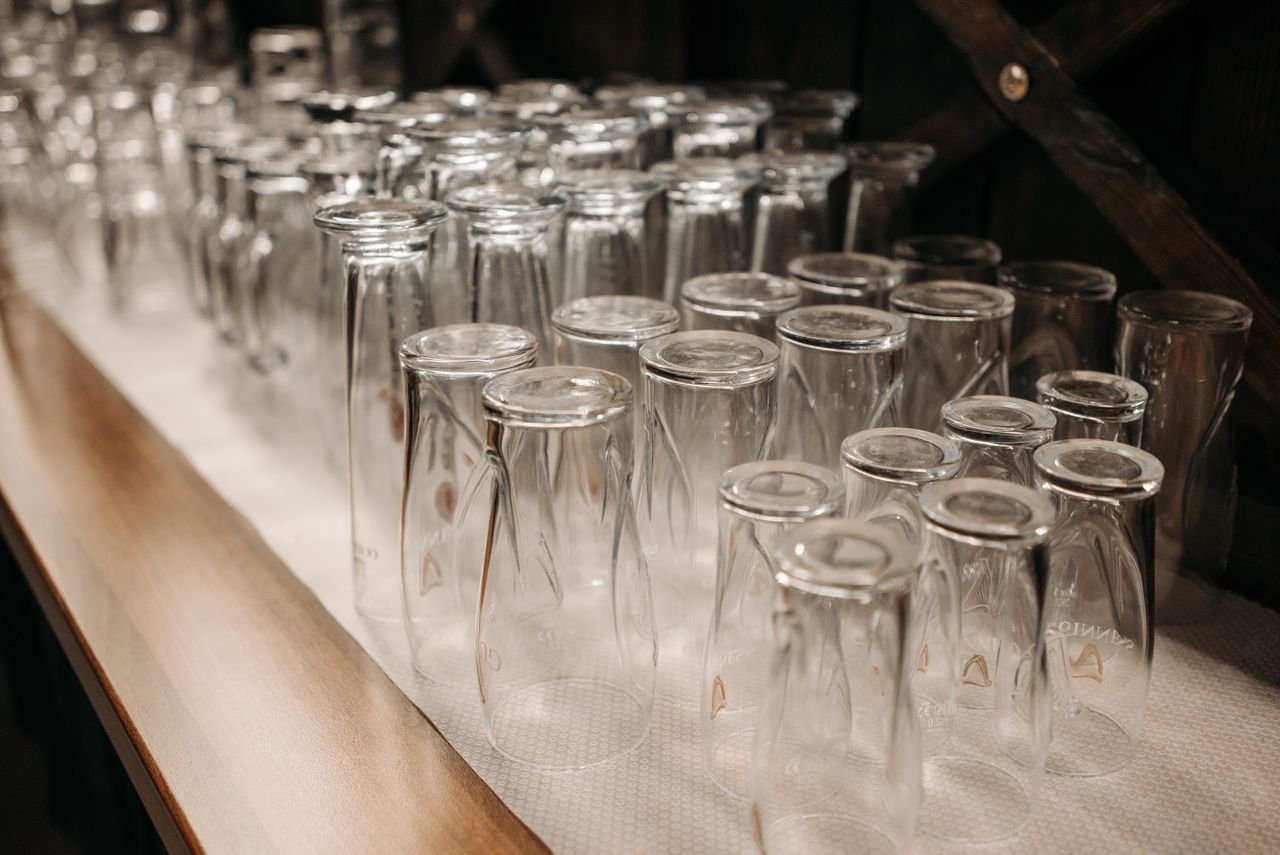
Storage matters just as much as washing. Good glassware storage starts with glasses that are completely dry, because moisture sealed inside a cabinet creates the damp, dusty conditions where film and odors develop. Store glasses upright rather than rim-down on bare shelves, since rims are the most fragile part. If you stack pieces in glassware storage containers between seasons, line them with soft cloth and leave the lids loose enough for air to move. A dedicated glassware cabinet with padded dividers protects rims and keeps dust off, which means less washing and fewer scratches between uses.
Sets deserve a note of their own. Matching glassware sets look their best when every piece ages at the same rate, so rotate them evenly rather than using the same few glasses every week, and treat the whole set to a vinegar soak when the first signs of haze appear. For a fuller picture of the storage side, see this guide to storing clean glassware, which covers cabinet conditions and placement in detail.
FAQ
Can vinegar damage glass or decorative finishes?
Plain glass tolerates diluted vinegar soaks without harm. Damage becomes a risk with decorated pieces: painted rims, gilded bands, and some acid-etched patterns can fade or dull after long exposure to acid, and lead crystal should be hand washed and given only short, diluted vinegar treatments. When in doubt, test a small spot first and keep soaks under fifteen minutes.
Is cleaning vinegar better than white vinegar for glassware?
Cleaning vinegar contains six to eight percent acetic acid, compared with about five percent in standard distilled white vinegar, so it dissolves mineral film faster. For light haze, the difference is small, and standard white vinegar is the safer choice for regular use. Reserve the stronger version for heavy buildup, and rinse just as thoroughly either way.
How often should I clean glassware with vinegar?
It depends on your water. In hard-water areas, a preventive wipe-down with diluted vinegar about once a month keeps film from ever becoming visible, and glasses used daily may need it more often. In soft-water homes, an occasional soak when you notice haze is enough. The vinegar patch test from earlier also works as a quick routine check.