A glass can leave the dishwasher spotless and still look dull two minutes later. Water dries in droplets, the minerals in it stay behind, and fingerprints land on the bowl on the way to the table. Bar teams face this challenge every shift, and hosts face it at every dinner party. Whether you are buffing a restaurant’s nightly lineup or the custom glassware you keep for events, three things decide the result: what you dry with, how you hold the piece, and how clean the water is.
Polishing glassware is a dry-buff step, not a washing step. Once the piece is clean and dry, you remove the last trace of water, oil, and dust with a clean, lint-free cloth, holding the glass by the bowl rather than the stem or the foot.
This guide covers the cloth worth buying, the grip that prevents breakage, and the point at which a hazy glass cannot be saved.

Why glassware loses its shine after washing
Most dull-looking glass is not worn out; it is carrying a thin film the wash cycle left behind. That film is usually mineral, sometimes detergent, and occasionally just skin oil.
What water spots actually are
Hard water holds dissolved calcium and magnesium. When a droplet dries on glass, those minerals stay on the surface as a chalky ring or a general haze. Hardness varies enormously between supplies: the Water Quality Association’s scale, reproduced in the University of Nebraska–Lincoln Extension guide to hard water, runs from soft at under 17.1 mg/L to very hard at 180 mg/L and above. A hot rinse makes it worse, because more minerals are left behind as the water evaporates.
Detergent residue and handling marks
Detergent causes the second kind of film. Too much of it, or a rinse that does not clear it, leaves a slick layer that catches light and kills clarity. Rinse aid hides the problem on the shelf but does not remove the minerals, so the haze returns on the next wash.
Handling adds the third. Fingers carry oil, and oil spreads. A thumbprint wiped with a damp cloth smears rather than lifts, which is why polishing cloths are kept for glass alone: a cloth that has touched a bench or a greasy plate puts that film straight back onto the glass.
What is the best thing to polish glass with?
A clean microfiber cloth is the best tool for polishing glass, with steam as a helper for dried-on residue and nothing abrasive anywhere near the surface. The cloth does most of the work; technique does the rest.
Microfiber cloths and lint-free towels
Microfiber is a blend of polyester and polyamide, with fibers finer than human hair. The structure lifts oil and dust into the fabric instead of pushing it around, and it does not shed the way cotton does. Wash it separately from kitchen linen and skip fabric softener, which coats the fibers and turns the cloth into a smearing tool.
Two cloths beat one: hold the bowl in the first and buff with the second, so your fingers never touch glass you have already polished.
Steam
Steam loosens what a dry cloth cannot. Hold the glass above a bowl of hot, not boiling, water until it fogs, then buff straight away; the condensate gives the cloth something to carry the residue out with.
Keep the glass above the water, never in it. Dunking a chilled piece is the quickest way to crack it.
What to keep away from glass
| Tool | Where it works | Risk |
| Microfiber cloth | All glassware, every day | None if washed without softener |
| Clean cotton tea towel | Sturdy tumblers, in a hurry | Sheds lint onto rims |
| Paper towel | Emergencies only | Paper dust and a faint odor |
| Newspaper | Never | Abrasive ink, fine scratches |
| Scouring pad or abrasive powder | Never | Permanent scratches, lost clarity |
Abrasive cleaners do not polish glass; they grind it, and the clarity a scouring pad removes never comes back.
How to polish glassware step by step
Work from the inside out, one section at a time, and keep your hands on the cloth rather than twisting the glass. Twisting is how stems snap.
- Rinse the piece in clean, preferably softened water.
- Let it drain for a minute.
- Fold a microfiber cloth into a pad and cup the bowl in one hand.
- Buff the inside of the bowl, then the outside, using light circular passes.
- Wipe the stem in one direction, from bowl to foot.
- Finish on the foot, then hold the glass to the light and check the rim.
- Set the glass down on a clean surface, not on a bar mat or a dish towel.
Stemware and wine glasses
Never hold the foot and turn the bowl. That motion puts twisting force directly on the stem-to-bowl joint, the weakest point in the piece. Thin, hand-blown glass also needs a lighter touch than a machine-made hotel glass: press with the weight of your hand, not your arm.
Tumblers, cups, and everyday glasses
The rim takes the most contact and shows the most marks, so finish there. Double-wall cups need care at the seal line, and nothing should be pushed into the gap between the walls. Textured patterns trap water; buff across the pattern rather than along it.
Jars, bottles, and narrow-mouth pieces
A hand does not fit into a narrow jar, and forcing it risks the glass and your knuckles. Wrap a cloth around a wooden spoon handle or use a bottle brush, then rotate the glass around the tool. On jars, the threaded neck is where water hides; wipe the threads before the lid goes back on, or the next opening will release a stale smell.
| Glass type | How to hold it | Most common damage |
| Stemware | Cup the bowl, or one cloth per hand. | Broken stem from twisting |
| Tumbler | Grip the body, finish at the rim. | Chipped rim from stacking |
| Double-wall cup | Hold the outer wall only. | Water caught in the sealed gap |
| Narrow jar or bottle | Rotate the glass around a cloth-wrapped tool. | Cracked neck from forced entry |
How to polish cloudy glassware
Cloudy glass is either a mineral film you can dissolve or permanent etching you cannot, so test before you spend time on it. The two look almost identical from arm’s length.
The vinegar test: film or etching
Dampen a clean cloth with white vinegar and wipe one section of the cloudy glass. Let it dry, then look at that patch. If the wiped area has gone clear, you have a mineral film, and it will come off. If nothing has changed, the surface has been pitted, and no polish will bring it back.
Removing a mineral film
- Fill a bowl with half white vinegar and half warm water.
- Submerge the glasses for about fifteen minutes.
- Wipe gently with a soft cloth, then rinse in clean water.
- Dry straight away with microfiber rather than letting the piece air dry, which is what created the film in the first place.
A citric acid solution works the same way if you would rather not handle vinegar. For a stubborn patch, mix bicarbonate of soda with water into a paste, work it over the area with light pressure, and rinse well. The paste is mildly abrasive, so use it sparingly and keep it away from decorated glass.
Making dull or tired glass look new again
Light haze, water spots, and greasy fingerprints all come back at the polishing stage. Steam the piece, buff it with a clean microfiber cloth, and check it against the light. If it still looks tired after two passes, the problem is the washing routine: cut the detergent dose, keep rinse aid topped up, and treat the water if hardness is high. Buffing harder does not help and dulls the surface over time.
Why etched glass cannot be polished back
Etching is corrosion of the glass surface itself. Over many cycles, hot water and aggressive detergent dissolve small amounts of silica and leave microscopic pits that scatter light in every direction. Glass is not a coating that can be reapplied, so no polish or cloth fills those pits.
It shows up most often in soft or softened water, where the detergent is not fully consumed and works directly on the glass. Very hot cycles speed it up, and so does leaving an acidic drink in a glass for hours. Once visible, the piece is a replacement item: retire it and correct the wash settings before the next batch follows.
How to store glassware so it stays polished
Glass stays clear when it is stored dry, kept apart, and held away from anything that smells. Storage is where a good polish is either protected or quietly undone.
Cabinet and shelf setup
Choose an enclosed, dry glassware cabinet away from a window, an oven, or a doorway with a temperature swing. Sudden heat and cold stress, glass, and direct sun can yellow decorated pieces.
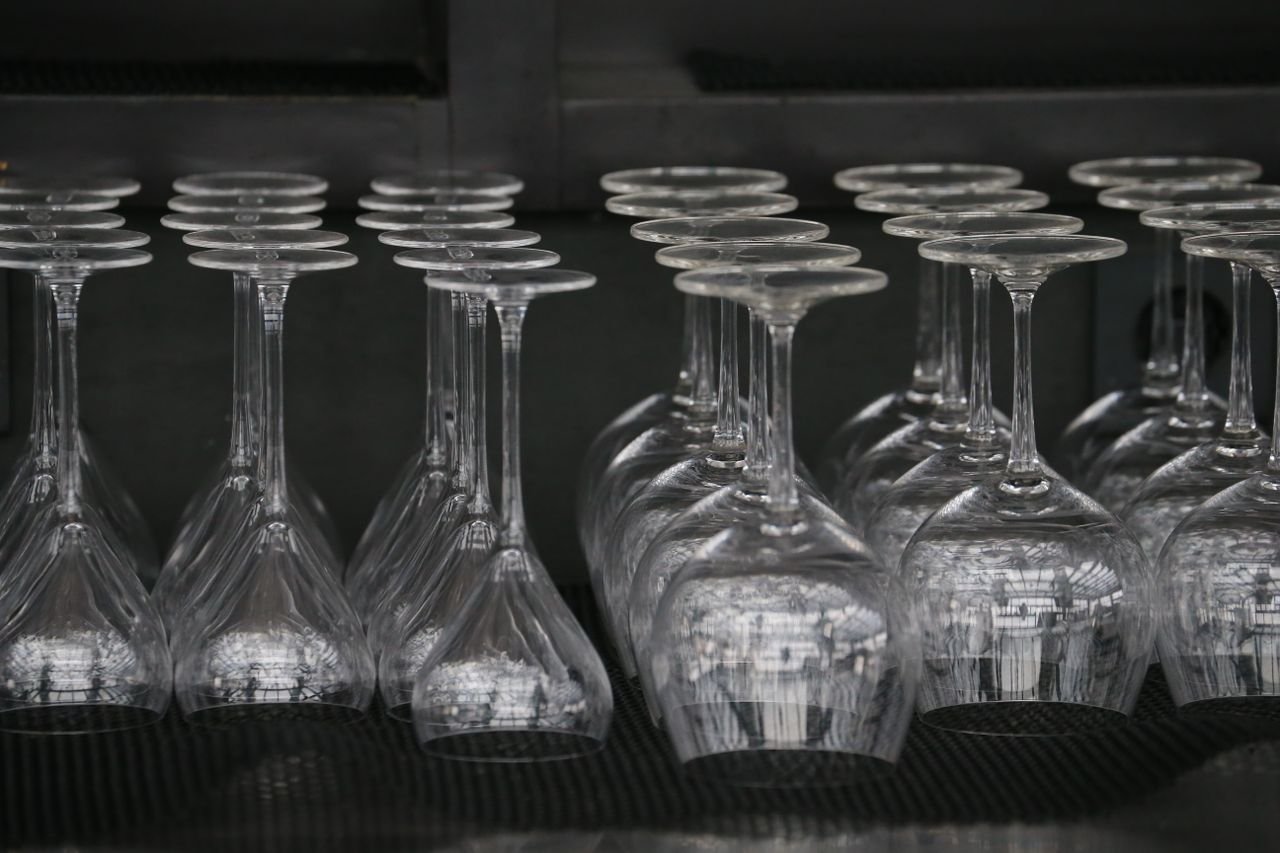
Upright or upside down depends on the shape. Narrow glasses stored rim-down keep dust out; wide-bowled stemware should stand upright on the foot, because the rim takes weight poorly.
Racks, padded storage, and storage containers
Nothing should touch anything else. Stacking tumblers chips rims and scratches bowls, and the damage turns up months later as a line of haze. Use slotted racks at volume and padded dividers for larger pieces. Clear storage containers keep a full set together and show you what is inside without opening the lid.
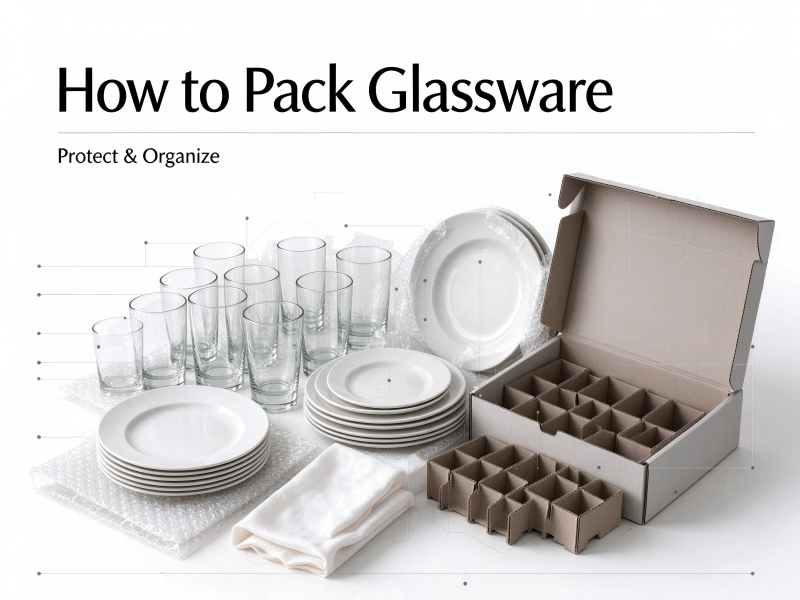
For seasonal stock, use compartmented boxes with padding between items. More on the daily habits is in this guide to glassware storage, which covers drying and stacking in more detail.
Rotation, dust, and the smell problem
Work from the front and refill from the back so older stock leaves first. A closed cabinet still gathers dust over weeks, so re-polish anything that has been sitting a while. Keep glass away from cleaning chemicals, onions, and coffee; it takes on odors from the air around it.
Polishing glassware at volume: rentals, events, and bar service
At volume, polishing is a workflow rather than an action: sort, inspect, buff, and put the piece back before the next round starts.
Rental and catering glassware: inspection before it leaves
Event stock and glassware rentals take far more handling than a shelf of everyday glasses. Build inspection into loading rather than packing: hold each piece to the light as it goes into the crate and pull anything cloudy, chipped, or cracked on the spot. Logging breakages by glass type shows which shapes in the rental set are costing money, and it is almost always the tall, thin ones.
Building a lineup that survives daily polishing
Glassware sets built for daily service should be chosen for how they survive handling, not only for how they look on a table. The stem-to-bowl joint is the failure point, so pieces with a shorter stem and a thicker joint outlast delicate showpieces. Where the menu does not demand a specific shape, a shorter, heavier profile cuts breakage and the time staff spend at the polish station. Small-batch glassware studios often make a delicate version and a sturdier build of the same shape; if you serve at volume, ask which one the maker recommends for machine washing.
Before committing to a line, confirm three things: that the supplier can keep the shape in stock for several years, that the export packaging suits a full container, and that the glass meets the food-contact rules in your market. A cheap line you cannot reorder costs more than it saves, because a mismatched replacement set looks worse than a worn one.

FAQ
Does the water I wash with really change how clear my glass turns out?
Yes, more than most people expect. If your supply is hard, minerals settle on the glass every time a droplet dries, no matter how well you polish. Ask your water supplier for the hardness figure in its annual quality report, or test a sample. If the number sits in the hard range, softening the water will do more for clarity than any change to your technique.
Can glassware be polished in a dishwasher, or does it have to be done by hand?
A dishwasher can wash, sanitize, and dry glass well enough for storage, but it cannot polish, because polishing means physically buffing the surface with a cloth. Let the machine handle stored stock, then polish by hand when the glass is about to go to a table.
How long should a polished glass stay clear before it needs polishing again?
That depends on where it goes next. A glass polished and placed straight onto a tray can be served within the hour. Dust settles within a day or two on an open shelf, and a week in a closed cabinet is long enough to need a quick buff. In service, inspect before each use and re-polish on the spot rather than storing a polished glass overnight and hoping.