A rocks glass is one of those items everyone can picture and almost nobody can spec. Ask three suppliers how much one holds and you’ll get three answers, because “rocks glass” names a shape rather than a volume. Bars order them by the case, rental companies count them by the thousand, and home buyers pick them off a shelf, and all three run into the same gap between what the listing says and what the glass pours.
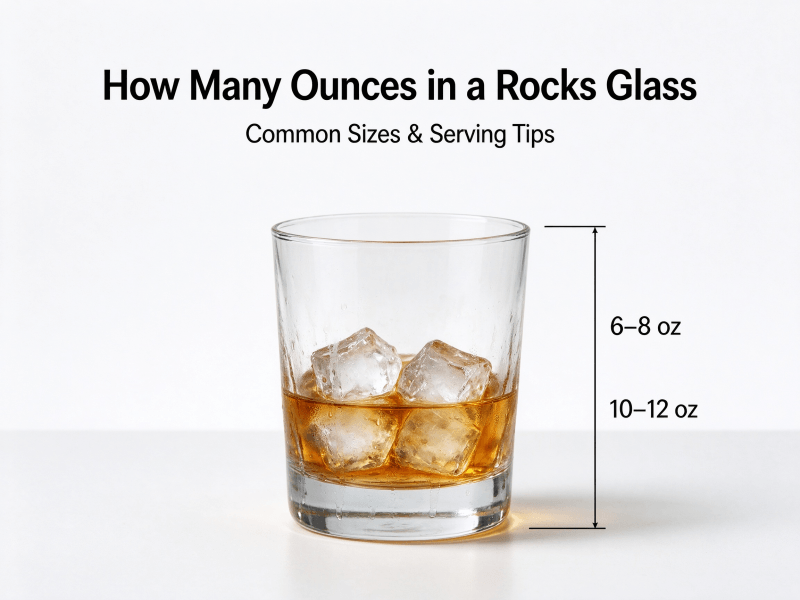
A standard rocks glass holds 8 to 10 fluid ounces, or roughly 240 to 300 mL. Single rocks glasses run 6 to 8 ounces, and double rocks glasses reach 12 to 14 ounces.
The ranges overlap more than the names suggest, so it helps to read them the way a buyer does, starting from the custom glassware specification rather than the label on the box.
Rocks glass sizes at a glance
Four sizes are sold under this name, and each covers a wider band of ounces than its label implies.
| Style | Typical capacity | In milliliters | What it suits |
|---|---|---|---|
| Single rocks, or lowball | 6 to 8 oz | 180 to 240 mL | A neat pour, or 1.5 oz with a splash |
| Standard rocks | 8 to 10 oz | 240 to 300 mL | 2 oz over a few cubes, or a built cocktail |
| Double rocks, or DOF | 12 to 14 oz | 350 to 415 mL | One large cube or sphere, spirit-forward drinks |
| King, or extra-large | 16 oz and up | 470 mL and up | Double pours and long mixed drinks |
Why the same name covers different volumes
A supplier’s figure usually describes the brim capacity of a particular mould, and small design choices move that number. A thicker base raises the exterior height without adding interior volume. A taper narrows the usable floor. A rolled rim adds a few milliliters at the top that nobody fills. Two glasses both sold as 10 oz cans, differ by a few tenths of an ounce and neither is mislabeled, because the trade treats capacity as a target rather than a tolerance.
Why the glasses got bigger
Mid-century bar stock ran smaller, sized for a 1.5- to 2-ounce pour over a few small cubes. Then ice got larger, and a 2-inch cube or a 2.5-inch sphere needs a wider floor. Spirit ranges widened too, so bars wanted one glass that could take a neat pour and a built cocktail without making either look wrong. The 10-ounce glass became the compromise, which is why it sits in the middle of most catalogs.
Why the listed capacity is not what you can pour
A glass rated to the brim will not serve that volume, because ice and the gap below the rim consume two to four ounces before any liquid goes in.
Brim capacity, washline, and headspace
Three numbers matter. Brim capacity is what the mould holds to the top. Washline is where a drink gets filled in service, usually about half an inch below the rim, which leaves room to lift the glass and room for aroma to gather. Headspace is the gap between the two. Pour to the brim and the glass spills on the first lift. Pour too low and the drink looks short. The washline is the working number and the one worth writing into a purchase spec.
How much room the ice takes
Ice displaces liquid, and the shape of the ice changes how much:
| Ice format | Approximate displacement | Effect on the drink |
|---|---|---|
| Three or four 1-inch cubes | 1.5 to 2 oz | Chills fast, dilutes fast |
| One 2-inch cube | About 4 oz | Slow, steady melt |
| One 2.5-inch sphere | 4 to 4.5 oz | Slowest melt, widest footprint |
| Crushed ice to the rim | 5 to 6 oz | Rapid chilling, rapid dilution |
Read that against the capacity chart, and the arithmetic gets uncomfortable. A 10-ounce glass holding a 2.5-inch sphere leaves about 5.5 to 6 ounces for liquid. Pour 3 ounces in and the drink sits around halfway up, a correct serve that looks like a short one. It’s also why the double exists: not to hold more whiskey, but to hold the same whiskey next to bigger ice.
How to check what your own glasses hold
- Fill the glass with water to the washline you actually serve to, measuring with a jigger or a marked cup.
- Note the total in milliliters, then divide by 29.5735 for fluid ounces.
- Empty it, add your usual ice, top up to the same washline, and measure again.
- Subtract the second figure from the first. The difference is your working volume, usually one to two ounces under the label.
Those conversions follow the US fluid ounce, fixed at 29.5735 mL in the NIST Handbook 44, Appendix C, the reference US weights and measures offices check against. The UK imperial ounce is smaller at 28.41 mL, so British recipes measured in ounces come out slightly short.
How many shots fit in a rocks glass
An 8 ounce rocks glass served with ice holds about 5 ounces of liquid, which works out to three 1.5-ounce shots by volume. A normal pour is one to one and a half shots, not three.
| Glass | Brim capacity | Liquid room with ice | 1.5 oz shots by volume |
|---|---|---|---|
| 8 oz | 240 mL | About 5 oz | 3 |
| 10 oz | 300 mL | About 6 oz | 4 |
| 12 oz | 350 mL | About 7 oz | 4 to 5 |
| 14 oz | 415 mL | About 9 oz | 6 |
The math answers the question, but not the way a bar uses it. A rocks glass is a serving vessel, not a measure. Portion control happens at the jigger, and the glass only has to leave room for ice and a washline. Sizing glasses by shot count is how a bar overpours without noticing, because a wide 14-ounce glass makes a correct 2-ounce pour look stingy.
Shot size isn’t fixed either. The US pours 1.5 fluid ounces; metric bars commonly pour 25 or 30 mL, and some pour 50 mL. A glass that holds three US shots holds closer to two and a half in a bar using 50 mL measures, so the answer depends on which country you’re drinking in.
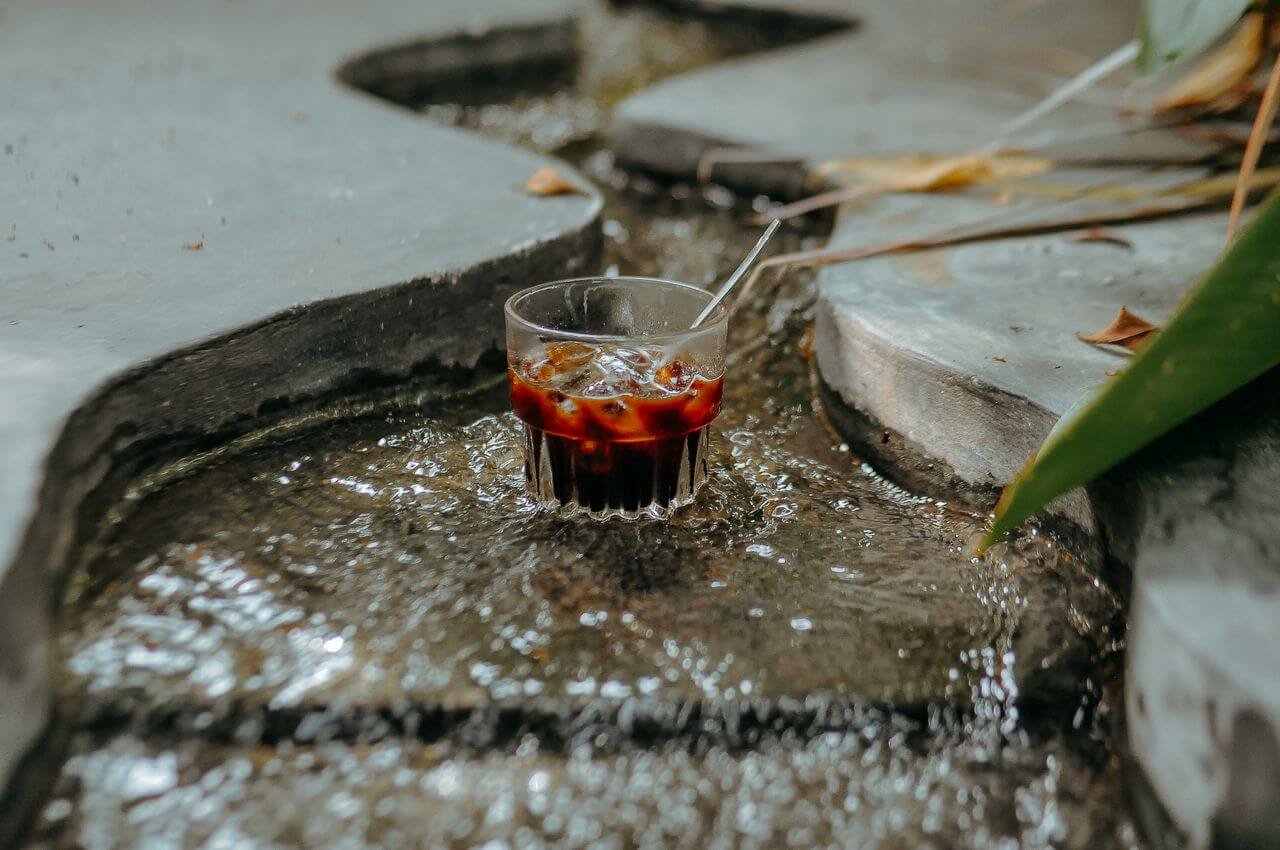
Rocks glass vs. Old Fashioned glass
They are the same glass. Rocks is the order name, Old Fashioned is the recipe name, and lowball is the name that shows up on inventory sheets.
The Old Fashioned cocktail was built in a short tumbler, and the association stuck hard enough that suppliers adopted the recipe as a product name. The shape came first and the names followed, which is why a bar can stock one item and list it three ways.
| Term | Where it shows up | What it means in practice |
|---|---|---|
| Rocks glass | Customer orders, retail listings | Short tumbler for spirits over ice |
| Old Fashioned glass | Cocktail menus, recipe books | Same shape, sized for a drink built in the glass |
| Lowball | Bar operations, inventory | Any short, wide tumbler, roughly 10 oz or under |
| Double Old Fashioned, DOF | Supplier catalogs, recipes | The 12 to 14 oz version of the same shape |
The only variant with a real difference is the double. It keeps the proportions, adds volume, and exists for drinks that need muddling room or a large cube. Everything else is naming. The comparison worth knowing is the highball: tall, narrow, 10 to 12 ounces, built for carbonated drinks that want less surface area and more height.
What is an 8 oz glass called
In barware, an 8-ounce glass is a single rocks glass or a lowball. In a kitchen cabinet, the same capacity is a water glass or a juice glass.
Capacity doesn’t name a glass. Shape does. An 8 ounce vessel can be a heavy-based tumbler, a tapered water glass, or a small highball, and each gets a different word on a shelf label.
| 8 oz vessel | Shape | Usual name |
|---|---|---|
| Heavy base, straight or slightly tapered sides | Short and wide | Rocks glass, lowball |
| Thin walls, no base, moulded taper | Everyday tumbler | Water glass, juice glass |
| Narrow and tall | Highball proportions | Small highball, or a Collins at larger sizes |
This is where nicknames cost money. A purchase order that says “8 oz glass” can be filled with a water tumbler that has no base weight and no room for ice. Writing “8 oz (240 mL) rocks tumbler, heavy base, fire-polished rim” removes the ambiguity in one line.
Choosing a capacity by how you serve
Choose from the pour you serve most often, not the glass you like most. An oversized glass makes a correct pour look thin, and a thin-looking drink gets topped up.
For a home bar
Two 10-ounce glasses cover neat pours and standard cocktails. If you build drinks with large ice, add two doubles. Buying six of one size sounds efficient and usually isn’t, because the glass that flatters a 2-ounce pour looks mean holding a Negroni. Most glassware sets are built around a single size, which is why a four-glass pack rarely covers both jobs.
For bars and restaurants
Capacity matters less than consistency. One size across the well means the washline falls in the same place on every drink, and a new hire can hit it without measuring twice. It also simplifies cabinet space, par levels, and replacement orders, since a single breakage item covers the whole rail.
For events, catering, and glassware rental
Catalogs for glassware rentals lean on 10- and 12-ounce tumblers because those sizes survive stacking, travel in racks, and suit the widest range of drinks. If you’re specifying for a recurring event, weigh stacking height and return rate as heavily as capacity. A slightly heavier glass that stacks flat usually works out cheaper across a season than a lighter one that chips in transit.
Storing and caring for rocks glasses
The base is the fragile part in storage, not the wall. Most breakage comes from stacked glasses and temperature swings, not from washing.
Arranging a glassware cabinet
Store upright or inverted in a single layer, with a finger’s width between glasses so rims don’t touch. Stacking two tumblers is the most common cause of a chipped rim, because the upper base lands on the lower rim with the full weight of the glass behind it. Measure the interior against the tallest glass plus clearance before you give a shelf over to barware.
Moving and seasonal storage
For anything that leaves the building, dividers matter more than the box. Glassware storage containers with individual cells, or a cardboard partition cut to the glass count, stop the lateral movement that cracks bases. Paper wrapping is the safer choice on thin-walled glasses, since bubble wrap pressed against a rim under a stacked load can leave marks.
Washing without thermal shock
Most soda-lime tumblers handle a domestic dishwasher on a normal cycle. Heavy bases survive handling but not sudden temperature changes, so skip the boiling-water pre-rinse and don’t move a chilled glass straight into a hot wash. Hand wash anything with a cut rim, and dry upside down on a rack rather than with a towel, which is where most rim chips happen.
Buying rocks glasses in bulk: what to specify
Write the volume in milliliters, name the point it gets measured to, and state the tolerance you’ll accept. A purchase order that says only “8 oz” gets filled to whichever interpretation the factory uses.
Five lines cover most of the risk:
- Nominal capacity in mL, plus whether that figure is brim or washline.
- Glass type, since soda-lime and lead-free crystal differ in weight, clarity, and how they take a rim.
- Wall and base thickness, given as a range rather than a single figure.
- Rim finish, and whether the rim should be fire-polished or cut.
- Packing method, bulk carton or individual cells, and whether a pre-production sample is required.
Samples settle arguments that spreadsheets can’t. Order two or three candidates, measure them with the water method above, and compare against the pour you actually serve. Suppliers that keep glassware studios in-house can often adjust a mold for capacity within a small range, but a change to base thickness or rim style belongs in the first quote, not the third.
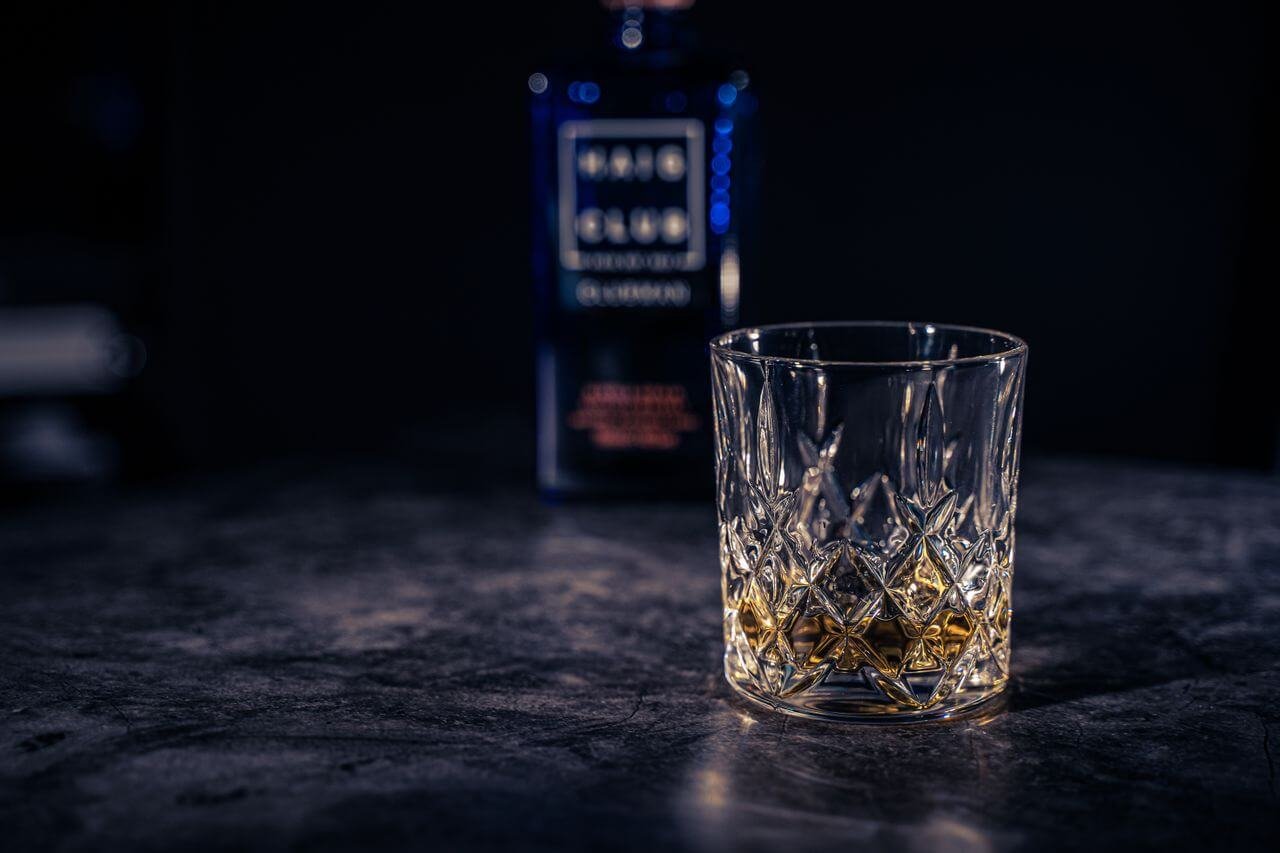
FAQ
Can a standard 8 oz rocks glass hold a full can of soda?
Not with ice. A 12-ounce can exceeds the brim capacity on its own, and once ice goes in, a standard rocks glass takes roughly 5 ounces of liquid. Soda belongs in a highball, which carries 10 to 12 ounces and enough height to hold the fizz.
Does a thicker base mean fewer ounces?
It does at the same exterior height. Base thickness comes out of the interior, so two glasses that stand the same height and share a diameter will hold different volumes if one has a heavier base. Weight is a poor proxy for capacity when you compare samples by hand.
Why do some menus list glass capacity in centiliters?
Metric bar practice, common in Europe and Australia. Twenty centiliters is 200 mL, and thirty is 300 mL, so the conversion is the number times ten. A 30 cl glass is a standard rocks glass and a 40 cl glass is a double, which maps onto the ounce ranges without much rounding.