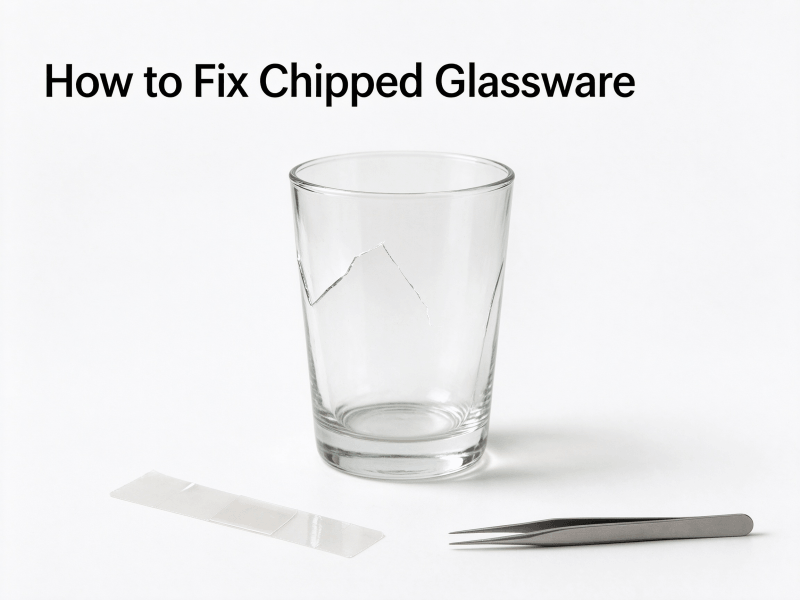
Most chipped glassware gets thrown out for the wrong reason. A glass knocks against a dishwasher tine, a tumbler lands hard in the cupboard, and a sliver leaves the rim. The piece still holds water and still matches the glassware sets on the shelf, so the decision to keep it or bin it comes down to a guess. In a restaurant or hotel, that guess gets made dozens of times a week.
A shallow chip on the rim can usually be repaired, either by grinding and polishing the edge back to smooth or by filling the missing volume with clear resin. A chip that has started a crack, a chip on the foot or stem, and any piece that leaks cannot be repaired safely. Repaired pieces also should not return to hot-drink service or to a dishwasher.
The rest of this guide covers how to tell those cases apart, how each method works, and what the food-safety rules actually say.
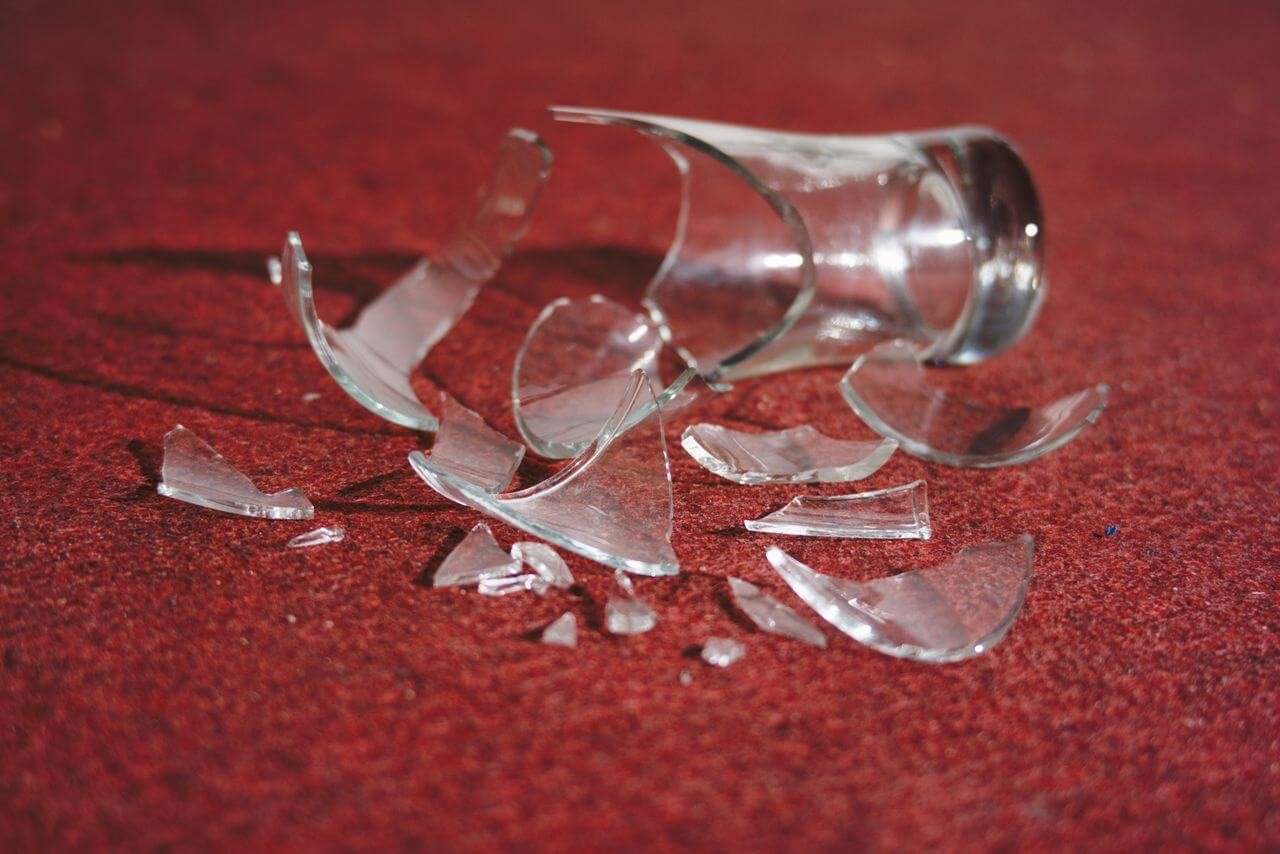
A chip is a structural defect, not a cosmetic one
Glass fails from its edges. A chip removes the surface layer that holds the piece in compression, leaving a sharp notch where stress concentrates. Every knock after that drives the notch deeper, so a chip that looks stable this month can open into a crack the next time the glass is washed.
Rims are the most exposed part of a drinking vessel, and most are fire-polished at the factory, which rounds the edge and closes the surface. Once that edge breaks, the glass underneath is rougher than it looks, and the fracture runs a short way into the wall.
Where chips come from
Basket tines strike the rim on every wash cycle. Stacked tumblers grind together as the stack is lifted. Glasses carried loose in a crate knock in transit. A cloth pulled hard across a thin rim can take a fleck out of it.
The lip line is the part that matters
A chip on the body is cosmetic. A chip on the lip line is not. That edge meets the mouth of everyone who drinks, so a rough notch is a cut risk, and the crevice behind it holds residue that washing does not reach. Run a finger around the inside of the rim under a light.
Decide the damage class before you touch the glass
Sort the piece before reaching for sandpaper: a chip with no crack behind it, a chip with a crack running from it, or a network of fine surface cracks. Only the first is a repair candidate.
| Defect | What it looks like | Repairable |
|---|---|---|
| Surface chip, no crack | Small sliver gone, glass behind it intact | Yes |
| Chip with a runner crack | Vertical line from the chip toward the base | No |
| Craze or fine crack network | Web of lines after a thermal shock | No |
| Chip on the foot or stem | Damage at the base or on the stem | No |
| Hairline at a jar shoulder | Line that weeps when filled | No |
A crack is a split through the wall, and its faces have already shifted at a microscopic level. Grinding cannot close that, and neither can resin.
Damage that can be saved
Run a fingernail along the rim. If the chip ends and the edge continues smoothly, the damage is contained. Fill the glass with water and let it stand. A piece that stays dry has an intact wall.
Damage that should be retired
Any vertical line from the chip toward the base is terminal. So is a chip on the foot, which carries the weight of the whole glass, and so is fine crazing, the web of shallow lines left after a thermal shock.
Method one: grind and polish the rim
Grinding removes material until the notch is gone, then polishes the new edge back to clear. It is the cheapest fix and the one that holds up best, but it lowers the rim slightly and only works on chips near the edge.
The tools are ordinary: wet and dry paper in a few grits, water, and a polishing compound. Work wet. Water carries off glass dust and keeps the edge from heating, and a dry rim sanded at speed can crack from friction alone.
| Grit | Job |
|---|---|
| 400 | Remove the notch, level the edge |
| 800 | Erase the 400 grit scratches |
| 1200 | Satin finish, edge feels smooth |
| 2000 | Pre-polish, surface starts to clear |
| Cerium oxide on felt | Restore transparency |
Most home repairs stop at sanding, which leaves a white band on the rim. That band is thousands of scratches scattering light. Cerium oxide mixed to a thin paste and worked with a felt pad polishes them out. Keep rotary speed low; friction heat builds fast on a thin rim.
Keeping the rim level
Sand the whole circumference, not just the chip. Working one spot leaves a dip that ruins the line of the glass. Turn the glass upside down on a flat surface; a wobble means one side is still high.
Method two: fill the chip with resin
Filling rebuilds the missing volume instead of removing glass, so the rim height stays where it was. It suits a deeper notch, and it is the wrong choice for anything touching the lip, because the plug is a different material from the glass.
- Clean with dish soap, wipe with isopropyl alcohol, dry completely.
- Check the fit before opening the adhesive.
- Apply a thin layer with a toothpick. Excess glue makes a weak joint.
- Hold or tape in place and cure for the full time on the label.
- Level with a fresh blade, then wet sand and polish.
Most failed fills come down to too much adhesive, a surface that was not degreased, or use before the bond reached full strength.
Choosing the adhesive
| Adhesive | Best for | Strength | Heat |
|---|---|---|---|
| Cyanoacrylate | Tight breaks with no gap | High in shear, brittle | Low |
| Two-part epoxy | Gaps and missing volume | High | Moderate, softens |
| UV-curing resin | Small chips where clarity matters | Moderate | Low |
| Silicone sealant | Sealing a joint, not rebuilding | Low | High |
For a decorative piece, any of these will do. For a vessel that holds liquid, the choice narrows quickly.
Filling a crack is not the same job
A crack is not a gap waiting to be filled. Its faces carry contamination, they no longer align, and resin pushed into the opening rarely reaches the full depth. What you get is a sealed surface over a split wall that fails once the piece is heated.
The food-safety question most guides skip
A cured adhesive is not automatically safe for food contact, and a repaired rim sits exactly where lips meet glass. Food-contact adhesives are regulated at the manufacturing level, not as consumer repair products, so a tube sold for household glass repair carries no clearance for repeated use in a drinking vessel.
In the United States, the relevant rule is 21 CFR 175.105, which covers adhesives in articles that package, transport, or hold food. It requires the adhesive to be made from listed substances and either separated from food by a functional barrier or limited to trace contact at seams. That rule was written for packaging lines. It says nothing about gluing a chip on a wine glass.
The practical line is simple. A repair on the body or foot of a decorative piece is fine. A repair on the lip line is a cold-drink piece at best, and in commercial service it should leave the floor.
Why repairs fail in heat and in the dishwasher
Repairs fail at temperature because the plug and the glass expand at different rates. Heat also drives whatever is trapped at the base of the chip outward, which is why a piece that survived a month of cold drinks can crack on its first hot fill.
Borosilicate, the material behind most heat-resistant glassware, expands roughly a third as much as soda-lime glass over the same temperature rise. An epoxy plug behaves closer to a plastic, so a hot fill puts the bond line in shear. A dishwasher adds hot water, alkaline detergent, and knocks in the same hour. Hand wash repaired pieces and keep them out of the microwave.
When a glassware studio is the better call
A glassware studio with a polishing wheel can take a rim down evenly and bring it back to optical clarity, which is the closest thing to an invisible repair. It makes sense for expensive or matched pieces and rarely for a glass that costs less than the work.
The difference is control. A wheel and cerium oxide slurry remove material at a predictable rate, and an experienced hand holds the rim level across the full circumference. Ask for the rim height before and after. Several glassware studios quote per piece. For lead crystal, keep the piece for occasional service rather than overnight storage of acidic drinks.
What chipped glassware costs a commercial operation
The cost is mostly labor and inconsistency, not the price of the piece. Every chip has to be found, pulled from the rack, and replaced, and mismatched stock shows up on the table.
Inspect at the rack rather than at the table. Whoever unloads the wash checks each rim against a light and drops rejects into a marked container that never returns to the service line.
Par levels are the other half. Build them from peak cover count, multiply for what is in service, in the wash, and in transit, then add a breakage buffer. Ordering by a count of chips instead of by par level is how a venue ends up short on a Friday night. Sets matter too: three matching glasses and one older shape read as neglect.
For event operators, glassware rental covers a handful of dates a year at a per-piece rate that includes washing and delivery. Permanent venues usually do better owning stock, because glassware rentals get expensive at weekly frequency.
Storage and handling that prevents the next chip
Most chips happen in storage and handling, not in use. Rims take contact damage from whatever sits above them, and nested glasses grind together every time the stack is lifted.
Rim down or rim up
Stemware belongs on a rack, hanging by the foot or sitting rim-down, so nothing can be set on the bowl. Tumblers stack, but limit the height and never nest them rim against rim. If the shelf above a row of glasses is low enough that a hand grazes the rims, the shelf is too low.
The cabinet
A glassware cabinet earns its keep when the shelves are lined, the clearance fits the tallest piece, and the door does not swing into the front row. Overfilling is the same failure as overstacking a rack, just behind a door.
Moving and bulk storage
Anything that travels needs separation, not padding alone. Rigid glassware storage containers with individual dividers protect rims better than bubble wrap. Loose glasses in a bus tub is the most common way a clean rack turns into a damaged one. The handling rules are covered in this guide to glassware storage.
Repair, repurpose or replace
Ask three questions: where is the chip, is there a crack behind it, and what will the piece be used for. If the chip is on the rim, the glass behind it is intact, and the answer to the last question is cold service or non-food duty, repair it. Otherwise, retire it.
| Situation | Decision |
|---|---|
| Lip-line chip, no crack, household use | Polish, keep for cold drinks |
| Lip-line chip, no crack, commercial service | Leave the floor, or demote to back of house |
| Body chip on a decorative piece | Fill and keep |
| Foot, stem, or runner crack | Retire |
| Chipped jar with a weeping line | Dry storage only |
For buyers, prevention belongs in the spec. Edge finish and rim strength decide how a glass survives its first year of washing. Replacement is easier when the shape is standard and sets can be topped up rather than rebuilt.
FAQ
Does polishing a chipped rim change how much the glass holds?
Slightly. Grinding lowers the rim, so the fill line moves down, and on stemware that can be a few millilitres. For measured pours, check capacity against your pour standard after polishing rather than assuming it is unchanged.
Can a chip on the base or foot of a glass be repaired?
No. The foot carries the full weight of the glass and the load passes through the repair every time the piece is lifted. A bond there sits in constant tension, and failure means a glass of liquid collapsing in someone’s hand.
Is chipped glassware recyclable?
Often, but check the local programme. Most curbside schemes take container glass, some exclude tempered or leaded glass, and a piece with cured adhesive in it is usually better sent to general waste.