Air fryers are a default countertop appliance in a lot of kitchens, and cooking straight into glass looks like the obvious move: you can see what is happening, nothing reacts with the food, and one dish goes from fridge to basket to table. So the question keeps coming up. Can I put glassware in the air fryer, or am I about to sweep shards out of a hot appliance?
Yes, you can put glassware in an air fryer, but only certain pieces. The container needs an oven-safe rating at or above your air fryer’s top temperature, which in practice means borosilicate glass or tempered soda-lime glass in good condition, with no lid, no painted or metallic trim, and no chips or hairline cracks. Drinking glasses, mason jars, decorative bowls, and double-wall cups stay out of the basket.
The difference between those two groups comes down to the glass recipe and how you handle it, and it starts with the basics of heat-resistant glass safety.
What makes glassware air fryers safe?
A piece of glass is air fryer safe when its base carries an oven-safe rating at least as high as your appliance’s maximum setting and when it is never exposed to a fast temperature change. Thickness, weight, and price tell you nothing. The marking on the base tells you everything.
Read the base, not the thickness.
Three markings carry the information you need, and they normally sit on the bottom where nobody looks: the words “oven safe” spelled out, a small oven symbol, and a temperature rating such as 425°F or 450°F. A microwave-safe label is not a substitute, because a microwave heats food and leaves the container mostly cool, while an air fryer pushes a 300°F to 400°F (roughly 150°C to 200°C) air stream around the food and heats the container itself.
Once the rating checks out, inspect the piece. Chips, hairline cracks, bubbles near the rim, printed patterns, metallic rims, and leftover label adhesive all become the starting point for a fracture. Glass fails at its weakest point, and decorations are weak points.
Glass types and their heat limits
| Glass type | How to spot it | Typical heat rating | Air fryer verdict |
| Borosilicate glass | Light for its size, high clarity, thin walls; common in European kitchen glass and lab-grade ware | Often 450°F to 500°F (232°C to 260°C) | Best choice when the base is marked oven safe |
| Tempered soda-lime glass | Standard modern oven-safe bakeware; slightly heavier, faint green edge | Commonly around 425°F (218°C) | Safe below 400°F with gradual heating |
| Plain soda-lime glass | Drinking glasses, jars, decorative bowls; greenish tint at the rim | No oven rating | Keep out of the basket. |
| Mason jars | Threaded neck, two-piece vacuum lid | Built around water-bath canning, not dry oven heat | Keep out of the basket. |
| Double-wall glass | Two walls with a sealed air gap, often used for coffee | No oven rating | Keep out of the basket. |
| Decorated glass | Metallic rims, painted patterns, decals | Decorative use only | Keep out of the basket. |
Ratings vary between manufacturers, so the number printed on your own piece overrides anything in a general table. If the marking is worn off and you cannot trace the model, treat the container as unrated.
Thermal shock is the real risk, not the temperature
Air fryer temperature is rarely the problem on its own, because oven-rated glass is tested well above what a home appliance reaches. The problem is how fast the glass gets there. Glass conducts heat poorly, so when one surface heats faster than the rest, that region expands while its neighbors have not caught up, and the tension has to go somewhere.
Published materials data puts the coefficient of thermal expansion of borosilicate glass at about 33 × 10⁻⁷ cm/cm·°C against roughly 85 × 10⁻⁷ for soda-lime glass, which is why the same temperature swing puts far less stress on borosilicate (ASM International thermal shock teaching material, checked 18 September 2026, ASM thermal shock demonstration). An air fryer makes that gradient worse twice over: the fan drives hot air straight at one side of the container, and the element cycles on and off instead of holding a steady temperature. A dish that survived years of conventional oven use can crack in its first week in an air fryer, and the recipe was never the reason.
Thermal shock and spontaneous breakage are different failures. Thermal shock cracks a container because of a temperature difference across the material. Spontaneous breakage happens in tempered glass when a nickel sulphide inclusion or a micro-scratch releases stored stress, with no warning. Tempered glass fragments into small granular pieces rather than long shards, as required by safety glazing standards such as CPSC 16 CFR 1201 and ASTM C1048, but fragments still end up in your food.
Which glassware can go in an air fryer, and which cannot?
Oven-rated glass bakeware and borosilicate storage containers are the pieces that can go in, provided the lid comes off, the container sits at room temperature, and about an inch of clearance remains on every side. Drinking glasses, mason jars, decorative bowls, double-wall cups, and anything with metallic trim or a chip should stay out.
Glass that is safe
- Bakeware with an oven-safe rating printed on the base.
- Borosilicate storage containers, lid removed.
- Heat-resistant glass measuring cups and mixing bowls rated for oven use.
- Glassware sets where each piece carries its own rating rather than only the box.
All of them need the same five conditions: room temperature before the basket, an inch of clearance, no lid or clip, a setting at or below 400°F, and never an empty run.
Glass that should stay out
- Drinking glasses and mugs. Not tempered, no oven rating, thin walls.
- Mason jars. The mason jar oven-safe question comes up because jars are already in the cupboard and hold a portion neatly, but a jar designed around water-bath canning is built for wet heat at around 212°F (100°C), not a dry basket with a fan.
- Decorative and coated glass. Painted patterns, metallic rims, and decals degrade, release material into food, or create hot spots.
- Lids and double-wall cups. Sealed glass traps pressure and heat underneath, and the air gap between double walls has nowhere to expand.
- Chipped or scratched glass. A defect is a stress concentrator, and a hot basket is the worst place to find out.
What materials and containers should stay out of an air fryer?
Plastic of any kind, including containers labelled microwave-safe, along with foam packaging, paper towels, brown paper bags, wax paper, wood, and any glass or ceramic without an oven rating. These materials either melt, leach into food, char, or catch fire in a hot appliance.
Containers that should never go in the basket
- Plastic containers and covers. They soften and warp, and a microwave-safe label does not cover dry high heat.
- Foam packaging. It melts quickly and is not food safe once heated.
- Paper towels, tissues, and brown paper bags. Light enough to lift in the airflow and land on the heating element, the most common route to an air fryer fire.
- Wooden bowls and boards. Dry heat drives out moisture, and wood chars before it visibly burns.
- Non-oven-rated ceramic and glass. Decorative glazes and untempered bodies fail without much notice.
- Oversized containers. A dish that fills most of the basket blocks circulation and creates hot spots.
Aluminum foil, perforated parchment sold for air fryers, and stainless steel bowls or racks are all usable; as long as the food holds them down, they stay clear of the heating element, and they do not block airflow.
Glass, metal, or silicone: what each material does in an air fryer
Glass suits food where moisture retention matters more than browning. For crisping, a dark metal pan outperforms glass, which reflects more radiant heat than it delivers to the food surface.
| Material | Heat behavior | Airflow | Best for |
| Oven-rated borosilicate glass | Heats slowly, holds heat, needs about an inch of clearance | Moderate | Casseroles, reheats, and food that should stay moist |
| Dark anodized aluminum | Heats fast, promotes browning | Excellent | Fries, wings, anything that should crisp |
| Stainless steel | Durable, no coating to wear through | Excellent | General cooking and reheating |
| Food-grade silicone | Flexible, insulates food from direct hot air | Good | Muffins, egg bites, small molded portions |
| Ceramic | Holds heat well, but solid sides block air. | Poor | Small portions that need moisture |
| Plastic | Not rated for this heat at all | Not applicable | Nothing |
How to air fry in glass without cracking it
Bring the container to room temperature, use a cold basket rather than a preheated one, leave about an inch of space on every side, take every lid and clip off, and keep the setting at or below 400°F. Those five habits remove most of the practical risk.
- Let the glass reach room temperature first, about fifteen to twenty minutes after the fridge.
- Do not preheat the appliance with the glass inside. It should warm up with the cavity, not before it.
- Hold the setting at or below 400°F even when the container is rated higher.
- Leave an inch of clearance so air moves around the container instead of piling against one wall.
- Remove every lid, clip, band, and suction seal before the basket goes in.
- Never run the appliance empty with glass inside, because dry heat has nothing to absorb it.
- Set the container on a silicone mat or small rack rather than flat against the basket base.
- Move it onto a dry trivet when it comes out, not onto a cold countertop or into a wet sink.
Glassware storage and care after air frying
Let the container cool to room temperature before it meets water, and store glassware with dividers, liners, and adequate shelf space rather than nesting pieces into each other. A good share of the breakage that shows up later starts as an unnoticed chip in the sink or the cabinet.
Cool first, then wash.
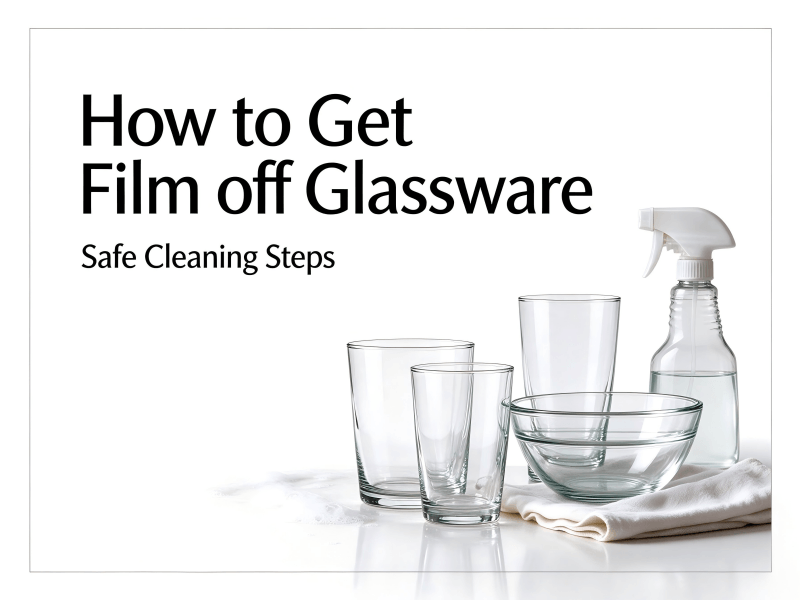
Hot glass into a cold sink, or hot glass on a damp cloth, repeats the same thermal gradient that cracks containers inside the basket. Let the piece come down to room temperature, then wash it, and do not stack hot pieces on each other.
Storing glassware so it survives the cabinet
Most chips happen after the cooking is over. A few habits cut that down:
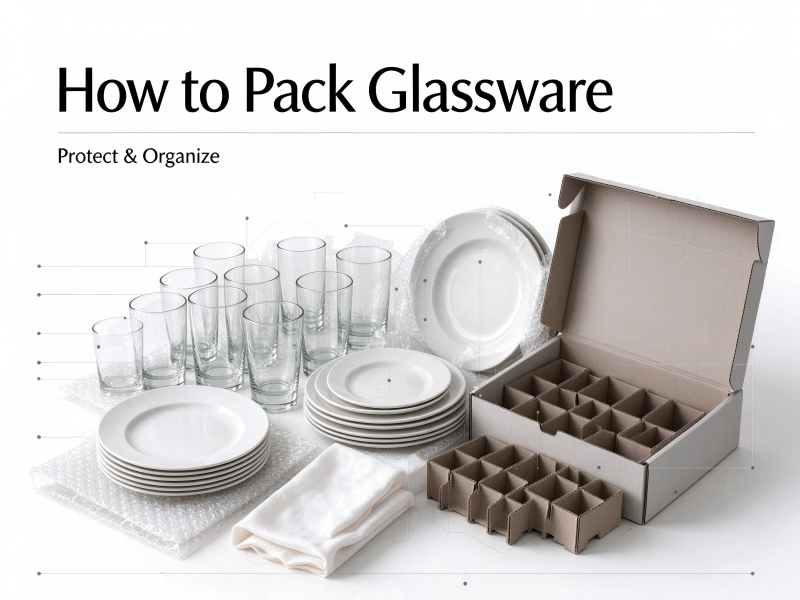
- Use dividers or shelf liners for glassware storage instead of standing pieces rim to rim.
- Nest only same-size pieces, and never drop a heavy bowl into a thin one.
- Check rims and bases as you unload the glassware cabinet, where hairline damage first becomes visible.
- Store glass containers with the lid off or set loosely on top so the seal is not compressed for months.
- Keep glassware sets on one shelf so pieces rotate instead of the same two bowls carrying every meal.
Glassware in commercial kitchens, rentals, and studios
Any operation that moves glassware at volume should treat the heat rating as a specification on record rather than a judgement call made per shift. A batch record by rating, an inspection on return, and a fixed replacement cycle cover most of the exposure.
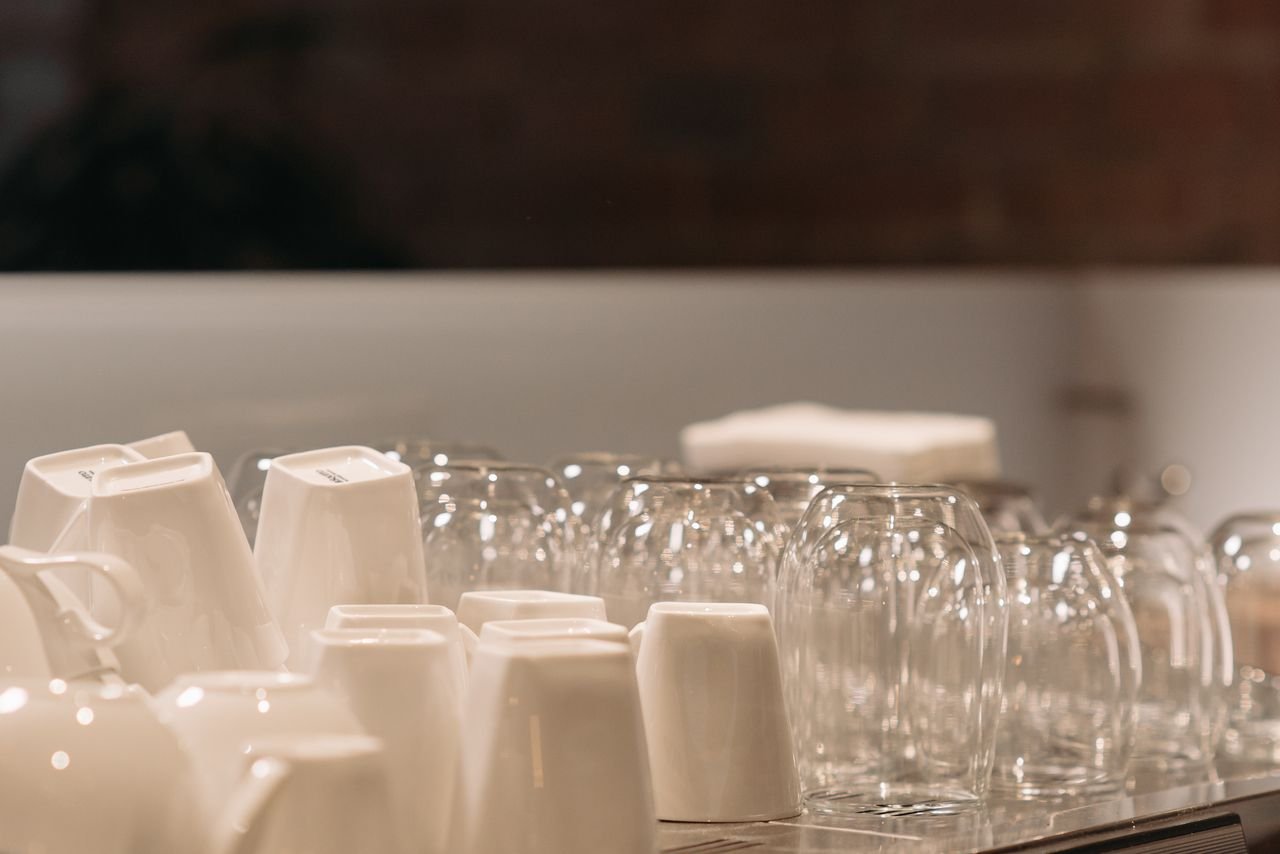
A glassware rental fleet usually holds several glass types side by side, and staff under time pressure grab whatever is nearest. Segregate by heat rating, and record it when each batch enters the fleet. For glassware rentals that return after every event, inspect at check-in rather than at the next dispatch, because a chip found early leaves time to replace the piece before it reaches a client.
Glassware studios and styling work rarely need oven heat, but sample preparation sometimes does, and that is where unrated pieces sneak into a high-temperature appliance. If a container is meant to meet heat anywhere in your process, put the rating in the specification and require it on the base of the finished piece.
FAQ
Can glassware stop food from crisping in an air fryer?
It can reduce browning. Glass reflects more of the radiant heat than a dark metal pan absorbs and passes into the food, so food in a glass dish tends to stay moister and paler on top. That suits casseroles and reheated portions and works against you for fries and wings.
Is a container labelled “microwave safe” suitable for an air fryer?
Not on that label alone. A microwave heats food and leaves the container relatively cool, while an air fryer heats the air and the container along with it. Check the base for “oven safe” or a temperature number first.
Can glass crack after it comes out of the air fryer?
Yes, and this is the failure people do not expect. Hot glass on a cold countertop or in a sink of water creates the same gradient that cracks containers inside the basket, just from the other direction.