A buyer comparing samples across a table sees clear glass and nothing else. The differences that matter, how a piece behaves at 90 °C, whether it clouds after a hundred washes, sit in the batch formula, not the color. That gap is why so many glassware sets bought against a vague heat-resistant claim fail in the first quarter of service.
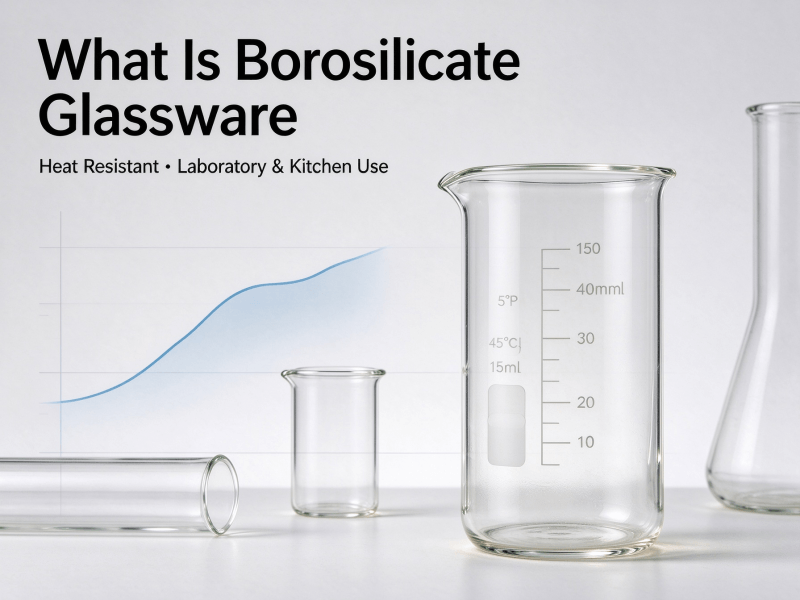
Borosilicate glassware is glass with boron trioxide built into its silica network, which holds down how much the material expands when it gets hot. Standard borosilicate 3.3 expands 3.3 × 10⁻⁶ per Kelvin against roughly 9 × 10⁻⁶ for ordinary soda-lime glass, so the same temperature jump produces about a third of the internal stress.
Everything below follows from that number: specs, failure modes, and the questions worth asking a supplier.
What the name actually refers to
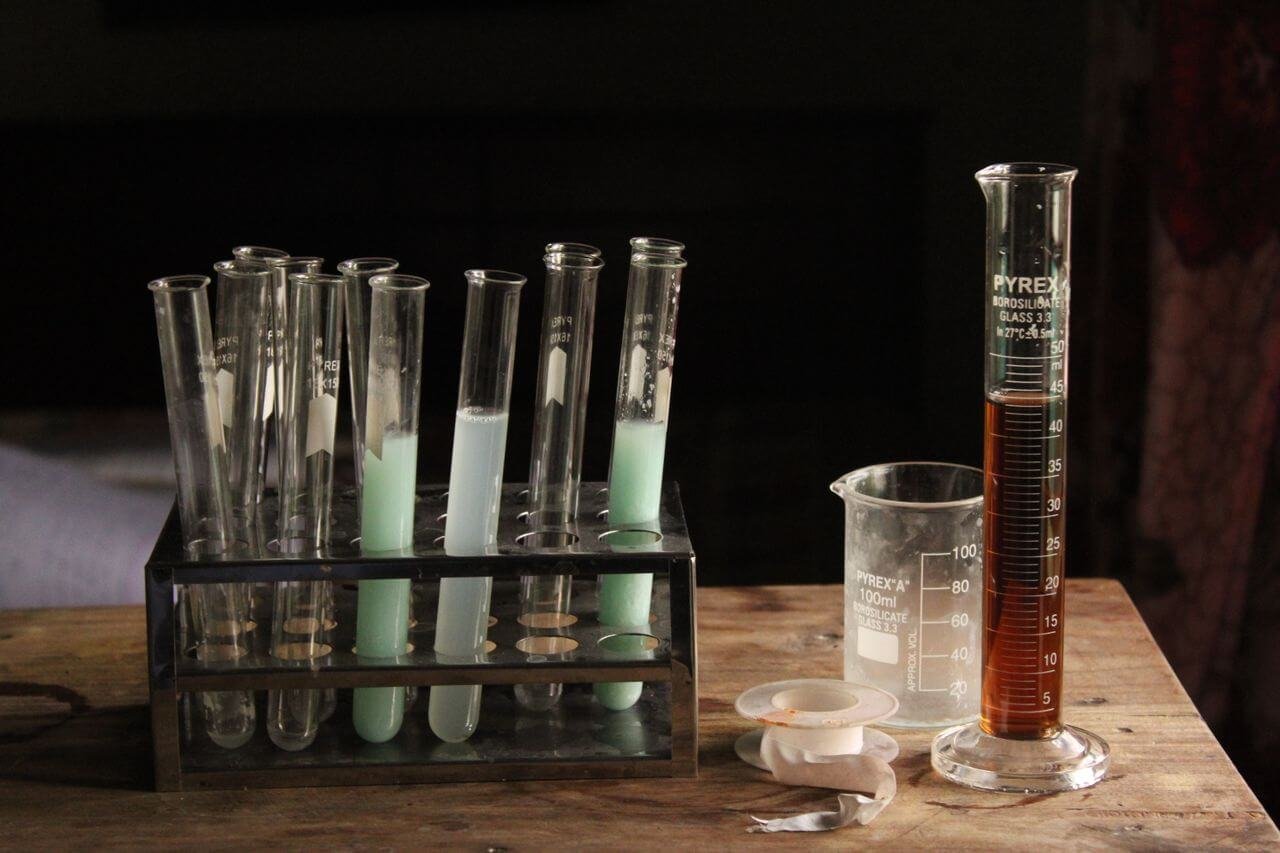
It names a glass family, not a finish or a brand. Borosilicate means boron trioxide is a principal ingredient of the batch, and the 3.3 that usually follows is a coefficient of thermal expansion rather than a version number.
Glassmakers started adding borates in the late 1800s to solve the oldest problem in the trade. Ordinary glass cracked whenever the temperature moved too fast, which kept it out of cooking and chemistry.
Boron does two jobs. It acts as a flux, lowering the melting temperature, and it forms part of the network itself, bonding with oxygen in a way that leaves the material less willing to stretch when it heats.
The grades on a datasheet are named after the expansion figure, not after strength or purity:
| Grade | Expansion (×10⁻⁶/K) | Typical use |
|---|---|---|
| 3.3 | 3.3 | drinkware, ovenware, laboratory ware, pharmaceutical bottles |
| 4.9 to 5.0 | 4.9 to 5.0 | lower-cost heat-resistant ware, some neutral tubing |
| 5.4 amber | 5.4 | amber pharmaceutical and lighting glass |
A supplier who says “high borosilicate” without a number has said almost nothing.
Why boron changes how the glass behaves
Lower expansion is what buys thermal shock resistance. Oven use, autoclave cycles and hot filling all trace back to that single change.
Composition and the expansion number
Published values for the 3.3 family sit in a narrow band across manufacturers:
| Property | Borosilicate 3.3 |
|---|---|
| Silica (SiO₂) | 80.6% |
| Boron trioxide (B₂O₃) | 13% |
| Sodium oxide (Na₂O) | 4% |
| Aluminium oxide (Al₂O₃) | 2.3% |
| Expansion, 20 to 300 °C | 3.3 × 10⁻⁶/K |
| Annealing point | 560 °C |
| Softening point | 820 °C |
| Working point | 1,260 °C |
| Density | 2.23 g/cm³ |
| Maximum thermal shock | 160 °C |
| Normal service limit | 230 °C |
The 3.3 figure and the envelope around it are defined in ISO 3585, borosilicate glass 3.3 properties, published in 1998 and reconfirmed after its most recent review. North American buyers usually meet the same material through a laboratory glass standard that classes it as Type I.
Soda-lime glass expands around three times as much and works at lower temperatures. Cheaper to melt, faster to form, available in more shapes, which is why it still dominates packaging.
Thermal shock in real numbers
Boiling water at 100 °C poured into a cup at 20 °C is an 80 °C step, half the 160 °C rating. That margin is why the pour works. The rating assumes no chips, no deep scratches and an even wall.
A 9 mm base and a 4 mm rim heat at different rates, so stress concentrates where they meet, which is where cracks start.
Chemical durability
Borosilicate 3.3 is rated class 1 for hydrolytic resistance, meaning water at 98 °C extracts almost nothing from the surface, and it holds the top acid class while sitting in the second alkali class. Years of contact with vinegar, citrus and coffee oils leave it clear.
The exceptions are narrow: hydrofluoric acid, hot concentrated phosphoric acid, and hot strong caustic solutions. None of those appear in a kitchen.
Borosilicate, soda-lime and crystal side by side
These are not three grades of one material. They differ in expansion, in lead content and in how they break, and those differences decide which belongs in front of a paying customer.
| Borosilicate 3.3 | Soda-lime | Lead crystal | |
|---|---|---|---|
| Expansion | 3.3 × 10⁻⁶/K | about 9 × 10⁻⁶/K | close to soda-lime |
| Thermal shock | high, rated around 160 °C | low; tempering raises it without removing the limit | low, best kept to cold service |
| Lead oxide | none | none | the defining ingredient |
| Density | 2.23 g/cm³ | around 2.5 g/cm³ | noticeably heavier |
| Unit cost | highest of the three | lowest | high |
Tempering is the most common substitute, and it is a treatment rather than a composition. The glass is heated and rapidly cooled so the surface sits under compression while the core stays in tension. That layer resists a temperature step and a knock. Cut through it with a scratch or chipped rim and the stored energy releases at once, so the piece fails completely instead of cracking.
Can you pour boiling water into borosilicate glassware
Yes, usually. The pour survives when the piece is undamaged, near room temperature rather than frozen, and built with reasonably even walls. It stops being safe when any one of those three fails.
What the glass tolerates
The 80 °C step from kettle to cup sits well inside the 160 °C rated shock, so the everyday case is nowhere near the limit. Two habits keep it there. Warm a cold piece with tap water when it comes out of a cold store, and let a piece cool before washing rather than running cold water into it after a hot rinse.
Thick-walled designs are the ones to watch: the extra mass holds heat unevenly, and the inner face can run far hotter than the outer after a fast fill.
Where thermal shock still wins
- An empty vessel left on a live burner, where one area heats faster than the rest.
- A frozen container placed straight into a hot oven.
- Cold water into a hot vessel, which includes bussing tubs and dishwasher racks as much as sinks.
- A chipped rim or deep scratch, because stress concentrates at the defect.
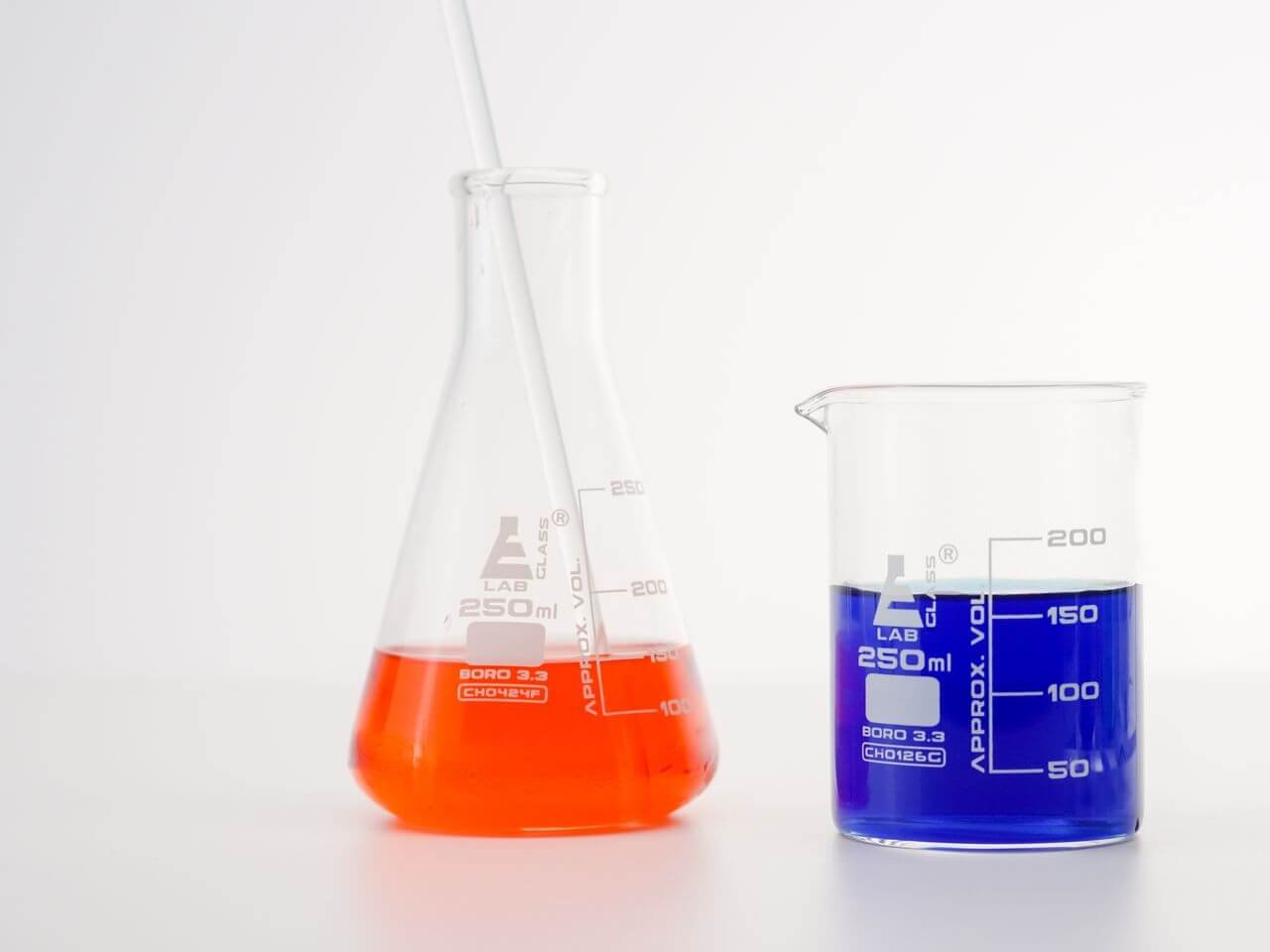
The downsides worth knowing before you specify it
It costs more than soda-lime, it chips and breaks like glass, and it constrains shape, thickness and decoration. None of that shows up on a sample table.
Cost structure
Boron-bearing raw materials cost more than sand and soda ash, and the batch melts and works much hotter, with the working point around 1,260 °C. Slower forming and higher energy land in the piece price. For a bottle cold-filled once and never washed hot, that premium buys nothing.
Impact, not temperature, is the real risk
Borosilicate resists heat. It does not resist a drop onto tile, or a trolley wheel. In a hotel or rental operation, handling breakage usually costs more than the material upgrade meant to prevent it.
| Downside | What it changes on a purchase order | Mitigation |
|---|---|---|
| Higher unit cost | price per piece above soda-lime equivalents | reserve it for lines with real heat or chemical contact |
| Brittle under impact | breakage allowance and replacement stock | drop-tested packaging and a stated spare ratio |
| Narrower forming window | mold design and wall thickness freeze earlier | design review before tooling is cut |
Does borosilicate glassware leach microplastics
No. Glass is not a polymer and does not break down into plastic particles. The parts that can shed them are attached to the glass: gaskets, liners, coated caps and some printed decoration.
The question got louder in 2025, when France’s food safety agency surveyed water, soft drinks, beer and wine sold in plastic, carton, metal and glass containers. Headlines reported that glass-packaged drinks carried more particles than plastic ones. The agency’s clarification traced the particles mainly to painted metal closures and to friction during capping, not to the glass body.
The plastic contact points in a glass jar or bottle are the silicone gasket, the lid insert, the sealing compound and any coated or printed surface. Those are the components to specify.
Lead is a separate question. Standard borosilicate contains none. Lead belongs to leaded crystal, a different material made for sparkle and cut decoration, which is why the two should never be specified interchangeably for food service.
Where borosilicate glassware gets used
Wherever heat, washing and reuse land on the same object, borosilicate earns its price. Where a piece is cold-filled and handled once, it rarely does.
Drinkware and tabletop
Double-wall construction is the clearest case. An air gap between two walls keeps a hot drink warm and the outside cool, and the seal between them holds a vacuum that a higher-expansion glass would stress with every fill. That is why most double wall glass cups use borosilicate, and why the wall at the sealed rim is the first thing to check in a sample.
Food service, events and glassware rental
Rental stock is chosen on cycles to failure, not appearance. A piece passes through loading, transport, service, bussing and a commercial wash many times a month, and the hot rinse is the thermal event that retires soda-lime early. For a buyer comparing glassware rentals, more cycles usually beat a cheaper piece replaced mid-season.
Glassware studios
Flameworkers heat borosilicate rod and tubing in one spot until it flows, then join or shape it while the rest stays cool. That works because the material barely expands, so hot and cold zones coexist without the joint cracking. Studios buy on diameter tolerance, wall consistency and batch.
Lab and industrial
Reagent bottles, beakers and pharmaceutical vials rely on the same properties, with autoclave cycles at 121 °C as the routine test. Volumetric ware adds accuracy of the graduation, so material is only part of that specification.
How to tell borosilicate from lookalike glassware
Three checks separate the real material from tempered soda-lime sold under the same words: weight in the hand, wording on the label, and whether the supplier will put a number on paper.
- Compare weight against size. At 2.23 g/cm³ borosilicate sits below soda-lime’s roughly 2.5, so a same-size piece feels lighter, not heavier.
- Read the exact wording. Borosilicate and low-expansion glass are material claims. Heat resistant and oven safe are performance claims that tempered soda-lime satisfies too.
- Ask for the datasheet. A supplier who can name the expansion coefficient and the annealing point is describing a material. One who cannot is describing a hope.
- Ask about continuity. Several well-known ovenware lines moved from borosilicate to tempered soda-lime decades ago while keeping the same silhouette, so a product’s reputation may describe a material it no longer uses.
Care, storage and handling
In service, most failures come from a temperature step or a knock, not from the material’s ceiling.
Washing without thermal shock
Let pieces reach room temperature before they meet cold water. Hot glass into a cold sink is the same stress as cold glass into a hot sink, and it is the most common way a sound piece is lost. Skip abrasive pads on decorated surfaces, since a scratch removes the strongest layer exactly where stress later concentrates.
Storage and cabinet layout
Store rim up, avoid nesting thin-walled pieces, and use dividers or felt pads where rims touch. In a glassware cabinet, put weight at the bottom and keep the front edge clear, because most breakage happens during retrieval. For pantry use, check the seal on glassware storage containers before the glass: a silicone ring hardens and stops sealing long before the body shows wear.
What to write into a purchase spec
Write the parameters, not the word. A specification that says borosilicate can be met with a document; one that names the grade, the expansion ceiling and the annealing check cannot.
| Spec line | What to require | Why it matters |
|---|---|---|
| Material grade | borosilicate 3.3 on the datasheet | rules out a quiet downgrade to 4.9 |
| Expansion | no more than 3.3 × 10⁻⁶/K, 20 to 300°C | the only number that predicts thermal performance |
| Hydrolytic resistance | class 1 | predicts clouding, odor pickup and leaching |
| Annealing | documented anneal near 560°C | residual stress is invisible until the piece fails |
| Decoration | lead and cadmium free, firing temperature stated | decoration is the usual heavy-metal source |
| Closure | gasket material and food-contact declaration | the only plastic in contact with the contents |
FAQ
Is borosilicate glass the same as tempered glass?
No. Tempering is a process applied to soda-lime, and sometimes to borosilicate, that puts the surface under compression. Borosilicate is a composition. A tempered piece can be stronger against impact and still fail all at once if that layer is breached.
Can borosilicate glassware go in a dishwasher?
The body usually can. The stresses there are mechanical rather than thermal: pieces knocking in the rack, and detergent attacking decoration. Double-wall items are the exception, because the seal between the walls degrades under repeated heat.
Can borosilicate glass be recycled?
Yes, but not through the container-glass stream. Its melting point sits above the range soda-lime furnaces run at, so one piece in the cullet can leave unmelted inclusions in an entire batch. Most curbside programs exclude it, so a specialty recycler or a manufacturer take-back is the realistic route.