A glass comes out of the dishwasher looking clean, and twenty minutes later it is covered in a chalky film. That film is not leftover detergent, and it is not a washing failure. It is the water. Most tap supplies carry dissolved calcium and magnesium, and when that water dries on a smooth surface, the minerals stay behind as a hard white crust.
The Water Quality Association lists mineral deposits on dishes and glassware as one of the standard symptoms of hard water, alongside scale on faucets and stiff laundry (WQA, Scale Deposits). Kitchens, bars, and caterers notice it first, because clear glass shows every mark, and customers see them at eye level on the table. Every piece that gets washed and air-dried is a candidate, from stemware to the glass cup sets used three times a day.
Water spots come off glassware with acid, not with scrubbing. Soak the piece in warm white vinegar or a citric acid solution for five to thirty minutes, wipe it with a soft cloth, then rinse and dry it by hand. The acid dissolves the calcium carbonate film; scrubbing only grinds the crystals across the surface. The same soak works on wine glasses, drinking glasses, and glass dishes, with a baking soda paste used afterward for whatever the acid leaves behind. If the cloudiness survives the soak, you are no longer looking at a deposit. You are looking at corrosion of the glass itself, and no cleaner reverses that.
What follows is the full routine: what the spots are, how to clear them from stemware, tumblers, and serving pieces, and which habits stop them from returning.
| Symptom | What it really is | First thing to try | Realistic result |
|---|---|---|---|
| White dots that wipe off with vinegar | Calcium and magnesium residue | Vinegar soak, five to thirty minutes | Glass clears completely. |
| Uniform milky film | Mineral film dried over a large area | Full-strength vinegar soak, thirty minutes | Clears with a second pass in hard-water areas |
| Rainbow or iridescent sheen | Early glass corrosion | Acid soak, then inspect. | Film may lift; the sheen often stays |
| Haze that survives vinegar | Etched glass surface | No cleaner fixes it. | Restore with polish, or replace the piece. |
| Rough patch you can feel with a fingernail | Deep etching or physical scratch | Cerium oxide polish on valuable pieces | Improves clarity, rarely perfect |
What water spots on glassware are made of?

They are mineral residue, not dirt. Hard water holds dissolved calcium and magnesium ions. When a droplet evaporates on glass, the water leaves and the minerals remain, bonded to the surface as carbonate crystals.
The deposit keeps changing after it forms. Fresh spots are soft and lift easily. Over days, the crystals recrystallize, harden, and lock into the microscopic texture of the glass surface. That is why a glass cleaned on Monday is easy work, and the same glass left until Friday needs a long soak.
Mineral film versus etched glass
Two very different problems look the same in a busy kitchen, so it helps to separate them before you start scrubbing:
- Mineral film sits on top of the glass. It is alkaline, so acid dissolves it. It wipes away.
- Etched glass is the glass itself, chemically attacked. Acid will not restore it, because there is nothing left to dissolve.
The test is quick. Soak the piece in vinegar for fifteen minutes, rinse, and dry it. If the mark is gone, it was a deposit. If it is still there and the glass looks slightly frosted, the surface has been damaged.
How to get water spots off wine glasses
Hand washing with a short warm acid soak is the safest route for stemware. Soak the bowl, wipe the rim and bowl with a soft cloth, rinse in warm water, and dry with two lint-free cloths before the glass has a chance to air dry.
Stemware deserves more care than a tumbler. The walls are thin, the bowl is the first place corrosion shows, and the stem is the part most likely to snap in a sink.
A five-step soak for stemware
- Fill a basin with warm water and white vinegar, one part vinegar to one part water for light spotting, or full-strength vinegar for a heavy crust.
- Lay the glasses on their sides so the bowl fills and the rim is covered. Do not stack them.
- Leave them for ten to fifteen minutes. Check one glass before you commit to longer.
- Wipe the bowl and rim with a microfiber cloth, then rinse in warm water.
- Dry immediately with one cloth and polish with a second dry cloth. Hold the bowl, not the stem, when you twist.
Why twisting the stem breaks glasses
Most stemware breaks during drying, not washing. Holding the foot in one hand and turning the bowl in the other puts torsion straight through the joint between stem and bowl. Hold the bowl with the cloth and turn the glass inside the cloth instead.
If you wash stemware in a machine, use a glass cycle, keep the water temperature moderate, and dose detergent below the maximum. Detergent that is too alkaline for the water you have is a common cause of the cloudy ring on a wine bowl.
How to remove hard water stains from glass with vinegar
Use a vinegar soak matched to the severity of the deposit. Light filming clears in a one-to-one vinegar and water mix within five to ten minutes. Thick crust needs full-strength vinegar and up to thirty minutes, sometimes a second round.
| Situation | Mix | Dwell time | Notes |
|---|---|---|---|
| Light spotting on drinking glasses | 1 part vinegar, 1 part warm water | 5 to 10 minutes | Wipe and dry by hand afterwards. |
| Cloudy film across the whole surface | Full-strength white vinegar | 15 to 30 minutes | Warm the vinegar slightly; never boil it. |
| Crust on the base or inside of a vase | Full-strength vinegar | 30 minutes to overnight | Add a handful of rice and swirl for narrow necks. |
| Decorated or printed glass | 1 part vinegar, 3 parts water | 5 minutes, then rinse. | Test a hidden area first. |
Why the acid works
Household white vinegar is about 5 percent acetic acid. Acetic acid reacts with calcium carbonate and converts it into calcium acetate, which dissolves in water. The tiny bubbles you see on the glass during a soak are carbon dioxide leaving the reaction, and they tell you the deposit is breaking down.
That is also why dwell time matters more than effort. Five minutes of contact does more than two minutes of hard rubbing, and rubbing with an abrasive pad scratches glass in a way no acid soak can undo.
Where vinegar stops working
Vinegar will not fix etching, scratches, or a damaged surface coating. It is also the wrong tool on decorated pieces. Gilded rims, screen-printed logos, and sprayed colors can lift or fade in acid, so dilute heavily on anything printed and keep the soak short.
One safety note that belongs in every kitchen: never mix vinegar or any acid with bleach. The combination releases toxic gas.

How to remove hard water stains from glass dishes
Submerge the dish if you can, and soak it in warm vinegar. Baking dishes, serving bowls, trifle bowls, and jars all respond to the same treatment as drinking glasses, with one addition: after the acid soak, a baking soda paste handles the residue that the acid loosened but could not dissolve.
Flat pieces that will not fit in a basin can be treated with vinegar-soaked paper towels laid over the stained area. Keep the towels wet for twenty to thirty minutes, then lift them and wipe.
Baking soda after the acid, never during
Baking soda is a mild abrasive, not a solvent for minerals. It does its job as friction, so it belongs after the vinegar has done the chemical work. Sprinkling baking soda into vinegar just neutralizes both and leaves you with salt water.
The sequence:
- Soak in vinegar and rinse.
- Mix baking soda with a little water to make a paste.
- Rub the paste over the remaining marks with a soft cloth or a nylon pad.
- Rinse and dry.
Narrow-necked pieces need a different trick. Fill the vessel with vinegar, drop in a spoonful of dry rice, and swirl. The rice acts as a gentle internal scrubber that reaches places a brush cannot. The same method works well on glass storage jars that have been air-dried after washing and picked up a ring of scale around the base.
The dishwasher route for glass dishes
A dishwasher can help if the machine itself is not the source of the problem. Run an empty cycle with a bowl of vinegar placed on the top rack, without detergent, to descale the interior and the spray arms. Then run the glass load with a normal dose of detergent and a rinse aid. If the water in your building is hard, no amount of machine cleaning will fix spotting until the water is treated or the load gets a final rinse in demineralized water.
How to keep water spots from coming back
Dry glassware by hand the moment the cycle ends. Almost every water spot forms during drying, not washing, and a cloth takes care of the water before it can evaporate.
Prevention is cheaper than cleaning, especially at volume. The habits that make the biggest difference:
- Dry immediately. Air drying on a rack leaves droplets exactly where you do not want them.
- Use rinse aid. It lowers the surface tension of the final rinse so water sheets off instead of beading.
- Turn the temperature down. Hotter rinse water accelerates both spotting and corrosion.
- Do not overdose detergent. Too much alkalinity attacks the glass surface over time.
- Treat the water. A softener at the building level, or a demineralized final rinse, removes the cause instead of the symptom.
- Store dry and covered. A closed glassware cabinet keeps dust and humidity off glass that is already clean, and avoiding tight stacking prevents the rim chips that later collect residue.
Storage matters more than people expect. Glass stacked while still slightly damp will weld mineral deposits across the contact ring, and that ring is harder to remove than a normal spot because it has had hours to set.
When cloudy glassware is permanent damage
If vinegar does not clear it, the glass surface has corroded. Etching is a chemical change in the glass itself, and it is permanent.
Researchers at Lehigh University, working with Unilever, found that the milky band on a wine glass bowl starts as a network of microscopic scratches left by the manufacturing and forming process. Repeated machine washing dissolves the glass slightly, the tiny cracks spread, and the damaged ring scatters light (Lehigh University, via ScienceDaily). In their test, glasses washed in a solution with no sodium disilicate stayed clear, while glasses washed in solutions containing it became visibly corroded in the same area where the scratches already were.
| Sign | Diagnosis | Action |
|---|---|---|
| Wipes off with vinegar | Mineral deposit | Clean and change your drying routine. |
| Rainbow sheen in the light | Early corrosion | Reduce detergent dose and temperature now. |
| Uniform haze after many cycles | Advanced corrosion | Retire the piece from service. |
| Rough to the fingernail | Deep etching | Polish if valuable; otherwise, replace. |
For a valuable piece, a cerium oxide polish can reduce the haze, though it takes patience and rarely returns the glass to new. For a working kitchen, the honest answer is replacement, plus a change in wash chemistry so the next set lasts longer.

What commercial buyers should check before the next order
Ask for the glass composition and the wash-test data before you commit to a volume order. Water spots are a maintenance problem, but how fast a glass cloud permanently is a specification problem, and it is decided at the factory.
Hotels, restaurants, caterers, and rental fleets run the same glasses through hundreds of cycles a month, so small differences in material and surface finish show up quickly as a visible cost. When you compare suppliers, ask about:
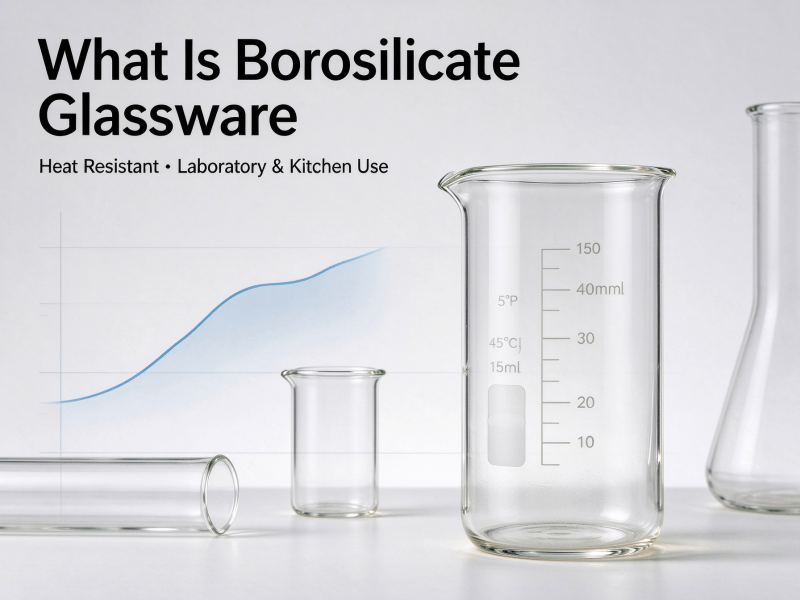
- Glass composition. Soda-lime and borosilicate behave differently under alkaline detergent and heat. Borosilicate resists chemical attack better and handles thermal shock, which matters when hot rinse water follows a cold pre-rinse.
- Surface quality. Since corrosion starts in microscopic surface defects, the finish that comes out of forming and annealing decides how quickly a bowl clouds.
- Decoration durability. Printed or sprayed logos should be tested against the wash chemistry you actually use, not just against water.
- Reorder consistency. A set that cannot be matched twelve months later turns one broken case into a mixed table.
- Compliance. Lead-free composition and food-contact documentation should be part of the quote, not an afterthought.
Holin Glass works with hospitality and retail buyers on exactly these points. The team supplies OEM and ODM service, custom shapes and capacities, and samples for wash testing before a bulk order is confirmed, so you can run a glass through your own dish room and see how it behaves rather than trusting a datasheet. If you are specifying a new range or replacing a fleet that has already gone cloudy, share your wash parameters and volume, and the custom glassware team will come back with options that fit the way your operation actually washes glass.
Sourcing locally versus sourcing from a factory
Searching for glassware near you is fine for replacing a dozen broken tumblers this week. It is a poor way to buy two thousand units on a repeat schedule, because retail stock changes and the same item is rarely available next season. A direct factory relationship fixes the specification once and lets you reorder against it.
FAQ
Does vinegar damage glass or a dishwasher?
Vinegar is safe on plain soda-lime and borosilicate glass when it is rinsed afterwards. It is not safe on every surface: gilded rims, printed logos, and some coated or treated glass can be damaged by acid, so dilute and test first. Inside a dishwasher, one descaling cycle with a bowl of vinegar is fine. Do it without detergent, and do not make it a weekly habit on machines with rubber seals that are sensitive to acid.
How do rental and catering operations keep glassware spot-free between events?
The work happens before storage, not after. Glass is polished and inspected while still warm from the wash, then stored dry in racks with space between pieces, because stacked damp glass is where the worst rings form. A demineralized final rinse cuts polishing time, since there are no minerals left to dry on the glass, and a vinegar bath for the worst cases costs far less than replacing cloudy stock.
When should cloudy glassware be replaced instead of cleaned?
Replace it when the haze survives a vinegar soak, when the surface feels rough, or when a rainbow sheen is visible under bright light. Those are signs of corrosion, not residue, and corroded glass keeps getting worse with every cycle. It also reads as dirty to a guest even when it is sanitary, which is a presentation cost on top of the replacement cost. If your building water is hard enough to damage heaters, pumps, and spray arms, a demineralized final rinse or full softening belongs in the same conversation, because spotting is then a maintenance issue as much as a cleaning one.