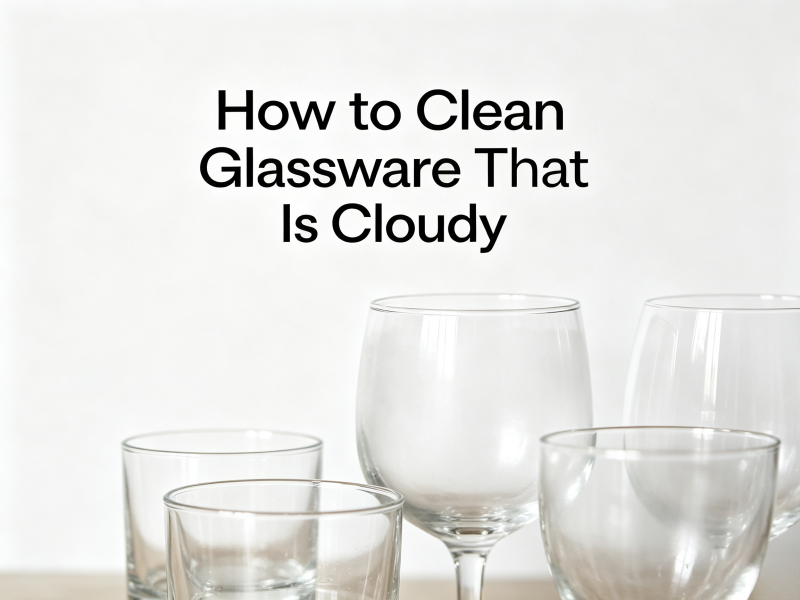
A glass comes out of the wash bone dry and still looks as though it has been sitting in milk. That milky look has two very different causes, which is why cloudy glassware is so often misdiagnosed.
Most cloudy glassware is neither dirty nor damaged. It is usually a hard water film of calcium and magnesium that dried onto the surface, and a 15- to 30-minute soak in white vinegar takes it off. The rest is etching, where alkaline dishwasher detergent in soft water has chemically removed material from the glass itself. Etching cannot be reversed, and scrubbing makes it worse. A one-minute spot test tells you which problem you have.
Whether you are triaging a few everyday glass cup sets or a rack of rental stock, the diagnosis comes first.
| What you see | Most likely cause | Reversible |
|---|---|---|
| Uniform milky haze, chalky when dry | Hard water mineral film | Yes. |
| Rainbow sheen, smooth to the touch | Etching of the glass surface | No |
| White spots shaped like dried droplets | Water left to air dry in place | Yes. |
| Brown or grey rings inside | Coffee, tea, or metal marks | Usually yes. |
Why glassware turns cloudy
Hard water leaves minerals on top of the surface, which is film. Alkaline detergent in soft water takes material out of the surface, which is etching. Film is a deposit on the glass. Etching is damage inside the glass. Other habits only change how fast each one develops.
Mineral film from hard water
Tap water carries dissolved calcium and magnesium. When water evaporates, those minerals stay behind as a chalky layer, and a dishwasher speeds this up by evaporating water straight onto the glass. Film builds gradually, which is why a set can look fine for months and then seem to turn white overnight. Your water supplier publishes a hardness figure for the area, usually in milligrams per liter of calcium carbonate or grains per gallon.
Etching from detergent and soft water
Modern phosphate-free dishwasher detergents are strongly alkaline. In hard water most of that alkalinity is spent reacting with calcium and magnesium, but soft water has little mineral content to neutralize, so the detergent attacks the glass instead, stripping metal ions out of the silica network and leaving microscopic pits. Those pits scatter light, which reads as haze, and early stages often show a faint rainbow sheen. Hot cycles and heavy detergent doses accelerate it. Etching is permanent: no cleaner, soak, or polish puts the material back.
Other reasons a glass looks cloudy
Coffee and tea leave tannin films, cutlery leaves grey metal marks, and dried droplets leave round spots rather than an even haze.
How to tell whether your glassware is filmed or etched
Run a spot test before you treat anything. Put a few drops of white vinegar on one cloudy patch, leave it for a minute, rinse, and dry. If the patch comes up clear, the problem is mineral film, and the rest of the set is worth cleaning. If it looks the same, the glass is etched, and further treatment is wasted effort.
- Vinegar spot test. The acid dissolves calcium and magnesium, so a patch that clears is film.
- Wipe test. Film lifts as white smears under a damp cloth. Etching does not move.
- Feel test. A fingernail catches slightly on film. Etched glass feels smooth but looks opaque.
- Light test. A faint rainbow sheen points to etching, and a flat white haze to film. Advanced etching also looks uniformly white, so treat this as a clue rather than proof.
How to clean glassware with vinegar
Fill a basin with undiluted white vinegar, lay the glasses in it so every cloudy area is covered, and leave them for 15 to 30 minutes. The acetic acid dissolves the calcium and magnesium deposits back into solution. Wash in warm water with a drop of mild dish soap, rinse, and dry immediately with a soft cloth.
- Sort the load. Set aside crystal, colored glass, and anything with a painted or gold rim.
- Submerge. Use a plastic basin or a towel-lined sink, and soak tall glasses in two passes.
- Wait. Fifteen minutes handles light film; heavy deposits can soak an hour. Do not soak overnight.
- Loosen the rest. Wipe with a soft sponge, never steel wool or scouring powder, which scratches the surface.
- Wash. Warm water with a small amount of mild, pH-neutral dish soap.
- Dry immediately. Air drying lets the last water evaporate in place, which is how the film formed.
When you should not use vinegar
Lead crystal, colored glass, and antique pieces with painted or gilded decoration can be dulled by soaking, and already etched glass gains nothing from the treatment.
| Glass type | Vinegar soak | Better option |
|---|---|---|
| Everyday soda-lime tumblers | Yes. | Soak, then hand dry. |
| Borosilicate, heat-resistant glass | Yes. | Soak, or citric acid |
| Lead crystal, cut or gilded | No | Lukewarm water, mild soap |
| Already etched glassware | No benefit | Replace or repurpose. |
How to make cloudy glasses crystal clear again without vinegar
Baking soda, citric acid, oxalic acid powders, and even plain toothpaste all lift mineral film, and they differ mainly in strength and in how much abrasion they add. Baking soda is the mildest. Citric acid works faster and leaves no smell. An oxalic acid cleanser is the strongest option for thick, old deposits. All of them treat film only.
Baking soda paste for stubborn spots
Mix two to three tablespoons of baking soda with enough water to make a paste the consistency of toothpaste, rub it into the cloudy areas with a soft sponge for about 30 seconds per spot, then rinse and dry. Keep the pressure light, and use it on film a vinegar soak has already loosened.
Citric acid and lemon juice
Dissolve two tablespoons of food-grade citric acid powder in a gallon of warm water and soak for 20 to 40 minutes. Lemon juice works the same way: three tablespoons into a cup of water, five to ten minutes. Citric acid leaves no smell and doubles as a monthly descaler for an empty dishwasher.
Oxalic acid powdered cleanser
Cleaners built on oxalic acid handle thick, aged deposits and lift the grey metal marks left by cutlery. The powder carries a fine abrasive as well as the acid, so keep the surface wet, work in small areas, and then wash the glass again with dish soap, because the product is not intended for food contact surfaces.
Toothpaste and denture tablets for narrow glasses
White non-gel toothpaste is a very mild abrasive for a light haze on everyday glass. Effervescent denture tablets suit the interiors of flutes, bottles, and vases where a sponge cannot reach: drop one into a glass of warm water, leave it half an hour, and the fizzing lifts deposits without scrubbing. Either way, the shine comes from dissolving the deposit and drying the surface immediately, not from pressing harder.
How to clean cloudy crystal
Wash crystal one piece at a time in lukewarm water with a few drops of mild, pH-neutral dish soap. Rinse with warm water and dry immediately with a soft lint-free cloth. Keep crystal out of the dishwasher, and do not soak leaded, cut, or decorated pieces in vinegar, because the softer surface absorbs minerals and acid more readily than everyday glass.
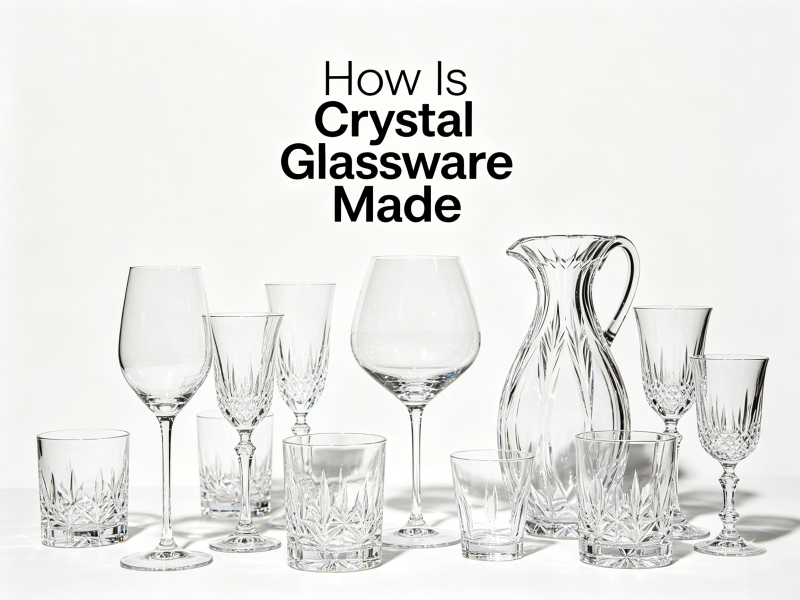
Traditional crystals contain lead oxide, and modern lead-free versions use barium, zinc, or potassium. Both are softer than soda-lime glass and slightly more porous, which gives crystal its depth but also makes it absorb water, minerals, detergent, and wine tannins.
- Line the sink or use a plastic basin so a dropped piece does not hit a hard surface.
- Keep the water lukewarm. Sudden shifts between hot and cold crack thin stems.
- Hold a stemmed glass by the bowl while washing, and never twist the bowl and stem in opposite directions.
- Skip abrasive pads, citrus-heavy soaps, and ammonia-based cleaners.
For decanters and narrow-necked pieces, a tablespoon of uncooked rice with warm soapy water and a gentle swirl reaches where a cloth cannot. Conservation specialists treat impact and unsuitable storage as the main risks to glass rather than ordinary dirt, so professional care guidance for glass objects favors the gentlest method that works over frequent washing. If a piece stays hazy after one gentle acid treatment, the cloudiness is surface damage rather than a deposit, and polishing only makes it worse.
How to prevent cloudy glassware in the dishwasher
Four things decide whether your glasses come out clear: detergent dose, rinse aid, water temperature, and cycle choice. Use the smallest amount of detergent that still cleans the load, keep the rinse aid topped up, keep the wash below 140°F (60°C), and choose a normal or eco cycle instead of a heavy one.
| Setting | What to do | Why it matters |
|---|---|---|
| Detergent dose | Minimum that cleans the load; halve it in soft water. | Excess alkalinity attacks glass when few minerals can react. |
| Rinse aid | Keep full; raise the dose in hard water. | Water sheets off instead of drying in droplets. |
| Water temperature | Below 140°F (60°C) | Heat speeds up mineral deposition and surface attack. |
| Cycle | Normal or over-heavy | Long hot cycles do the most damage. |
| Loading | Leave gaps so water drains off. | Trapped water dries in place and leaves spots. |
If your water is hard
Hard water means film, and the answer is mineral management rather than more detergent. Fill the rinse aid and raise the setting, use dishwasher salt if your machine has a softener reservoir, and run a descaling cycle with citric acid or vinegar on an empty machine about once a month.
If your water is soft or softened
Soft water means less film and more etching risk, and the corrections are the opposite of what most people expect. Cut detergent to roughly half, drop to a cooler and shorter cycle, and switch off the heated dry. Soft water is not a guarantee of clear glass; it changes the failure mode from a removable film to a permanent one.
How to store glassware so it stays clear
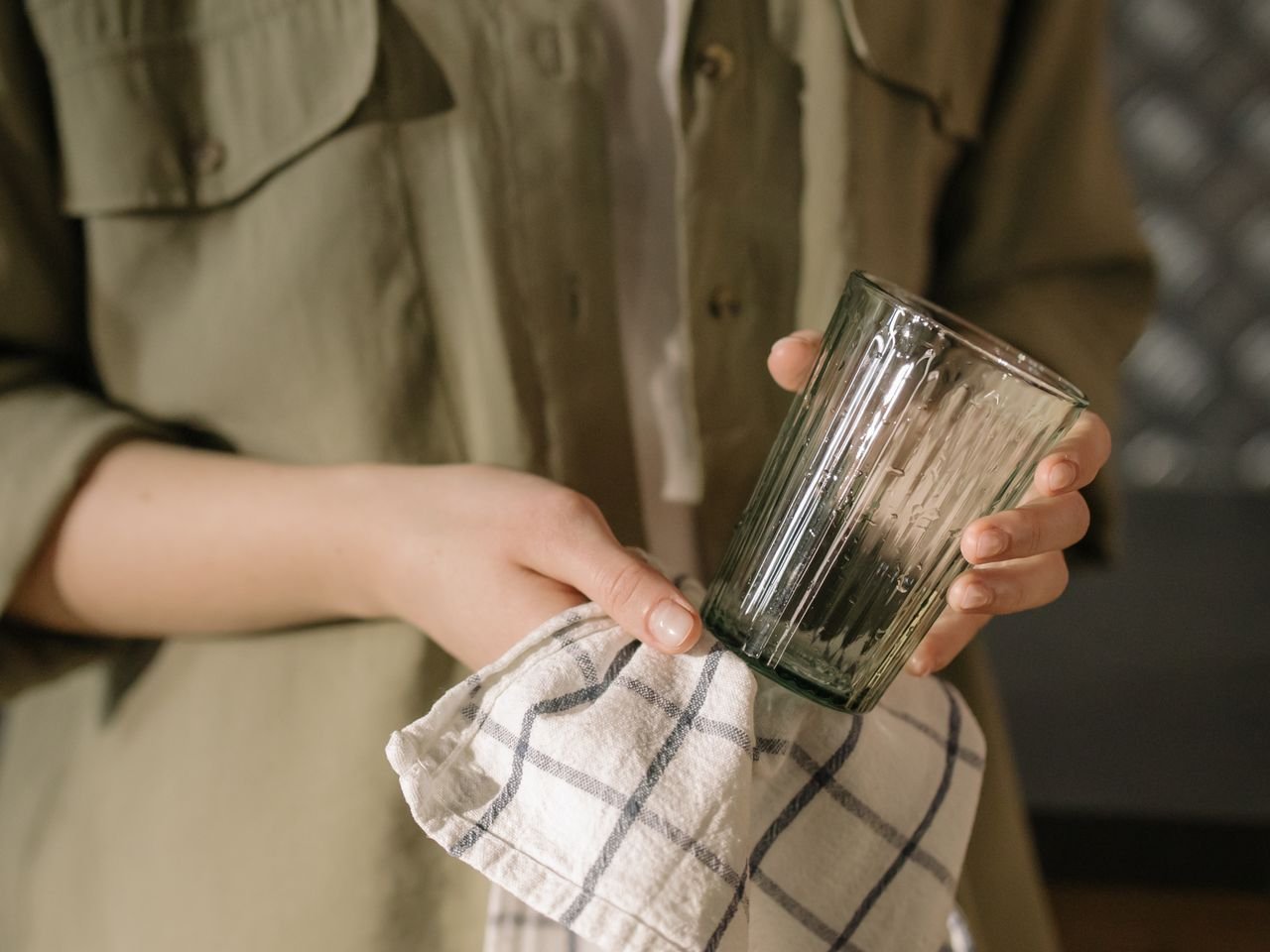
Store glassware completely dry, upright, with space between pieces, in a closed cabinet that keeps dust and cooking grease off the surfaces. Airborne grease builds a film that looks exactly like cloudiness and has to be washed off again, and glasses stacked rim against base chip each other over time.
Dry everything before it goes into the cabinet, including the recess in the base where water collects. Upright storage protects rims, though a covered arrangement is better on open shelving in a busy kitchen.
- Line shelves with a soft, non-shedding mat rather than newspaper or bare wood.
- Leave a finger of space between glasses so they cannot knock together.
- Keep storage away from the dishwasher vent, kettles, and direct sunlight, which fades colored glass over years.
Storing everyday sets and large collections
Everyday sets stay clearer when they are stored as a closed unit: a cabinet with doors, a shelf tidied into rows, or a glassware storage container for pieces used once or twice a year. Never stack drinking glasses inside one another, because the pressure on rims produces hairline cracks that later become breaks. Learning how to store clean glasses and cups properly pays off every time you unload a clean set.
Commercial and rental glassware
The same rules run at a larger scale in bars, hotels, and rental operations, but the economics change: every etched piece that goes back onto the rack dulls the whole set.
- Wash in racks so glasses never touch, and air-dry inverted rather than with a cloth that leaves lint.
- Treat the delivery cycle as an inspection point. Sort returns into filmed, chipped, and etched, and retire the etched ones.
- Store in a closed, dry area away from steam and cooking vapors.
Within a week it becomes obvious which glasses are drifting towards etching, and that early signal is the cheapest replacement warning a kitchen ever gets.
FAQ
Does cloudy glassware mean the glass is not clean?
No. Mineral film is a deposit of calcium and magnesium salts left by water, not bacteria or food residue, so glasses that have been washed are hygienic even when they look hazy. Etched glass is the exception: its pitted surface gives detergent residue and oils somewhere to settle, so a badly etched glass can smell stale no matter how often it is washed.
Can etched glass be polished back to clear?
Only film responds to polishing. Etching removes material from the glass, so there is nothing to polish back, and household polishing compounds simply grind away more surface. Professional polishing can work in principle, but it removes a thin layer of the wall, which is uneconomical for ordinary drinkware.
How often should you descale glassware?
Base the schedule on your water rather than the calendar. In a hard water area, a vinegar or citric acid soak every four to six weeks stops film accumulating. In a soft water area, film is rare, so the priority shifts to detergent dose and cooler cycles.