Walk down any supermarket aisle and you will see the same split: water in plastic, juice in plastic, milk in plastic. Glass sits on the premium shelf: fewer options, higher price. Most people choose plastic because it is lighter and cheaper. But the conversation around what we drink from has shifted. People are asking harder questions about what leaches into their water and where their empties end up.
The short answer is yes: glass bottles are generally better than plastic in health, environmental, and taste dimensions. Glass does not leach chemicals into your drink, it is fully recyclable without quality loss, and it does not generate microplastic particles. Plastic is lighter and more shatter-resistant, but that is all.
Here is how the two materials stack up across the factors that actually matter.

Health: What Gets Into Your Drink
Glass is the safer material for food and beverage contact. It is chemically inert and does not release anything into the liquid it holds, regardless of temperature or storage time.
Plastic bottles raise concerns because their chemical composition is not locked down. Polyethylene terephthalate (PET), the plastic used for most disposable water bottles, can leach antimony trioxide into water, especially when exposed to heat. Leave a plastic bottle in a hot car, and you are getting more than just warm water.
Beyond PET, polycarbonate plastics contain bisphenol A (BPA), an endocrine disruptor linked to hormonal imbalances, fertility issues, and developmental problems in children. While many manufacturers have switched to BPA-free alternatives, studies from the National Institute of Environmental Health Sciences suggest that substitute compounds like BPS and BPF may have similar biological effects. Glass sidesteps this problem entirely. As a material composed primarily of silica, soda ash, and limestone, it does not contain or require plasticizers, stabilizers, or monomers that can migrate into food.
Businesses sourcing packaging at scale also face regulatory pressure here. The European Union has tightened food contact material regulations under Framework Regulation (EC) No. 1935/2004, and the FDA continues to review substances used in plastic packaging. Companies buying custom glassware for food or beverage applications avoid this regulatory uncertainty from the start.
Environmental Impact: Beyond the Recycling Bin
Glass has a stronger environmental case than plastic when you look at the full lifecycle. It recycles indefinitely without downcycling, while plastic degrades in quality with each recycling loop.
The numbers are stark. According to the EPA, the recycling rate for glass containers in the United States was approximately 31.3% in 2018, while plastic PET bottles and jars reached about 29.1%. The difference is not in the rates themselves but in what happens after recycling. A recycled glass bottle becomes another glass bottle. A recycled plastic bottle typically becomes polyester fiber for clothing or carpet, which then cannot be recycled again. This is downcycling, not a closed loop.
The energy argument also gets more compelling when you look closer. Making glass from virgin materials requires temperatures above 1,500 degrees Celsius, which is energy-intensive. But when you use cullet (crushed recycled glass), the melting temperature drops and energy consumption falls by roughly 2 to 3 percent for every 10 percent of cullet used, according to the Glass Packaging Institute. Plastic production relies on petroleum or natural gas feedstocks, tying it directly to fossil fuel extraction.
Then there is the problem of what does not get recycled. Plastic bottles that miss the recycling stream break into smaller pieces but never truly disappear. The UN Environment Programme estimates that plastic accounts for approximately 85% of marine litter. Glass, by contrast, is made from abundant natural materials. If a glass bottle ends up in the ocean, it eventually breaks down into sand, which is what it started as.
For businesses and consumers looking at bulk storage, glass storage jars provide a reusable system that eliminates single-use packaging.

Microplastics: The Risk You Cannot See
Glass bottles do not shed microplastics. Plastic bottles do, and the quantities are larger than most people expect.
A 2018 study published in Frontiers in Chemistry by researchers at the State University of New York at Fredonia found that 93% of bottled water samples from 11 major brands contained microplastic particles. The average concentration was 10.4 particles per liter, with some samples exceeding 10,000 particles per liter. These particles include polypropylene, nylon, and PET fragments.
A more recent 2024 study from Columbia University and Rutgers University, published in the Proceedings of the National Academy of Sciences, used advanced imaging techniques and found that a typical liter of bottled water contains approximately 240,000 nanoplastic particles on average. That is orders of magnitude beyond previous estimates.
Where do these particles go? Research from the University of Amsterdam and Vrije Universiteit Amsterdam has detected microplastics in human blood. A 2022 study in Environment International found plastic particles in the bloodstream of 77% of tested volunteers. Researchers are still studying the long-term health effects, but the presence of microplastics alone is enough to give many people pause.
Switching to glass eliminates this exposure pathway. A wholesale glass jar purchase for a commercial kitchen, a cafe, or a retail brand removes one more source of microplastic ingestion from the equation.
Glass Bottles for Babies: Why Parents Are Switching
Glass bottles for babies are widely considered the safer option by pediatric health organizations because they eliminate chemical leaching risk during the most vulnerable stage of human development.
The American Academy of Pediatrics raised alarms about plastic food containers in a 2018 policy statement, specifically calling out BPA, phthalates, and other additives in plastic packaging. For infants, whose body weight is low and whose organ systems are still developing, even small doses matter more.
Plastic baby bottles also face a practical problem: sterilization. Parents boil bottles or run them through high-heat dishwasher cycles to kill bacteria. Heat accelerates chemical leaching from plastic. A 2020 study in Nature Food demonstrated that polypropylene baby bottles release millions of microplastic particles per liter when exposed to the temperature of hot formula preparation, roughly 70 degrees Celsius.
Glass bottles for babies avoid these problems. They can be boiled, steamed, and sterilized without material degradation. Silicone sleeves add grip and shatter protection, which addresses the most common objection to glass for baby use.
For parents making their own baby food and storing it, glass jars with lids work as both storage and serving containers, cutting down on the number of items in the kitchen.

Glass vs Plastic for Water: Taste, Temperature, and Daily Use
Glass bottles doot affect the taste of water. Plastic can affect the taste of water, especially when bottles are left in warm conditions or reused over time.
Ask anyone who drinks water from a reusable plastic bottle that has been through a few dishwasher cycles, and they will describe a faint plastic taste. This is not imagination. Volatile organic compounds from the plastic can migrate into the water, and the effect gets stronger with heat and age.
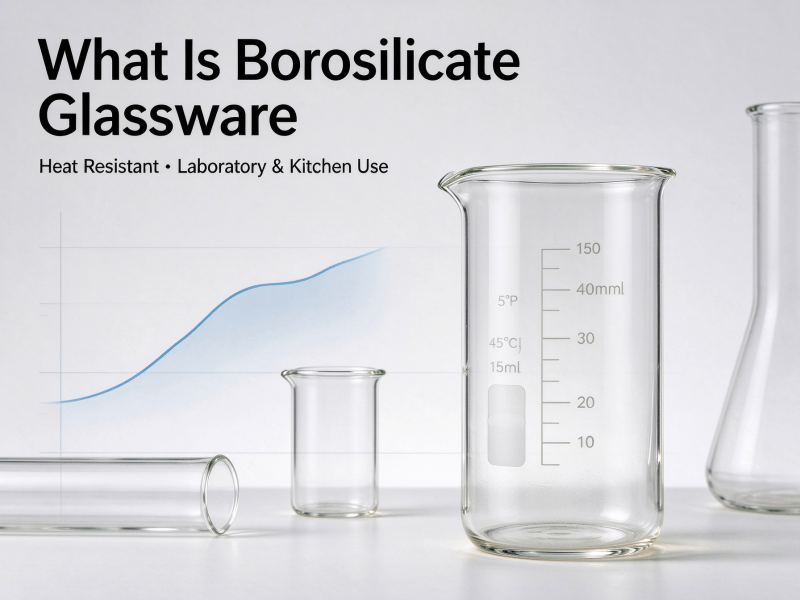
Glass also handles temperature extremes better in practical terms. You can pour boiling water into a borosilicate glass bottle without worrying about warping or chemical release. You cannot do that with a standard plastic bottle. For people who make tea on the go or want to carry hot liquids, glass is the more functional choice.
On the aesthetic side, restaurants, hotels, and cafes increasingly choose decorative glass bottles and jars for table service. The reason is simple: water served in glass looks and tastes better than water served in plastic. This is not a trivial thing for a business whose reputation depends on how customers experience the smallest details.
Weight remains the real drawback. A typical 500 milliliter glass bottle weighs around 400 grams when empty. A plastic equivalent weighs under 50 grams. For hiking, travel, or anyone who carries a bottle in a bag all day, that difference is meaningful. The trade-off is real, and for some use cases it makes sense to choose plastic despite its other drawbacks.
Summary
The evidence points in one direction. Glass bottles beat plastic for health because they do not leach chemicals. They beat plastic for the environment because they recycle in a closed loop. They beat plastic on microplastics because they shed none. They beat plastic for babies because they handle sterilization without degrading. They beat plastic for taste because they are neutral to the liquid they hold.
Plastic is lighter and does not shatter. Those are advantages. But they come with a set of trade-offs that a growing number of consumers and businesses are unwilling to accept.
For companies evaluating packaging strategy, the shift toward glass is not a trend. It is a response to better data and more aware customers. Bulk buyers looking at glass water bottles, jars, and storage containers are making a calculation where per-unit cost is only one variable.
The question is not really whether glass is better than plastic. It is whether the specific use case makes the switch practical. For most daily situations involving food and drink, it does.
FAQ
Does glass or plastic keep drinks colder longer?
Neither material provides significant insulation on its own. The cooling effect comes from the liquid temperature and external conditions. Glass feels colder to the touch initially because it has higher thermal conductivity than plastic, but the actual liquid temperature equalizes at similar rates. For extended cooling, a double-wall insulated container works better regardless of material.
Are all glass bottles recyclable everywhere?
Most clear, green, and brown glass bottles are accepted in curbside recycling programs across the United States and Europe. The exception is tempered glass like Pyrex, which has a different melting point and can contaminate recycling batches. Non-container glass such as windows, mirrors, and light bulbs should not go in bottle recycling streams. Check local guidelines for specific rules in your area.
How do I know if a glass bottle is lead-free?
Modern glass bottles manufactured for food and beverage use are required to be lead-free under regulations in the United States, the European Union, and most developed markets. Soda-lime glass, the standard for glass bottles and jars, does not contain lead. Concerns about lead in glass typically apply to decorative crystal glassware, not everyday containers. Look for “lead-free” labeling when buying decorative or imported items to be certain.